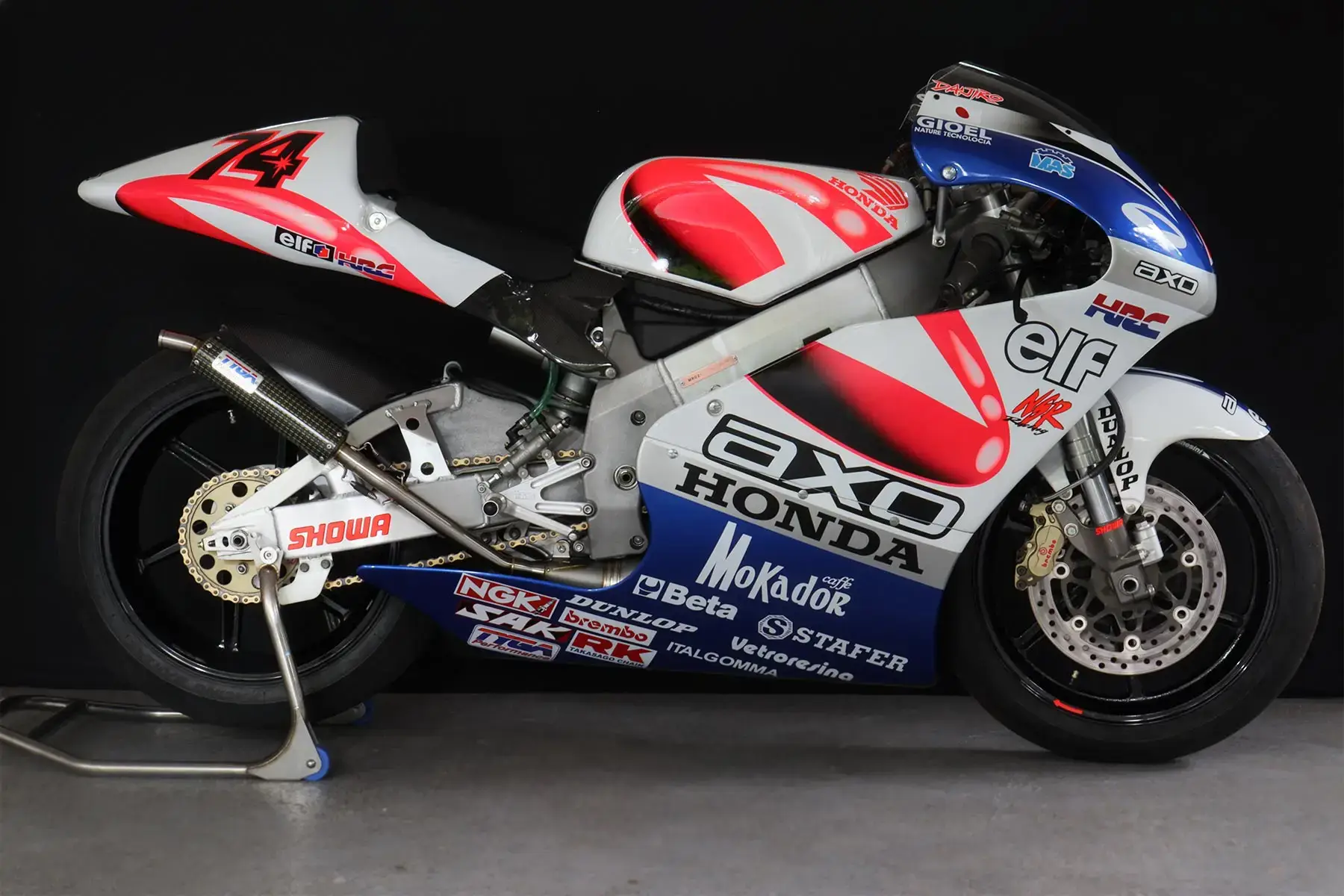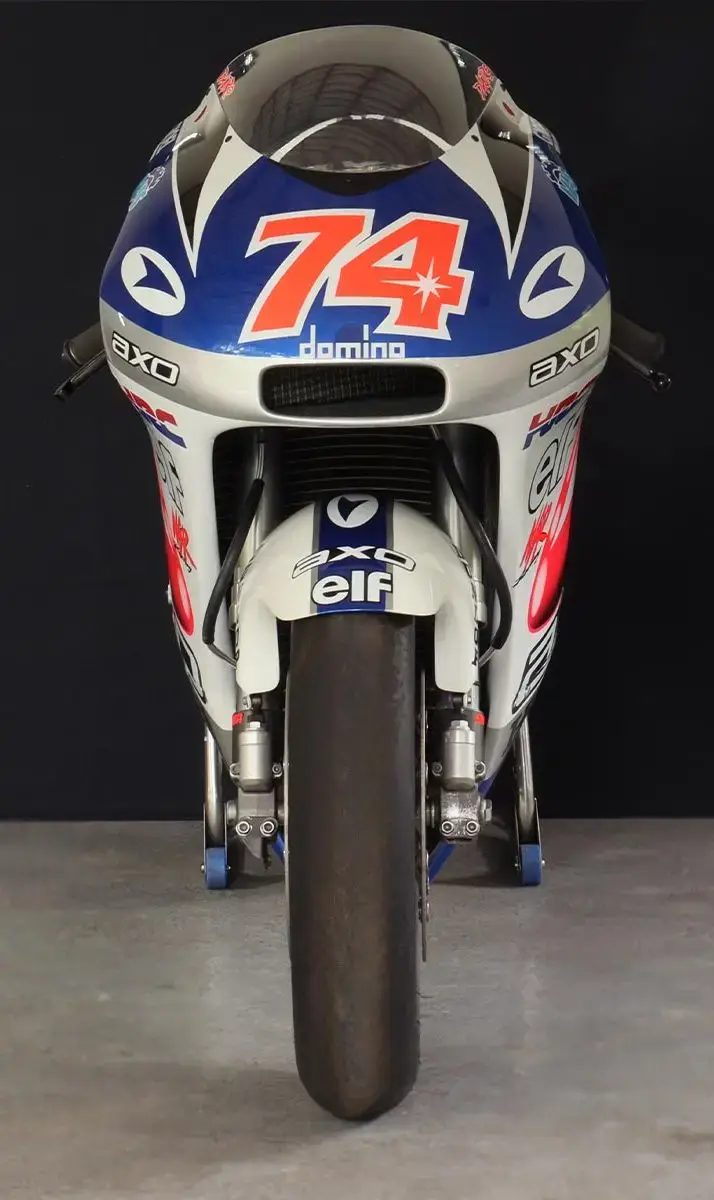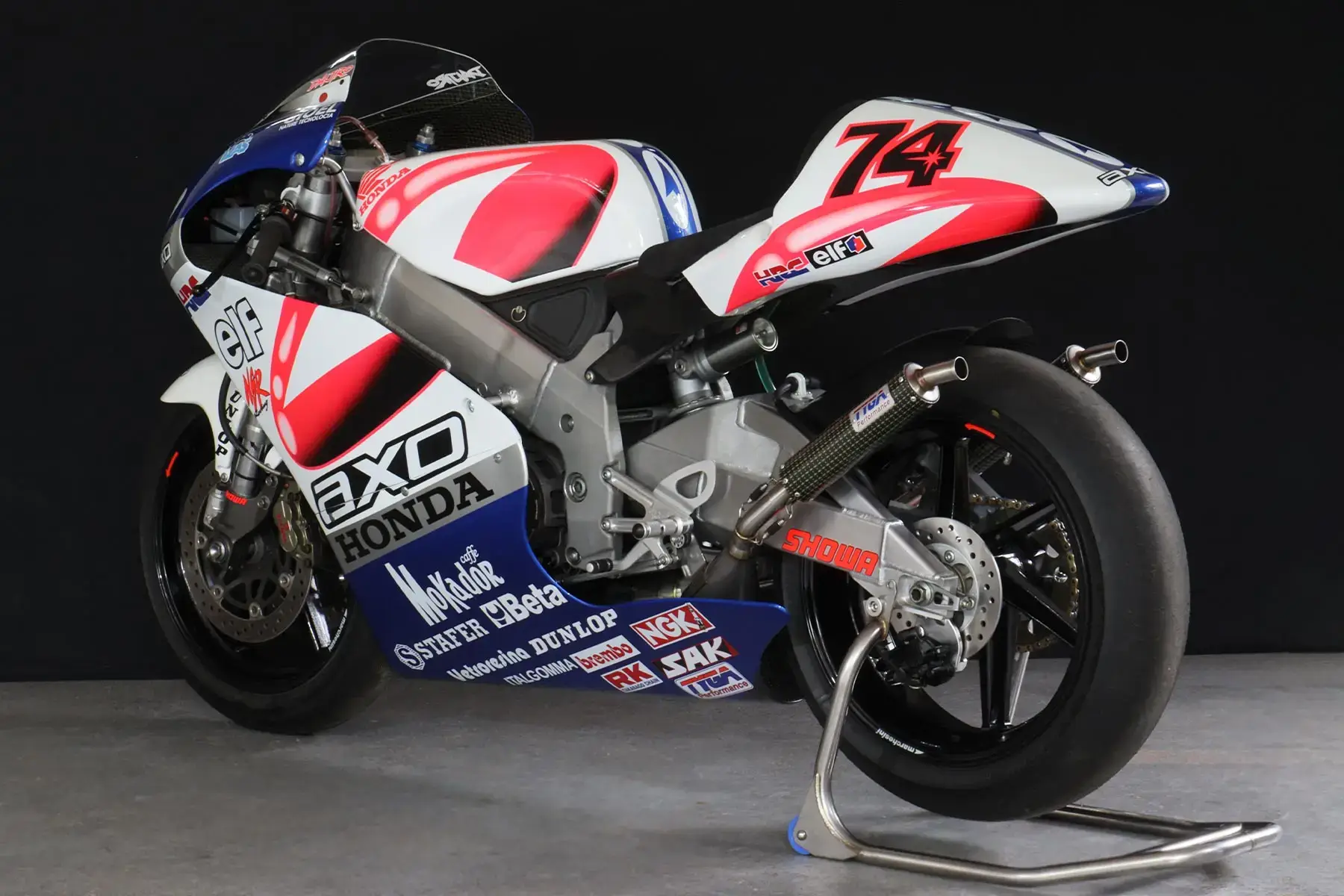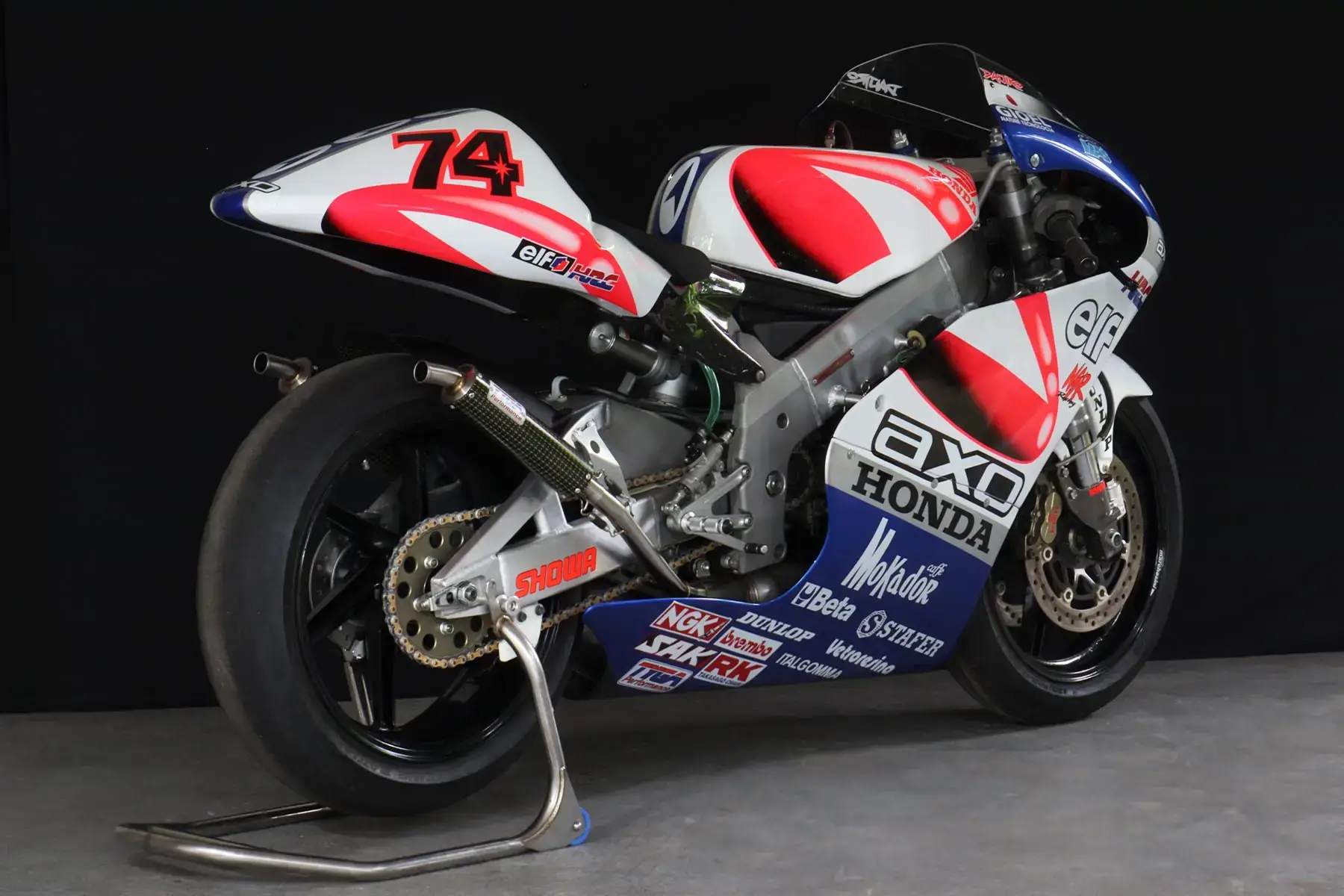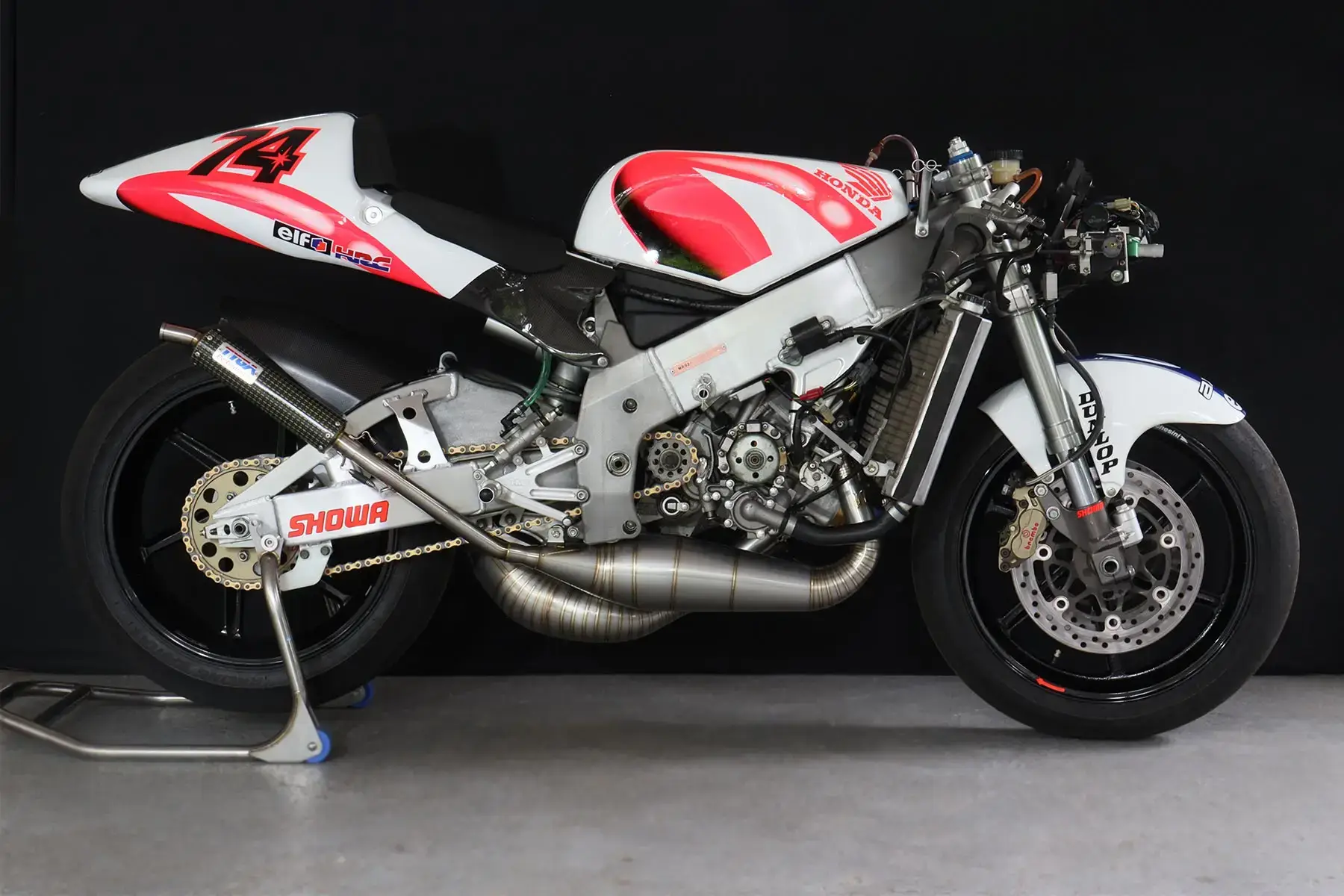



Honda RS250 NXA “AXO” (Kato)
| Date: | November 2025, text & photos by Paul Pearmain, © TYGA-Performance.com |
| Builder: | Tyga Performance |
| Motorcycle Model: | Honda RS250R NXA |
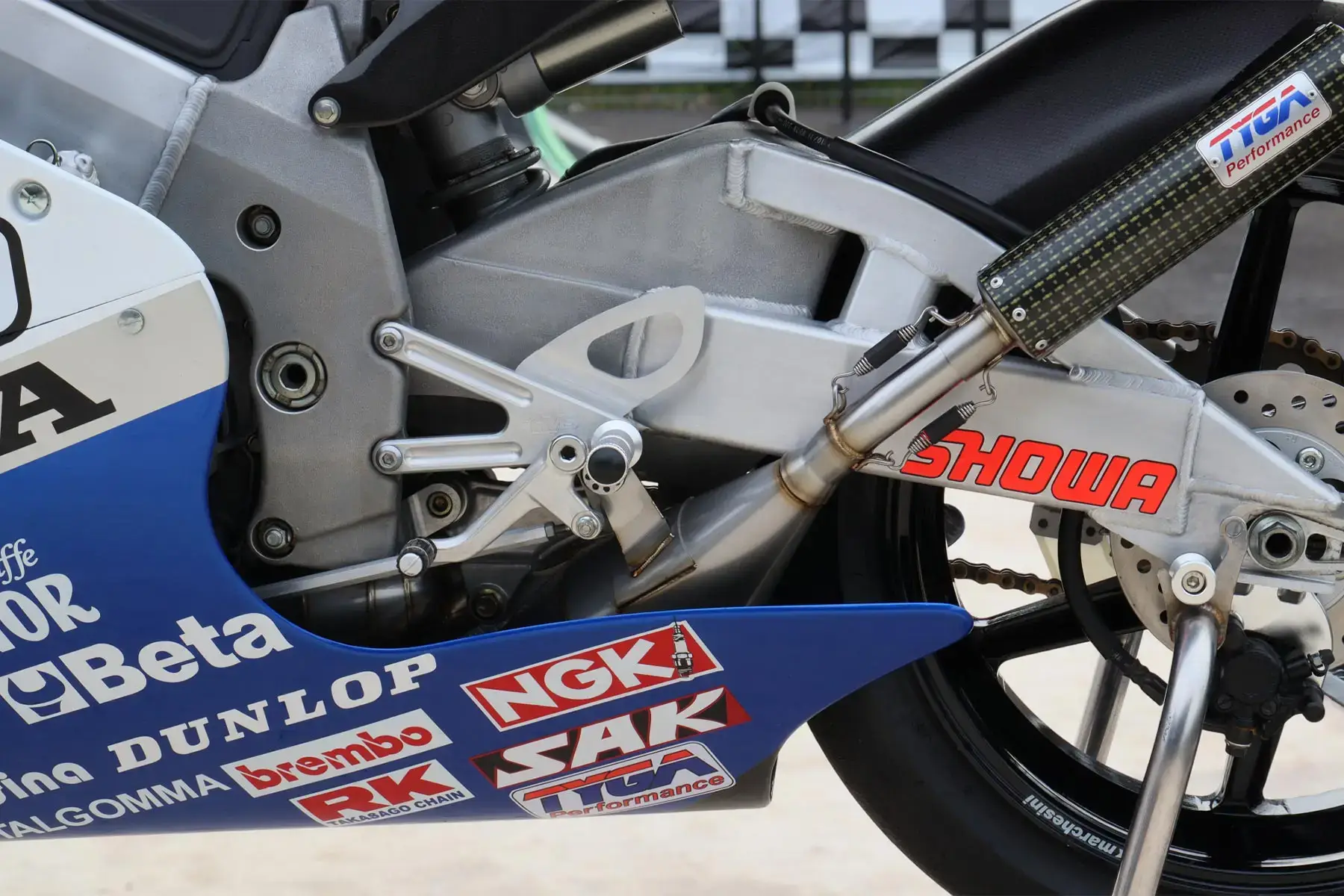
| Products Used: | Kit Complete Bodywork Set Carbon Type 2 Upper with Front Fender RS250R NXA, Exhaust Chamber Set Stainless Steel NXA RS250R, Silencer GP-T Carbon/Kevlar Two Stroke Spring Mounted, Air Box Carbon/Kevlar RS250 NXA Kit, Bracket Rear Brake Caliper CNC Silver RS250R NXA. All TYGA products used listed below. |
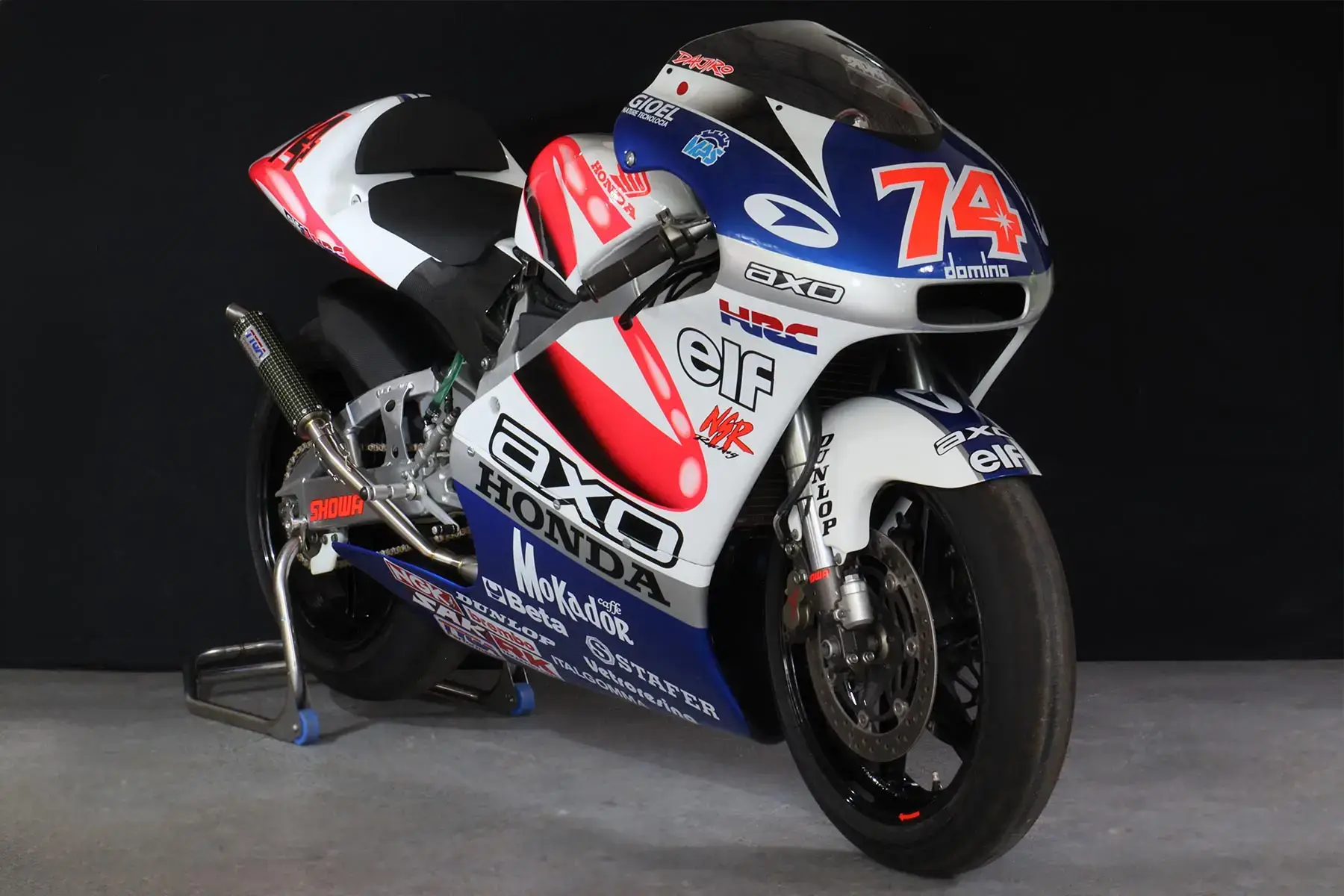
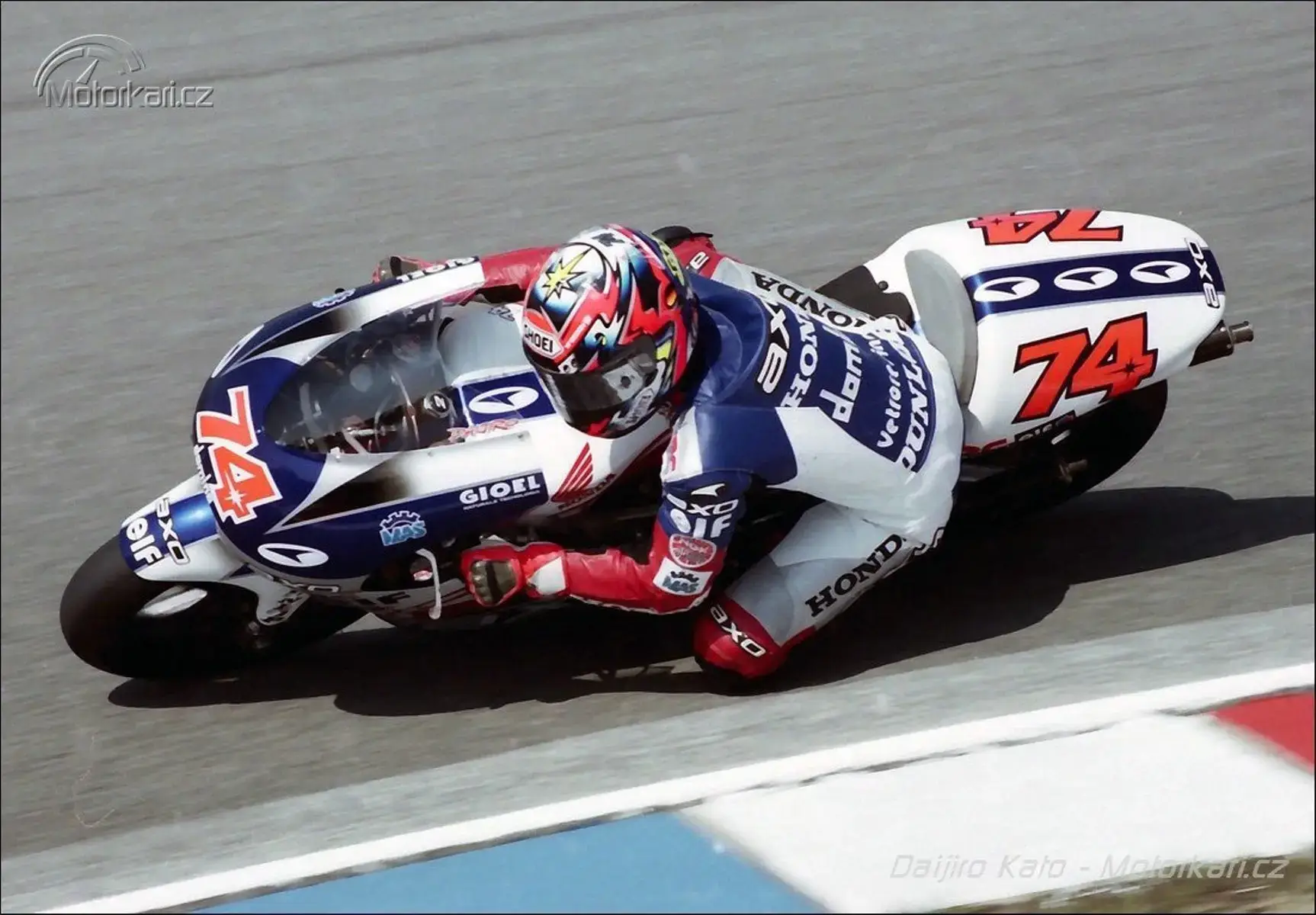
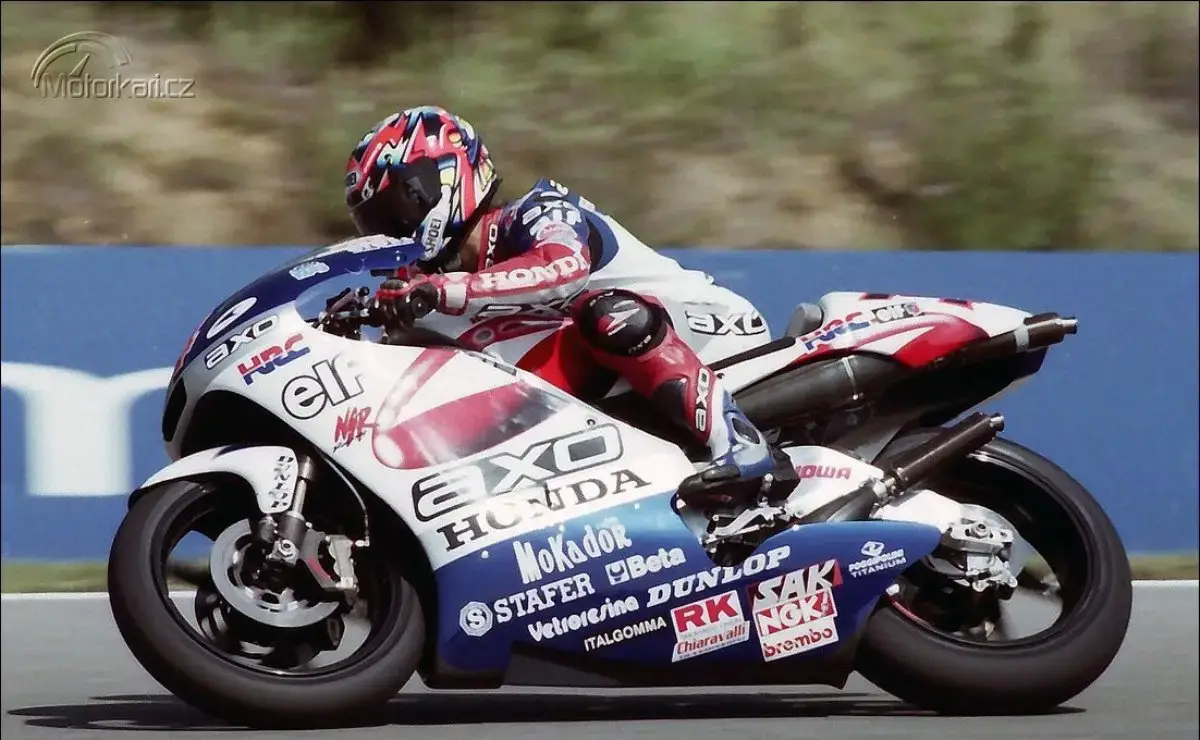
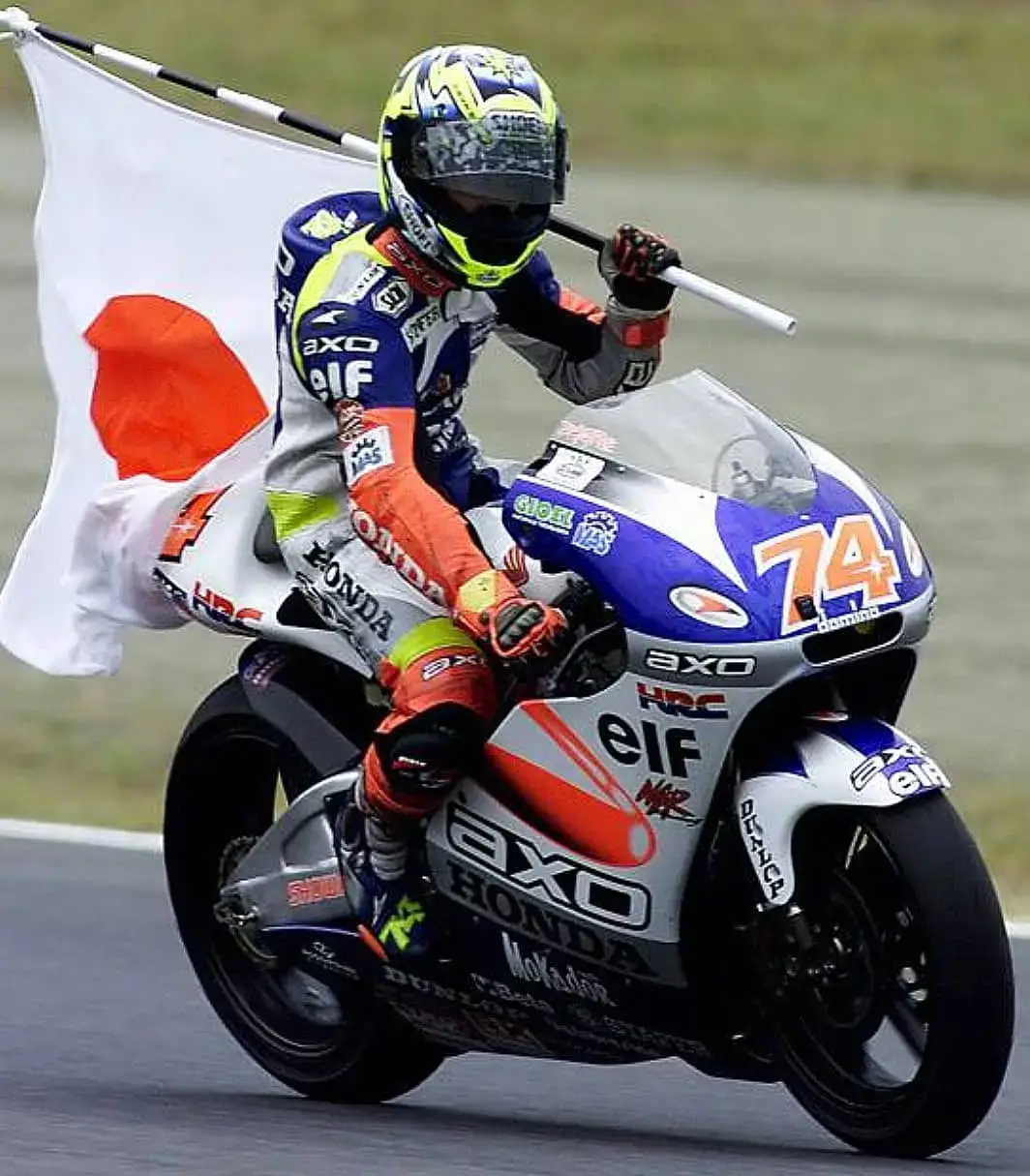
Anniversaries come around quicker the older you get and for me it is hard to believe that it has already been 25 years since the talented Daijiro Kato started racing in the 250cc world Championship. He finished the 2000 season in third spot, winning four races and was awarded Rookie of the Year. We all know the rest of his sad story, World Champion in 2001, moving up to the 500cc class in 2002, showing massive promise and then was tragically killed at Suzuka the following year. Such a massive loss for the sport and this bike is built as a tribute to arguably the best Japanese motorcycle racer ever, Always in our hearts, Daijiro will always be remembered for his aggressive and tactical riding style on the track, and his humble and courteous personality in the paddock.
Kato’s 2000 model HRC factory bike was a very exotic NSR250, built in very limited numbers and leased to top factory teams in the World and Japanese Championship. Very few of these bikes ever existed, and as far as I am aware, there are none in private hands. If you want to see one, your best opportunity is to visit the Honda Collection Hall in Motegi, Japan. If you are lucky, you will see factory NSR250s displayed from this era though they only show a small fraction of the bikes they have stored away. I should clarify something at this point, some readers may be getting confused between the factory NSR250 race machine and the production NSR250R street race replica bike built by Honda with lights and mirrors. Our website is full of examples of the latter and we have even made an Axo Kato project using an MC21 NSR250R a few years after the GP version was raced. If you scroll down our project page list you will see it as one of our earlier attempts and it had some of the first TYGA Performance bodywork in existence. Click here to read article about Honda Axo Gresini GP250 Replica.
| Specifications | Values |
|---|---|
| Model | RS250R |
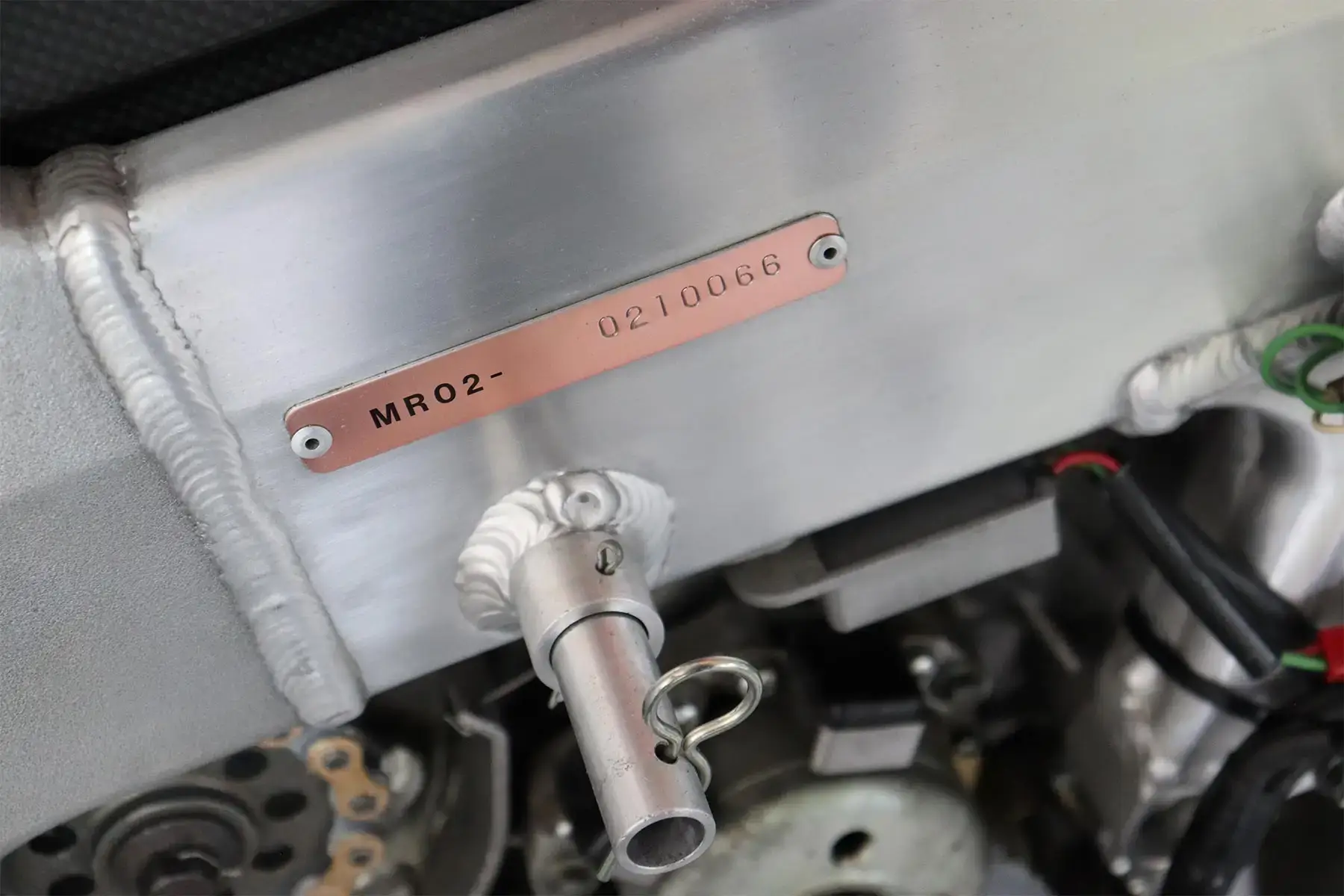
| Model No. | MR02 |
| Dimensions (LxWxH) | 1,954×640×1,090 mm |
| Wheelbase | 1,340 mm |
| Ground Clearance | 110 mm |
| Seat Height | 785 mm |
| Caster Angle | 22° 30′ |
| Half Dry Weight | 101 kg |
| Engine | Liquid-cooled 2-stroke crankcase reed valve 75° V-twin |
| Displacement | 249 cm3 |
| Bore x Stroke | 54×54.5 mm |
| Max. Power Output | 67.6 kW / 12,500 rpm 92 PS / 12,500 rpm (unleaded high-octane fuel) |
| Max. Torque | 52.2 N•m / 12,000 rpm 5.33 kgf-m / 12,000 rpm (unleaded high-octane fuel) |
| Carburetor | Keihin PJ38 throttle sensor-equipped power jet control carburetor × 2 |
| Ignition | Digital CDI |
| Transmission | 6-speed |
| Clutch | Dry multiplate |
| Fuel Capacity | 21 liters |
| Oil Capacity | 0.5 liters |
| Frame | Aluminum twin-spar |
| Brakes | ø296 mm dual floating disk with 4-piston caliper ø198 mm single disk with single piston caliper |
| Wheels | 3.50-17 6-spoke ‘U’ f-section cast magnesium 5.50-17 8-spoke ‘U’ f-section cast magnesium |
| Suspension | Fully adjustable 41 mm inverted telescopic fork Remote reservoir damper |
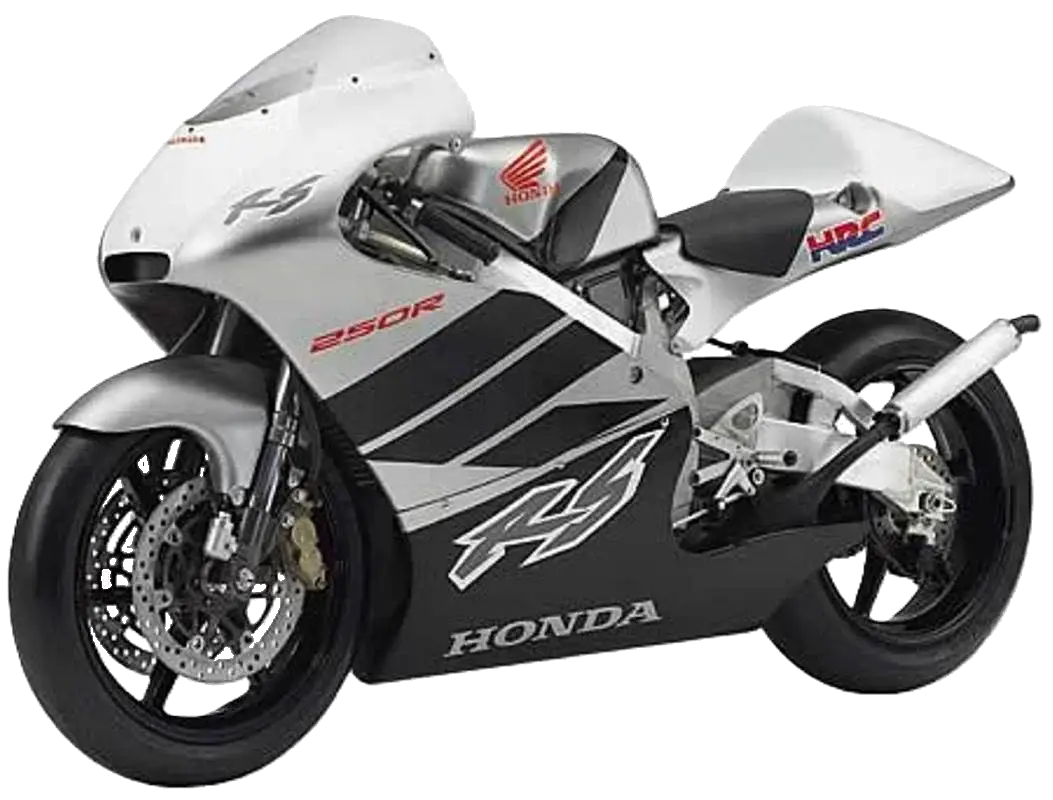
This makes the NXA more or less contemporaneous with Kato’s bike and as a result, it has a passing resemblance to the factory machine. There are quite a few differences though, notably power and visually the reverse cylinder with exhaust exiting the seat unit but given that we don’t have an NSR250 and probably never will, the NXA is the next best thing and pretty special in its own right. In any case, if I put on my business suit on for a moment, our primary function in making these project bikes is to showcase our products and sell them to a market, so I hope the NXA owners are as enthusiastic about this bike as we are!
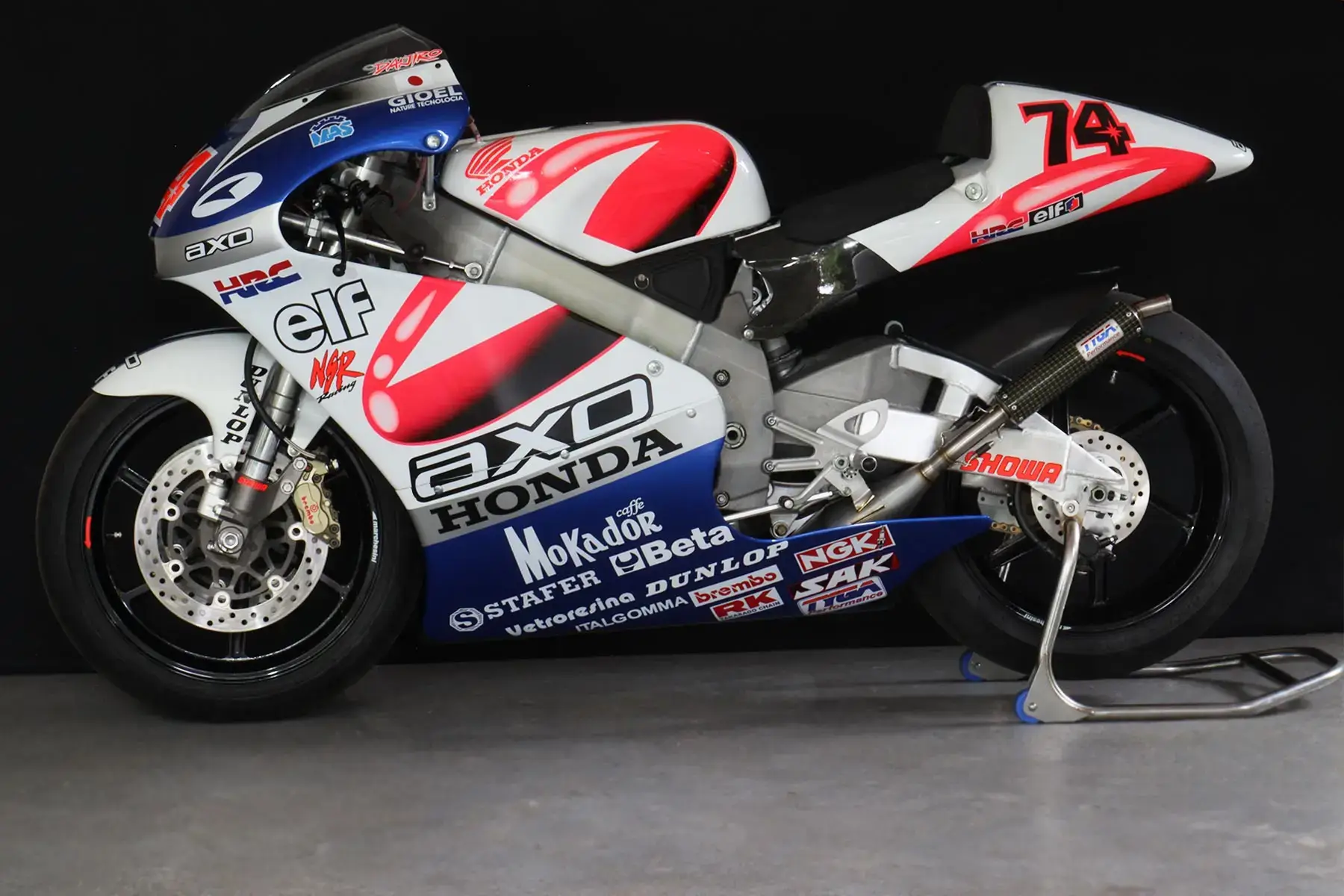
Frankly speaking, I don’t think we will be swamped with orders for NXA parts. By 2001, Honda had pretty much given up with two strokes and the championships which were feeding the World series were not that popular either. This resulted in very low production numbers. By the end, I believe HRC were down to turning them out in single figures and the last ones were sold in about 2005 which make them rare and collectable today. They represent the pinnacle in Honda two stroke design and deserve a very special place in TYGA Performance’s line up and hopefully inspire some products for other models in the future too. For me, they are interesting too for a much more practical reason and that is that the NXA is a substantially larger bike than the previous RS250s and I can actually fit on one which is not the case for the NF5 which I found very cramped when I rode it around Bira circuit.
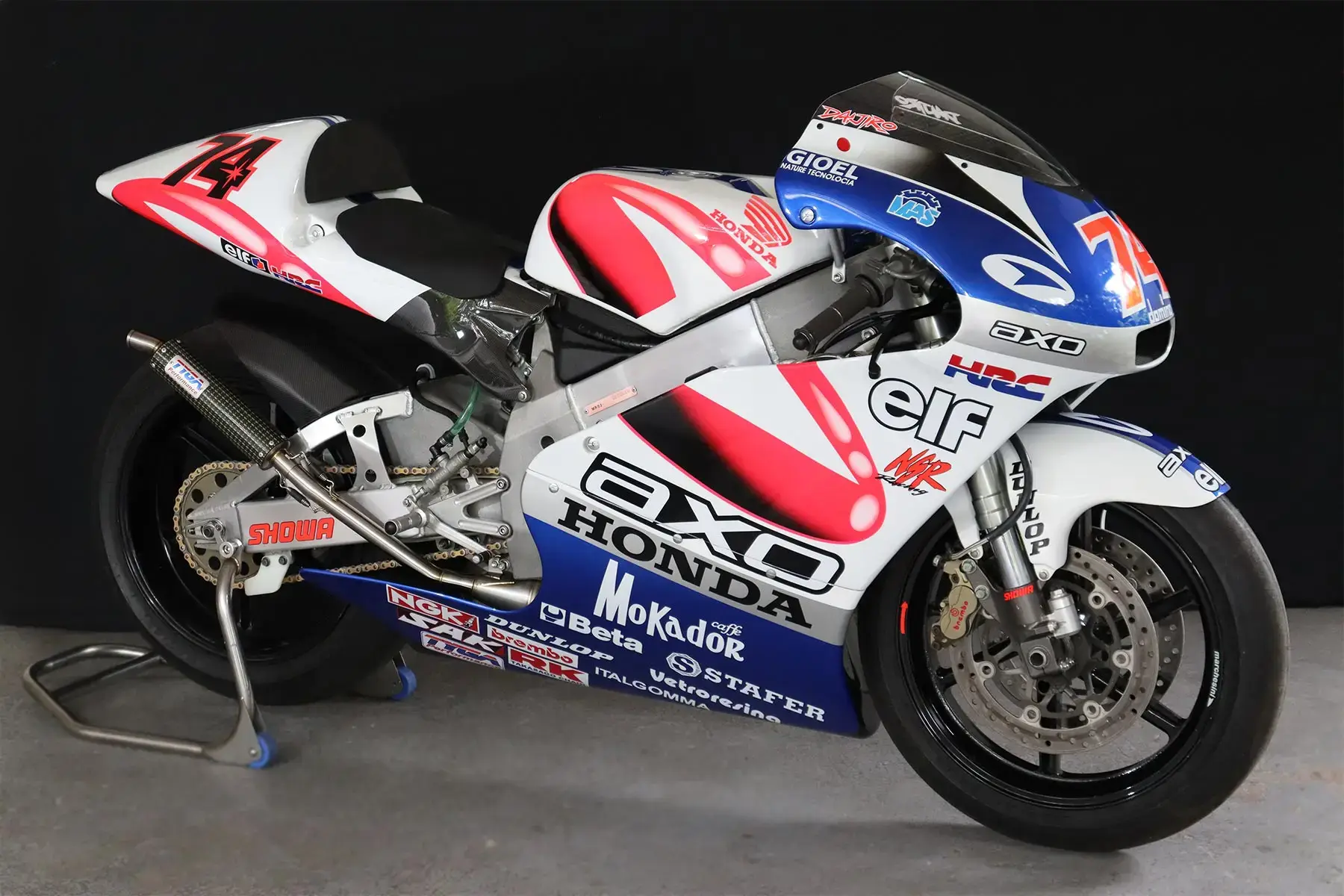
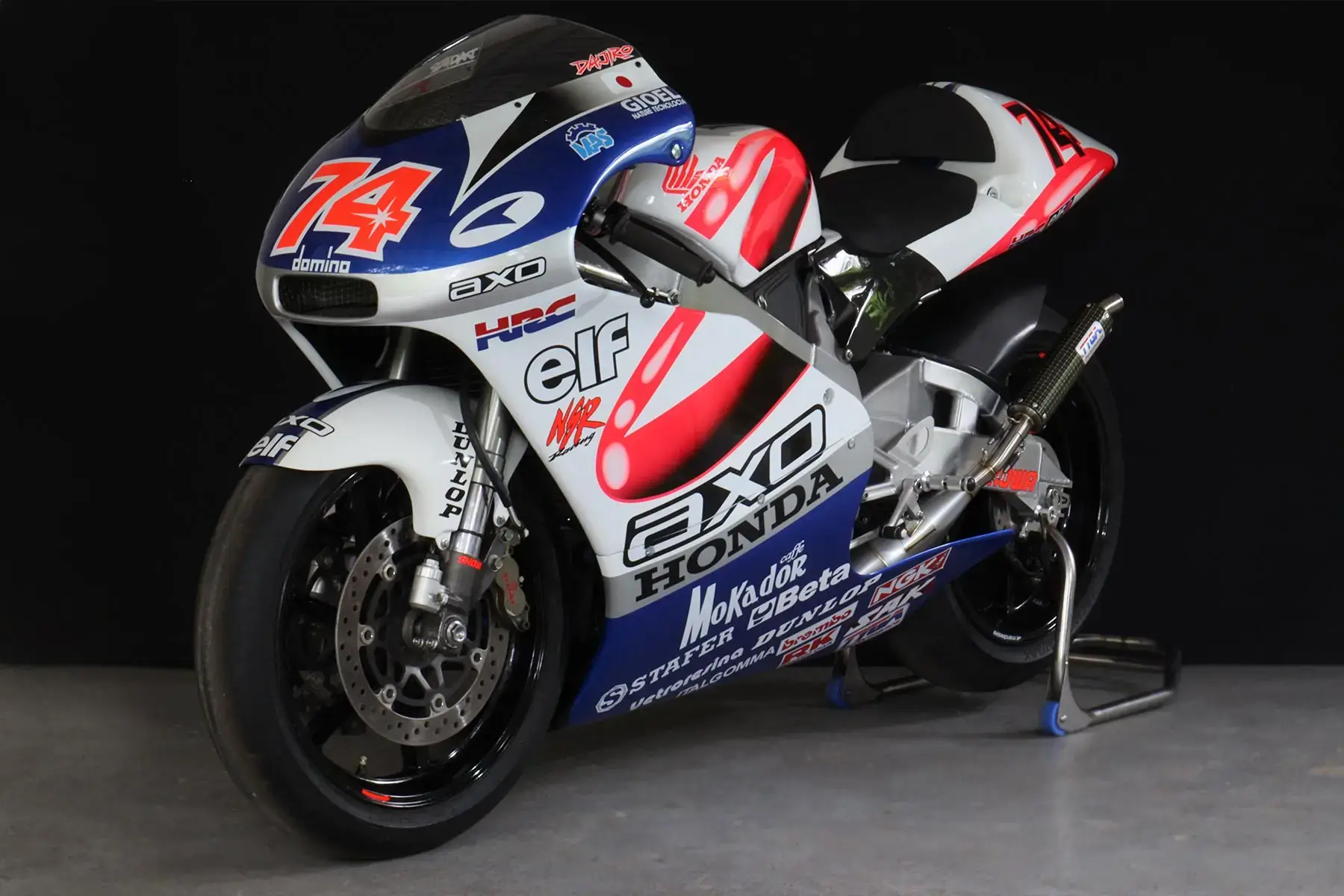
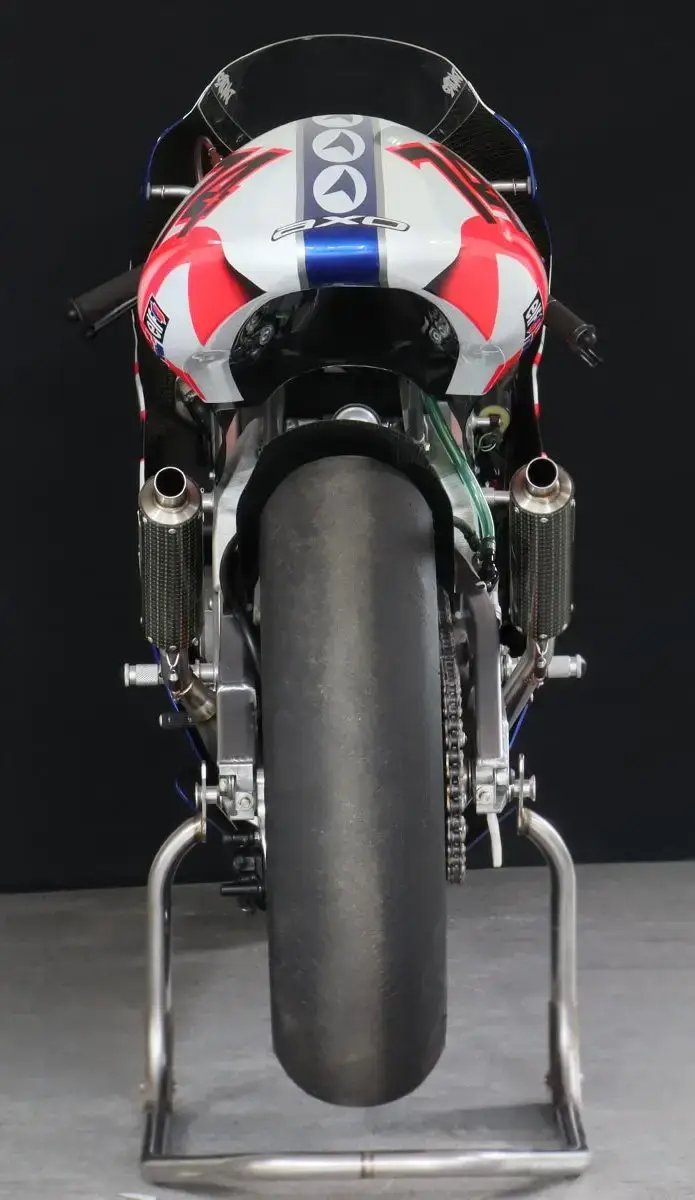
The bike you see here is an early 2002 model, not that HRC updated it much over the years. There was an upgrade to the engine in 2002 and a change to multi spoke wheels along the way, but that was about it. Being TYGA Performance, we obviously didn’t leave it completely stock and there is list of parts we used if you scroll below. The primary focus of the project was to showcase the painted bodywork and the exhausts; the latter we will come to later. The bodywork shape is more or less stock for an NXA, though there does appear to be different versions of the fairings produced. Maybe a reader can explain the difference. The shape of our fairing and seat cowlings were modelled from panels that we rescued from a dumpster in Sepang in 2003. We sincerely thank the Troll BQR Team for crashing twice that weekend and conveniently damaging different sides of the panels so we still had enough pristine material on the other sides to make our molds.
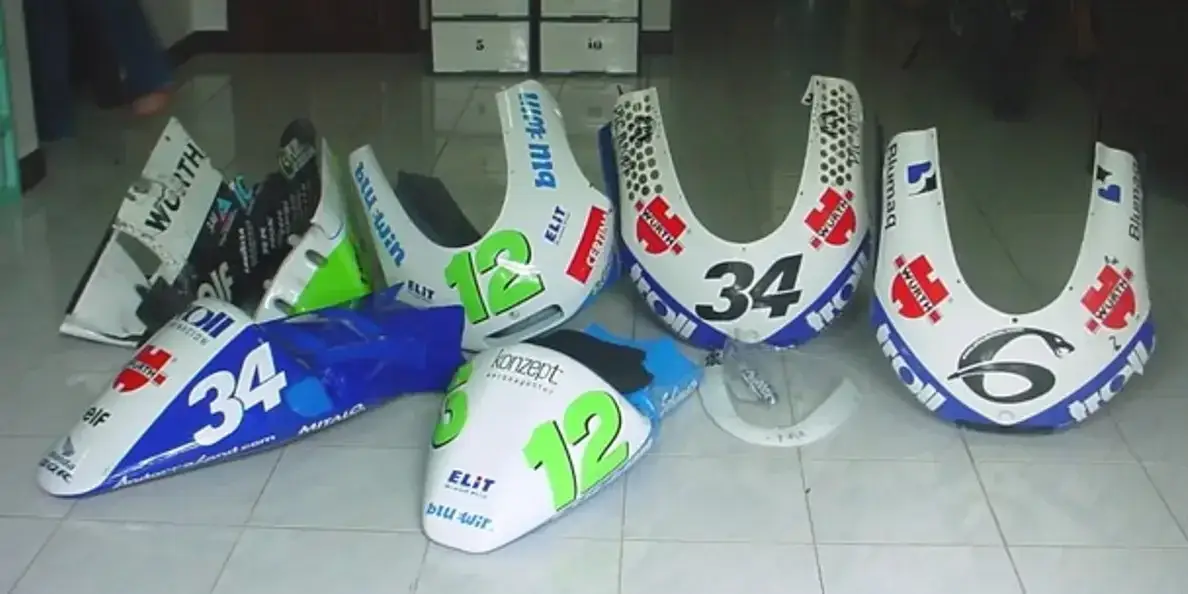
When comparing their team panels with other stock ones that we have supplied with the bike, it tends to have a flatter nose and the seat cowling is filled in on the underside all the way forward under the PGM for a streamlined and attractive tail.
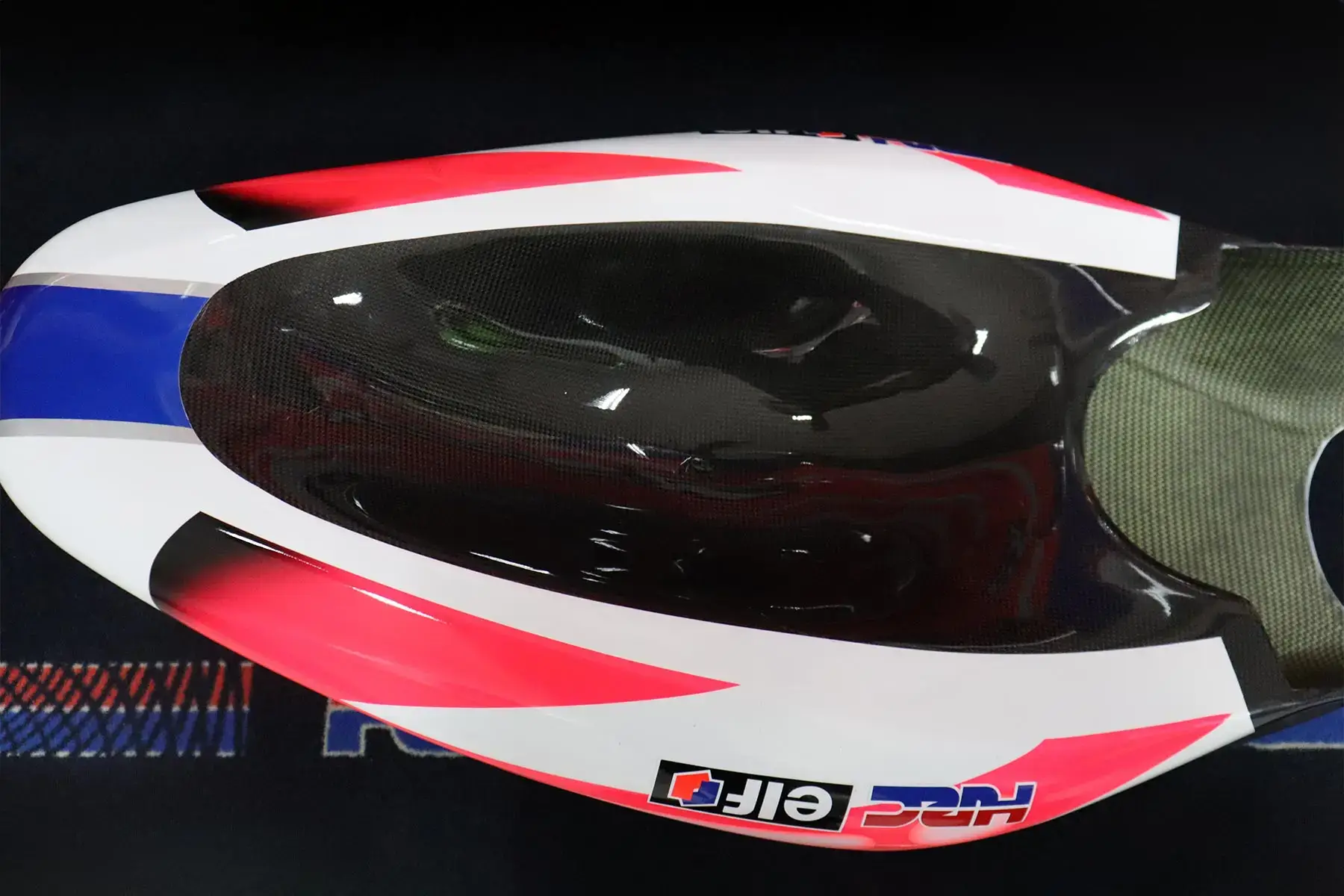
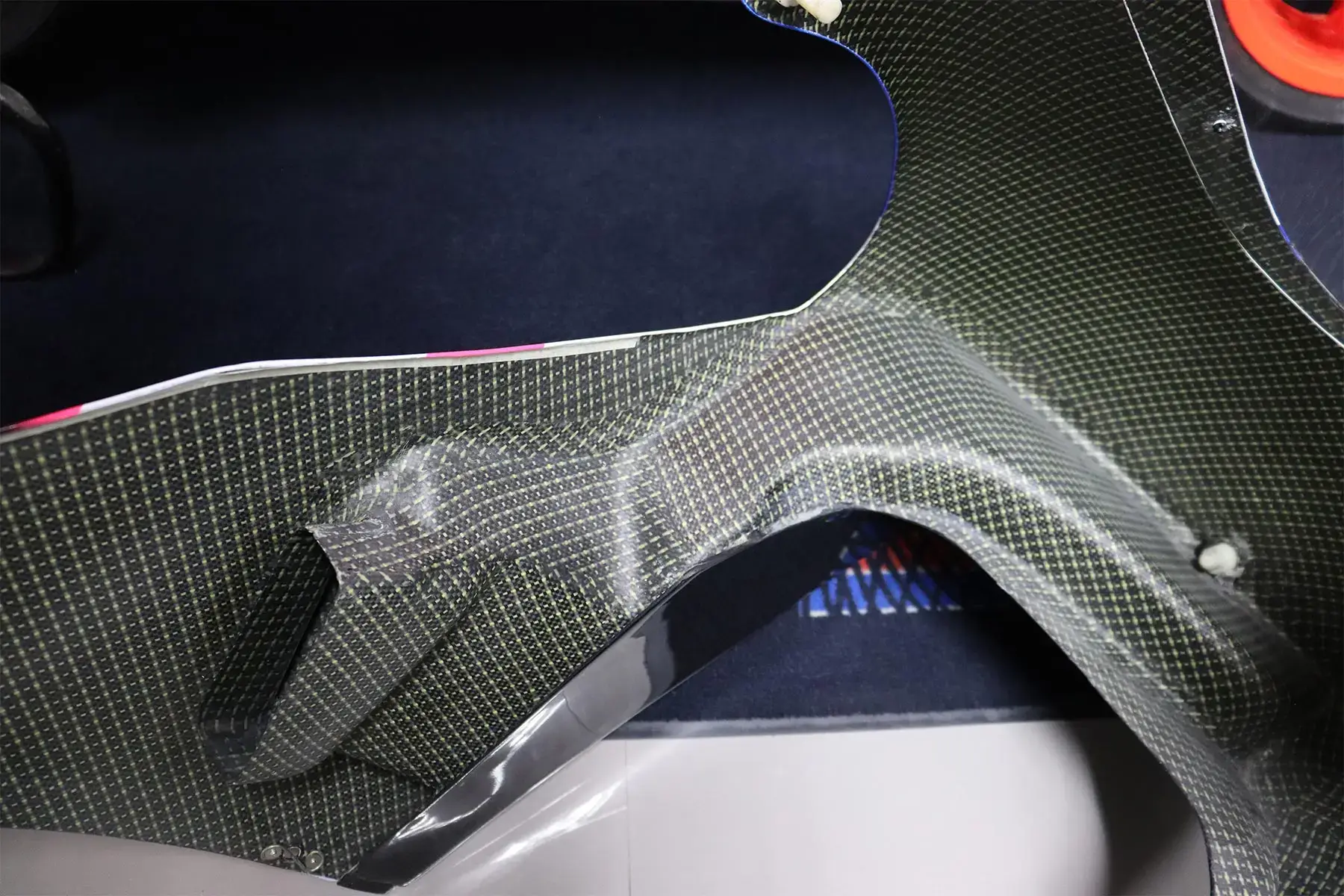
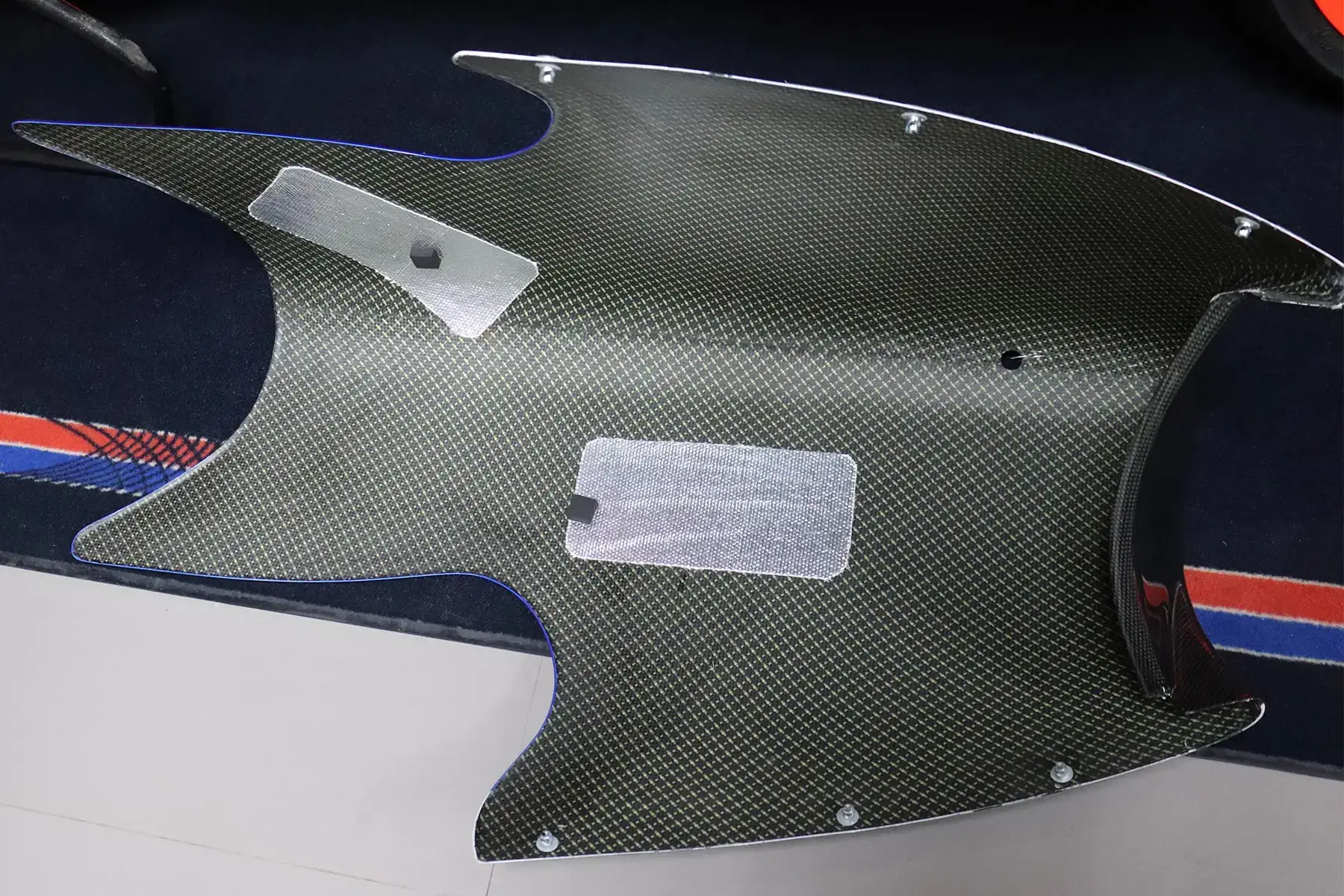
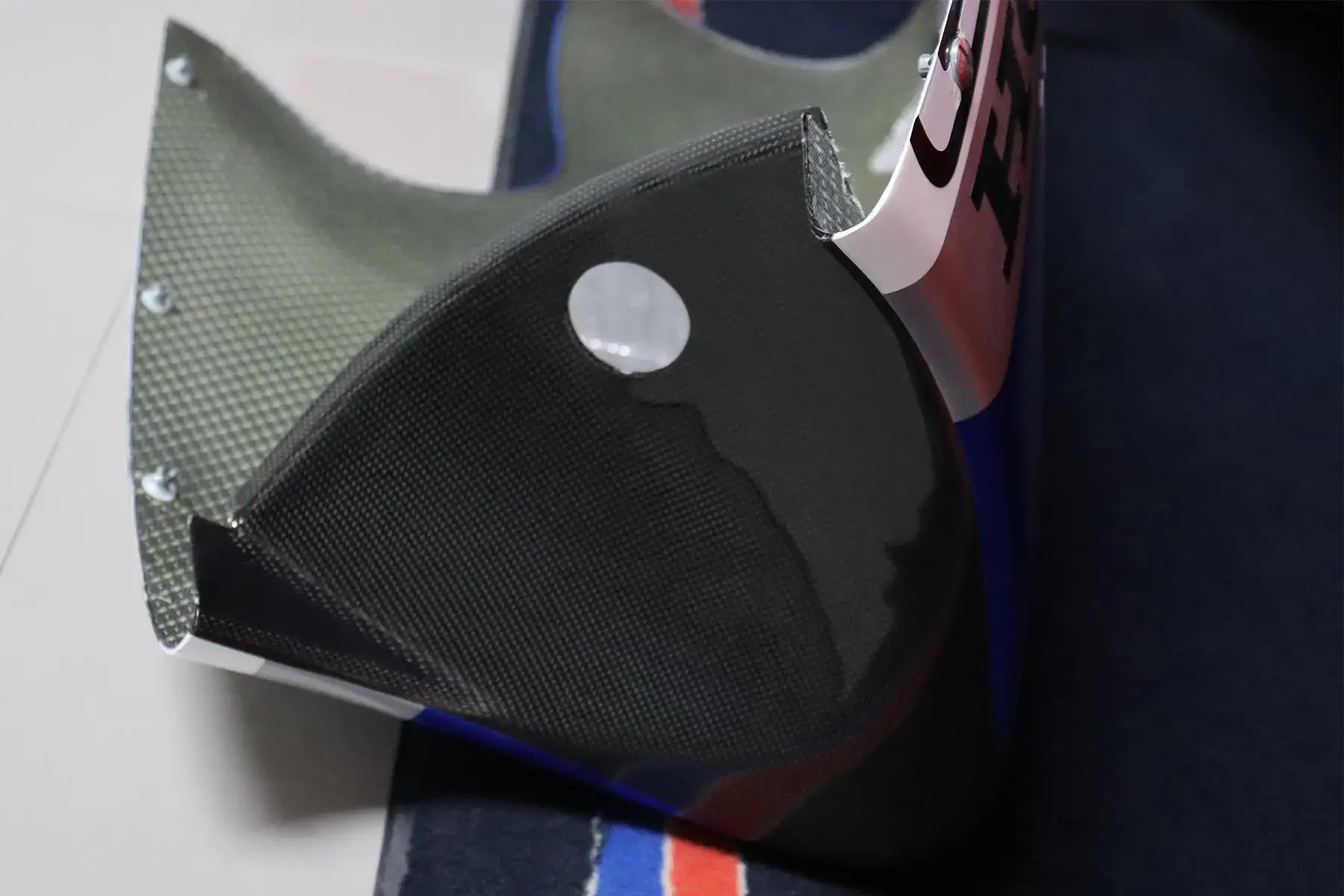
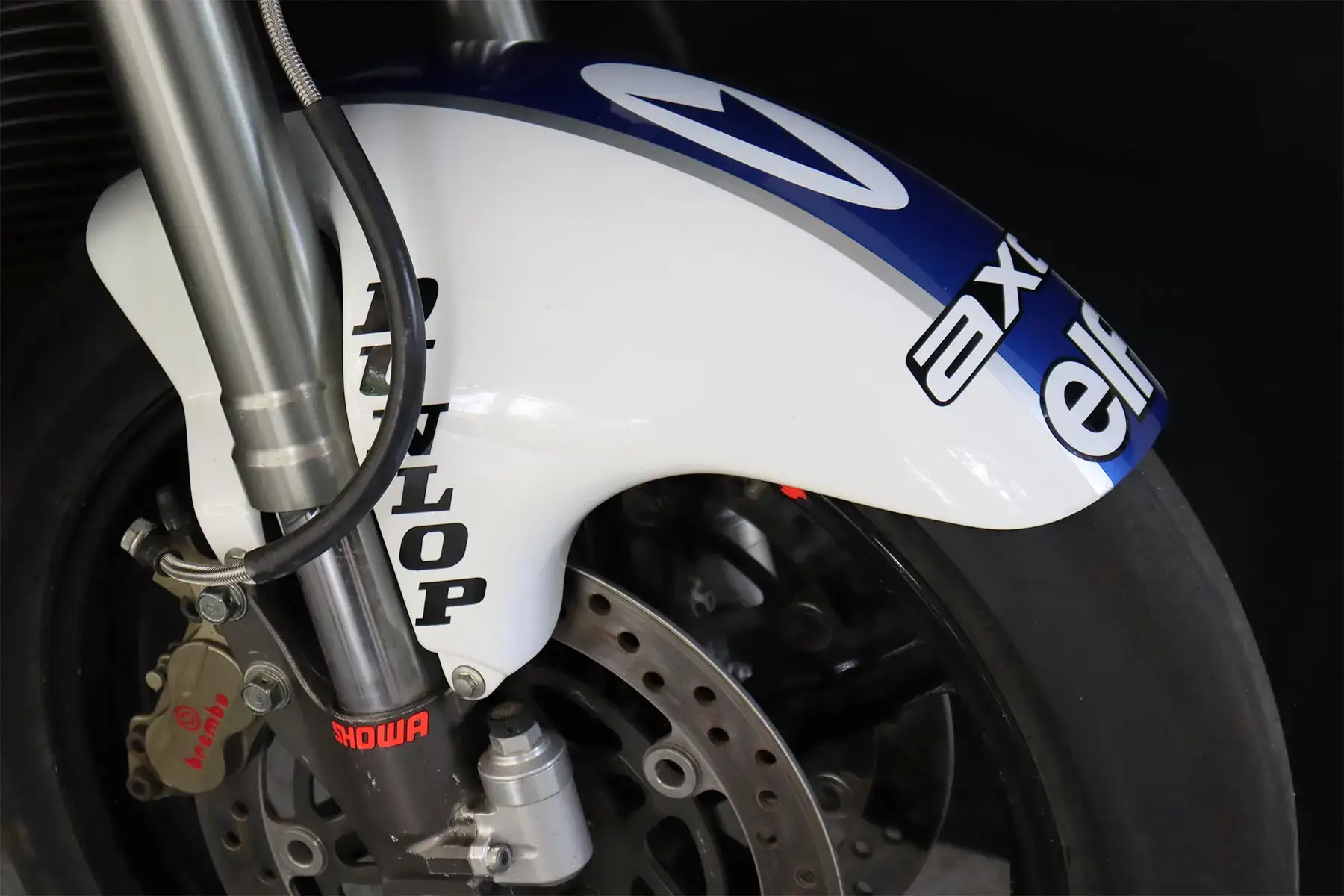
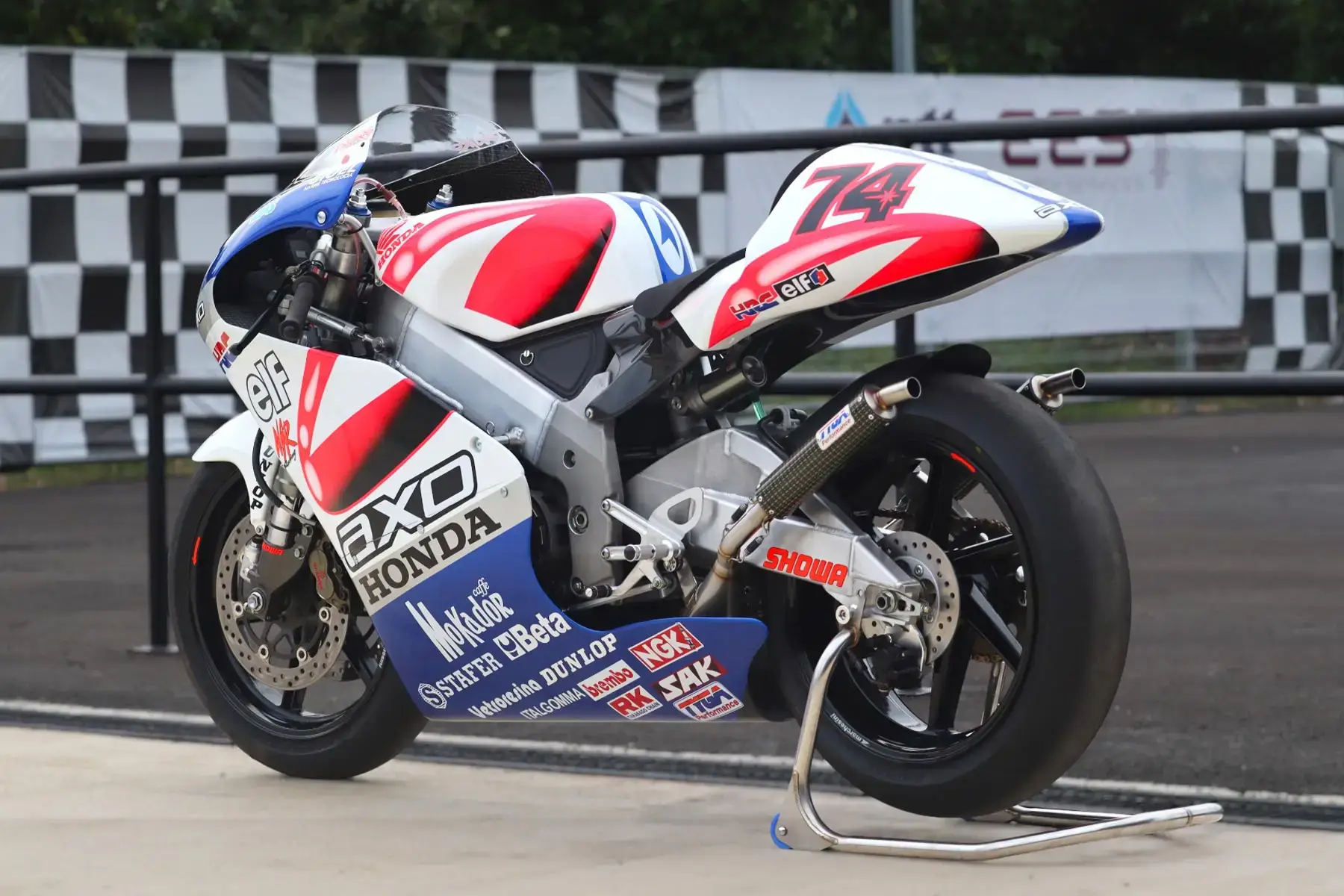
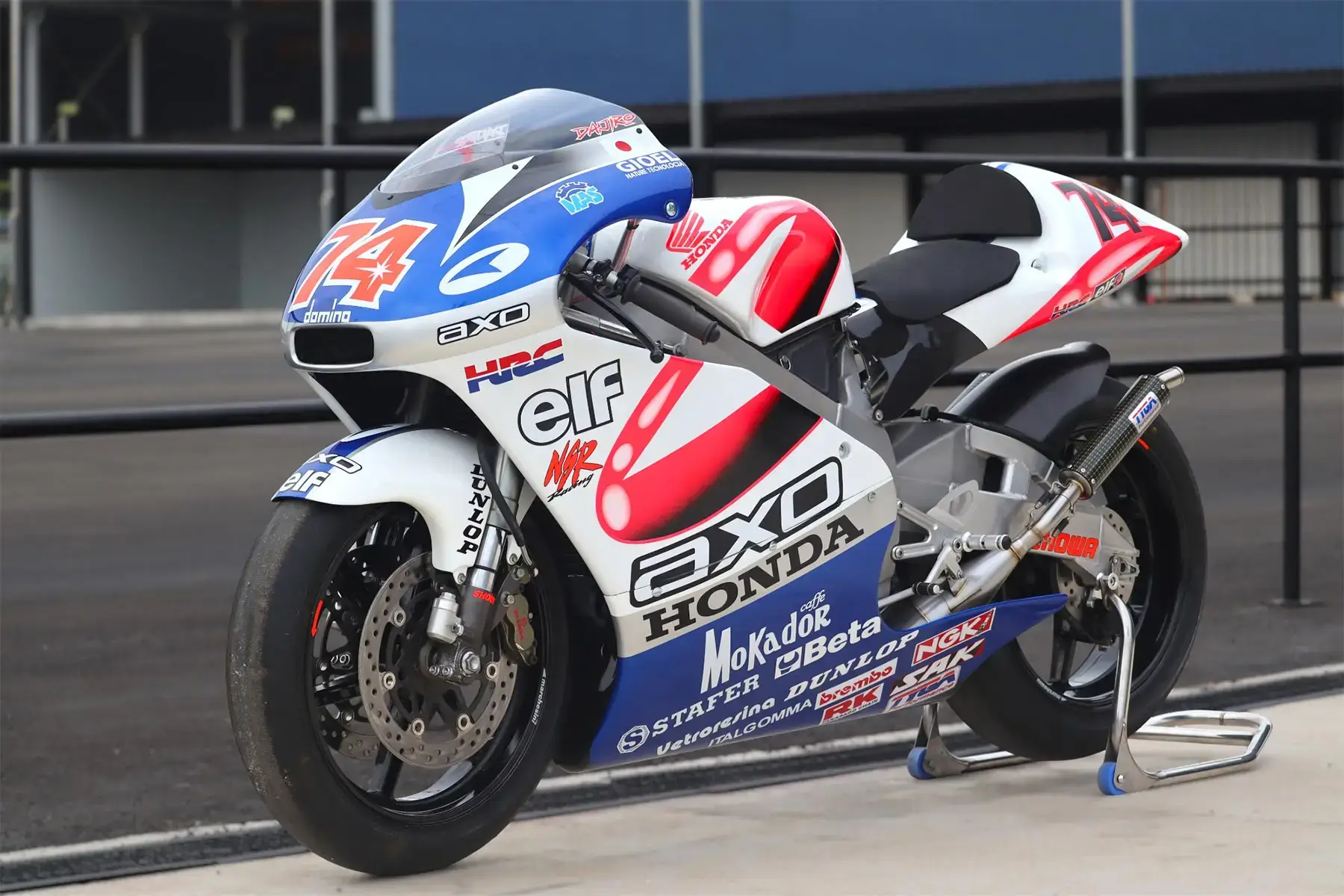
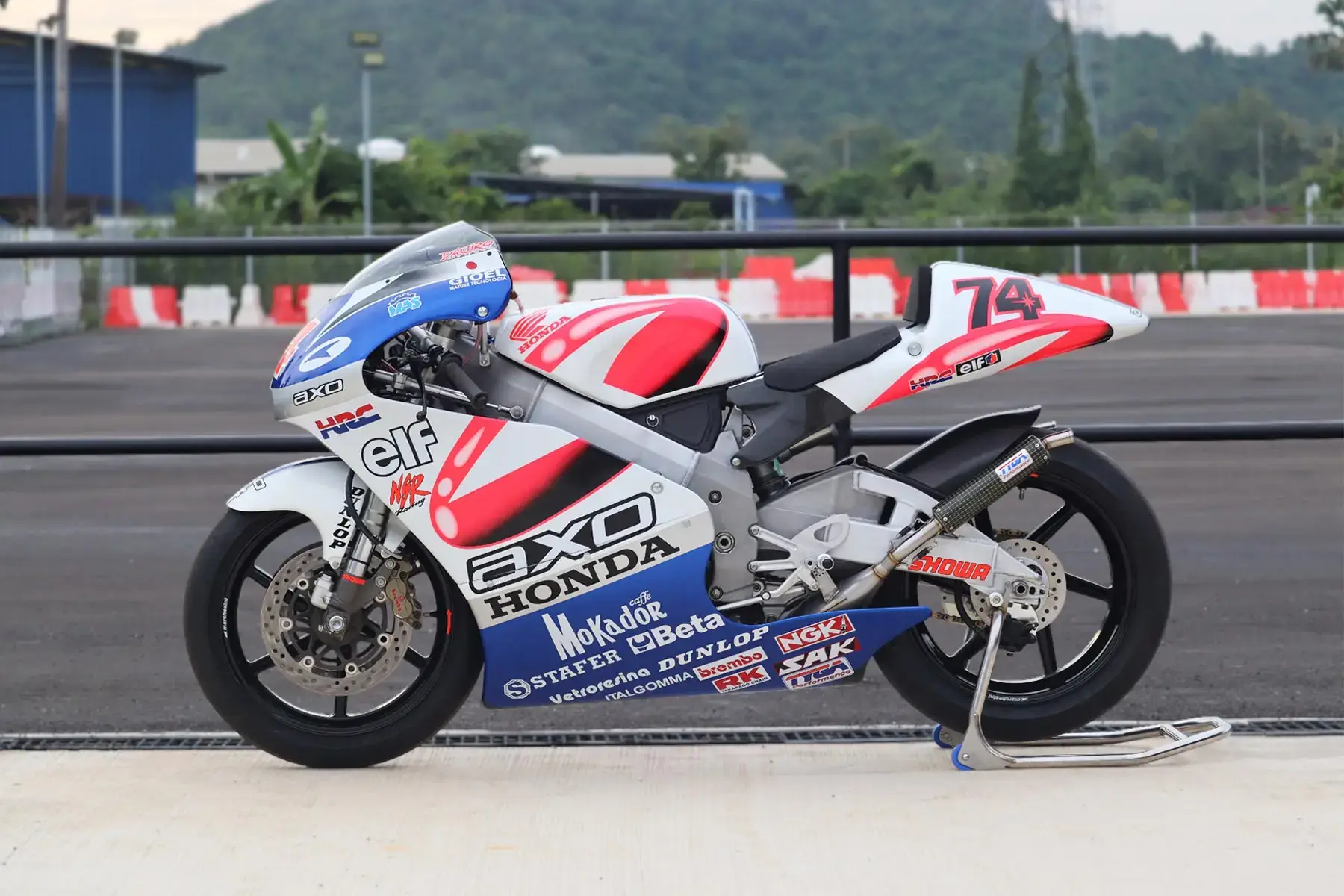
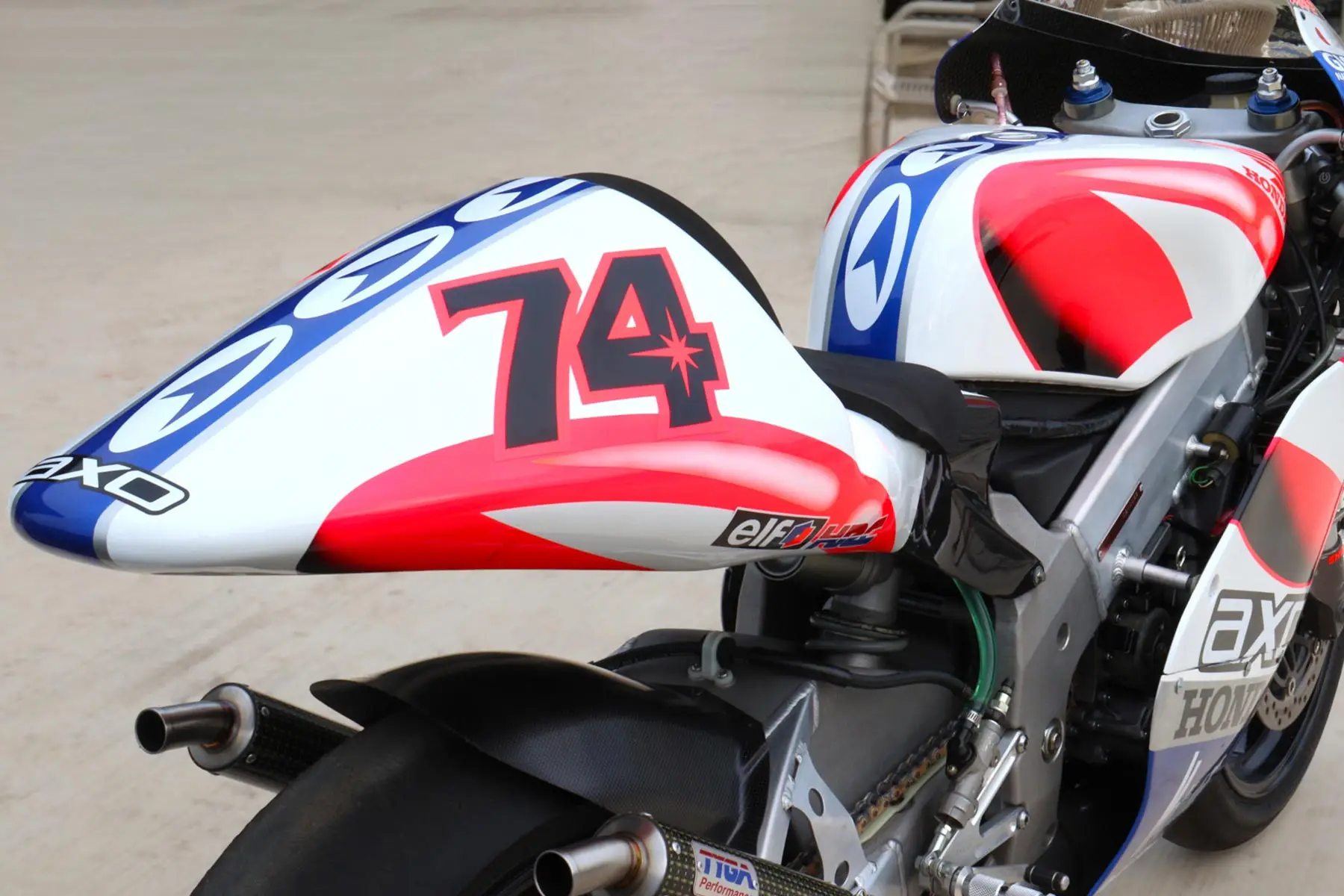
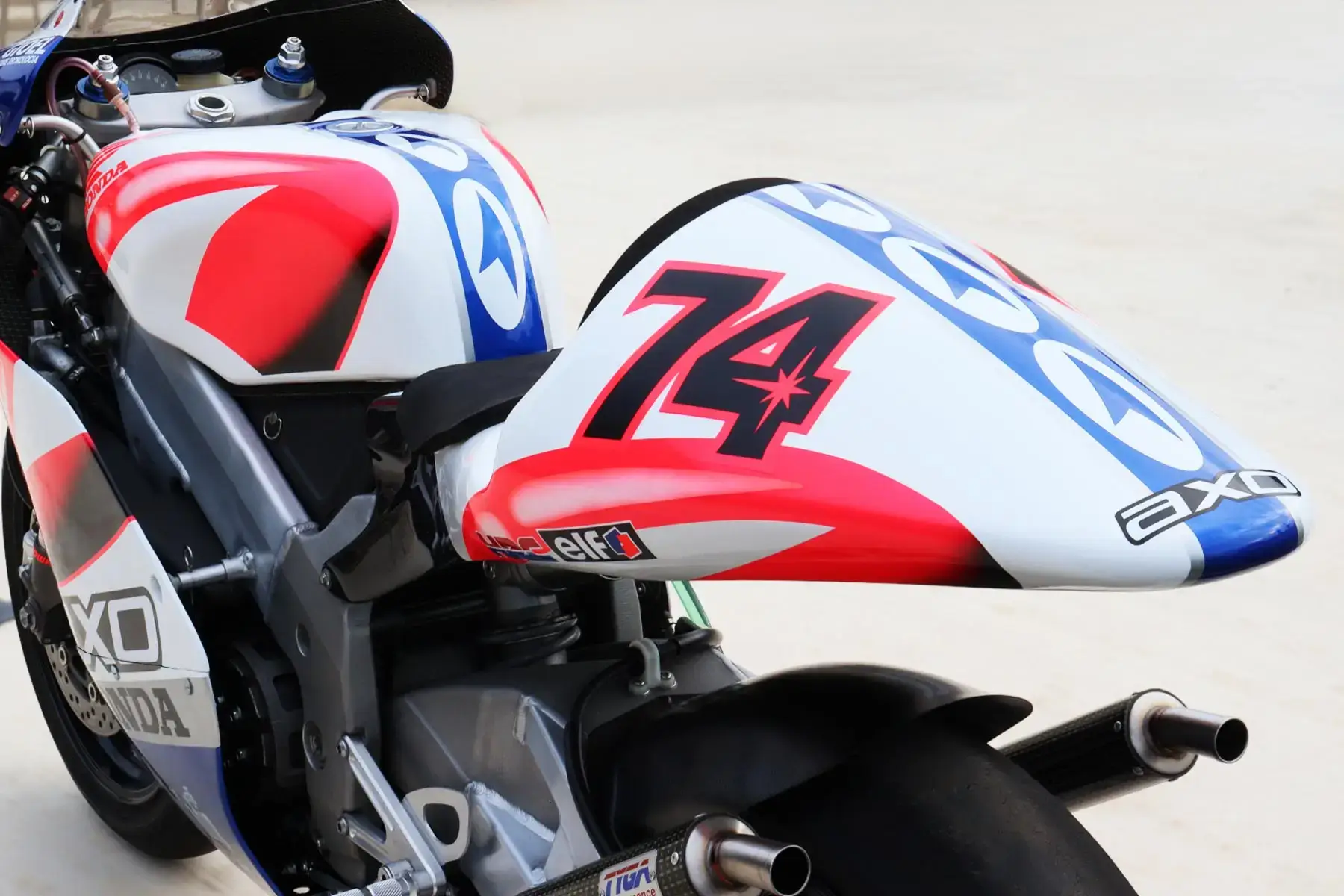
Having made molds from Debon’s broken eggshell panels, and put the bodywork into production a few years ago, we chose to use the carbon version of this bodywork for our project. We went with the option of having the inside finished in the ‘special’ Kevlar weave as used by HRC for a factory. Even though it was to be painted, we wanted some carbon showing on the outside too if at all possible. Luckily for us, the Kato Axo scheme actually leaves the carbon exposed on the bottom of the belly and we extended the bare carbon to the inner cowling area too. Likewise, the seat cowling, we have left the enclosed underside part in carbon weave to give it a bit of a special look.
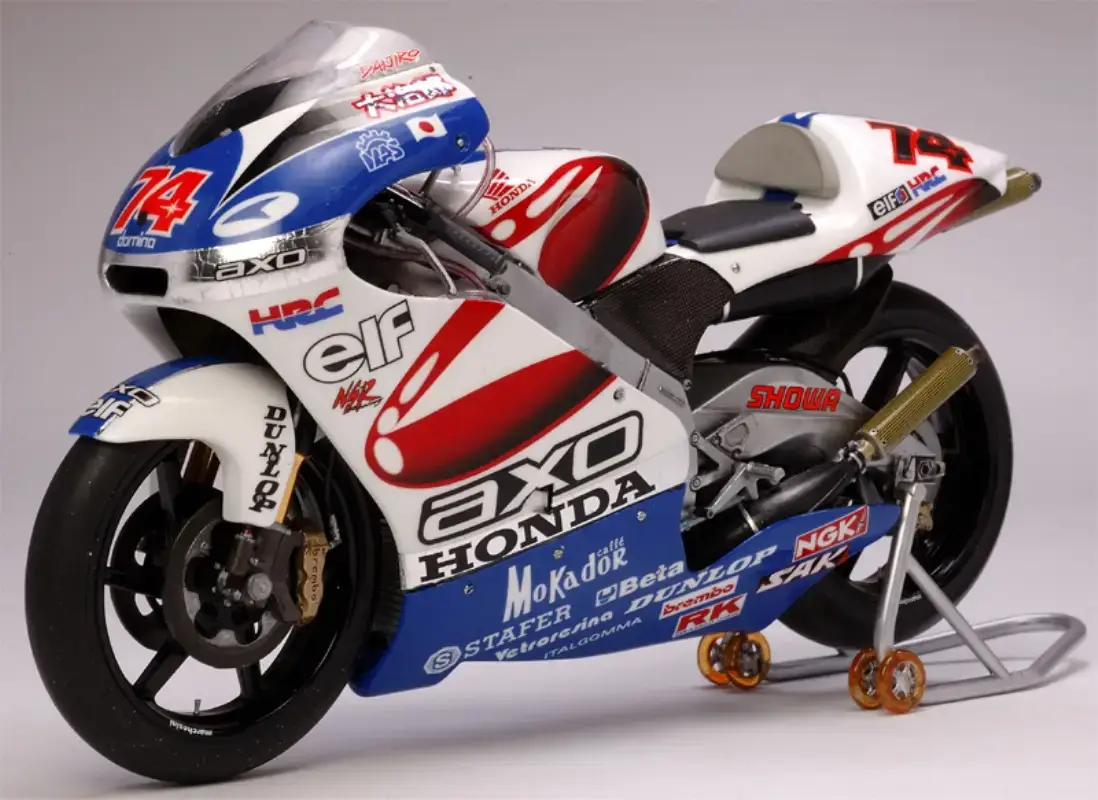
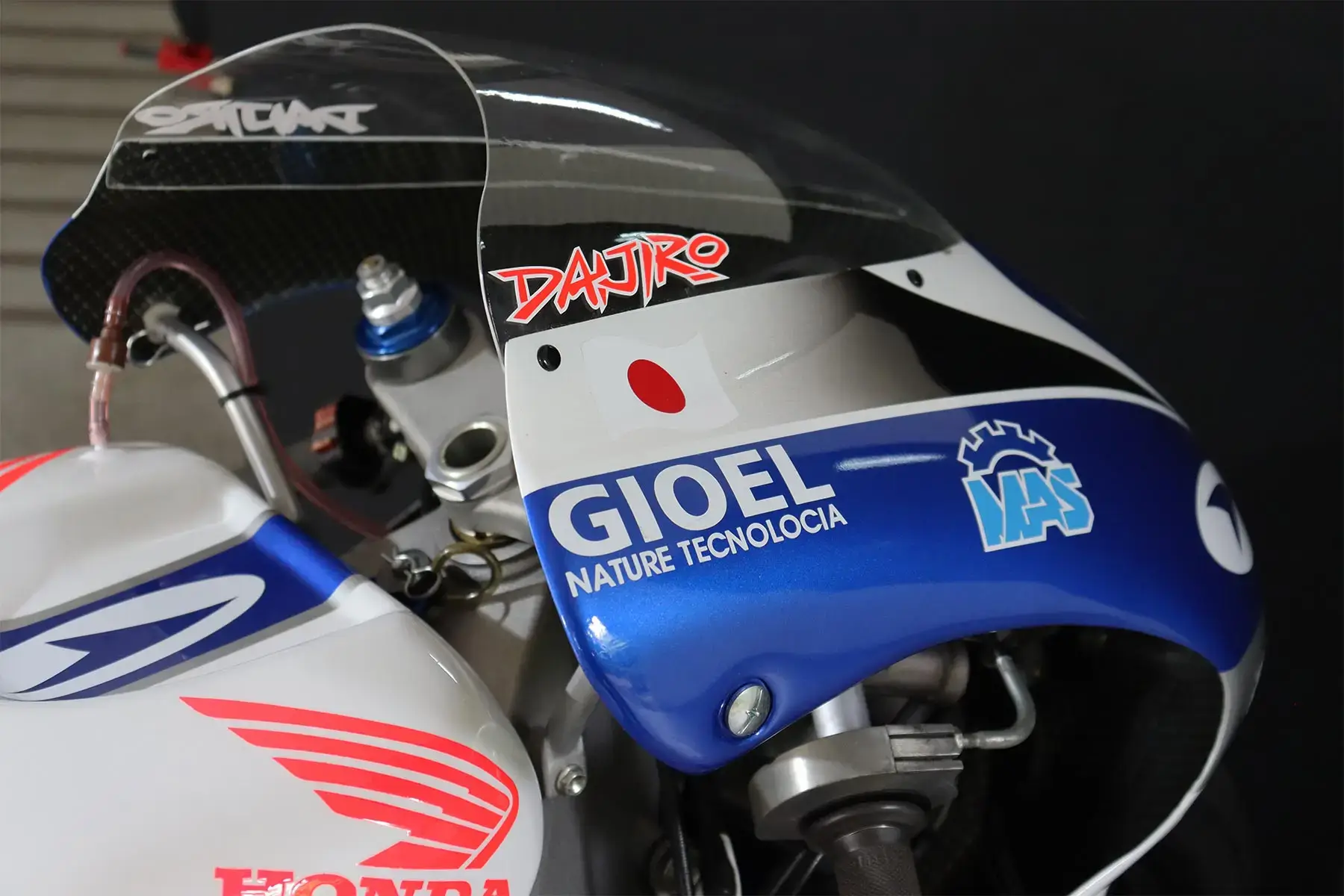
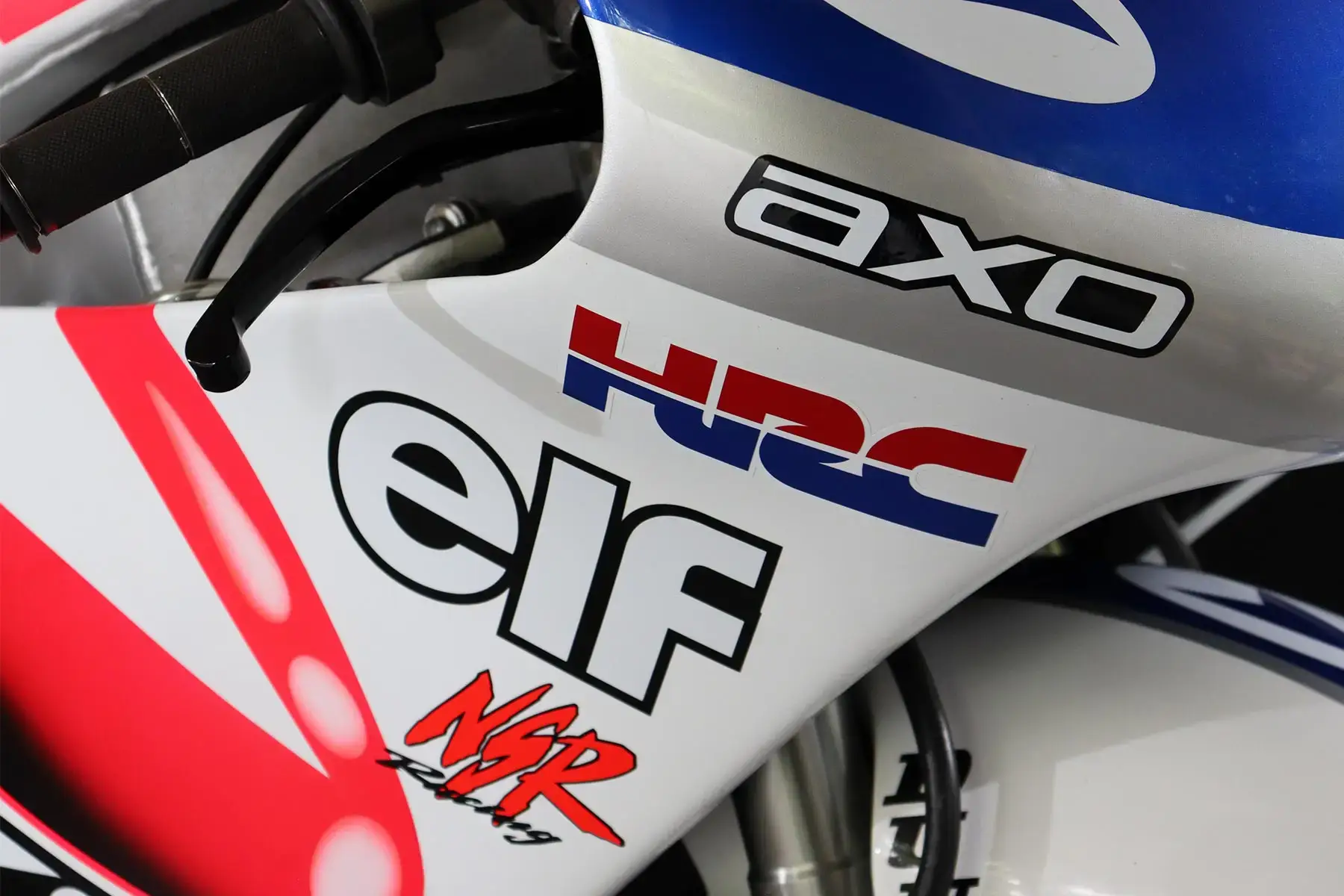
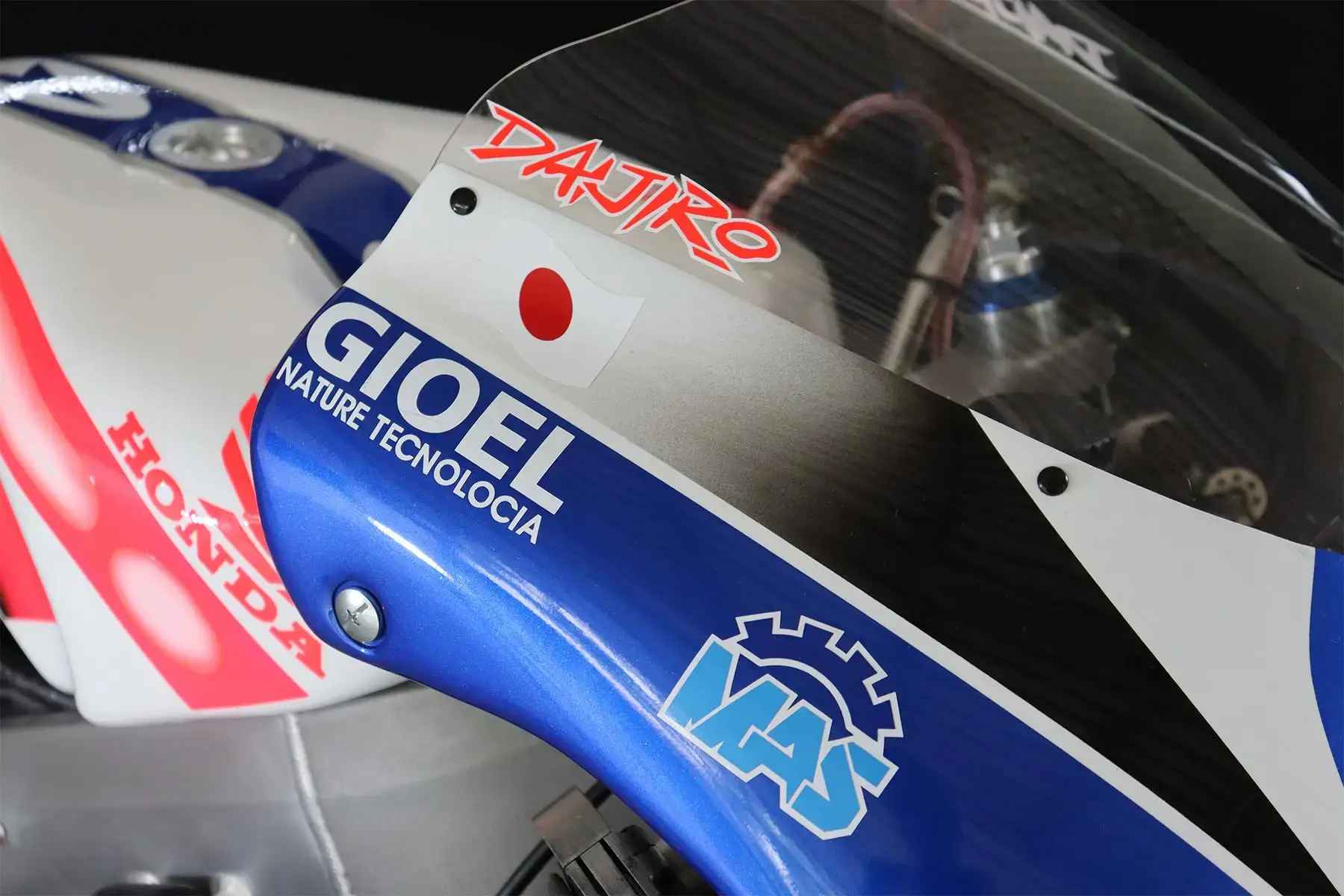
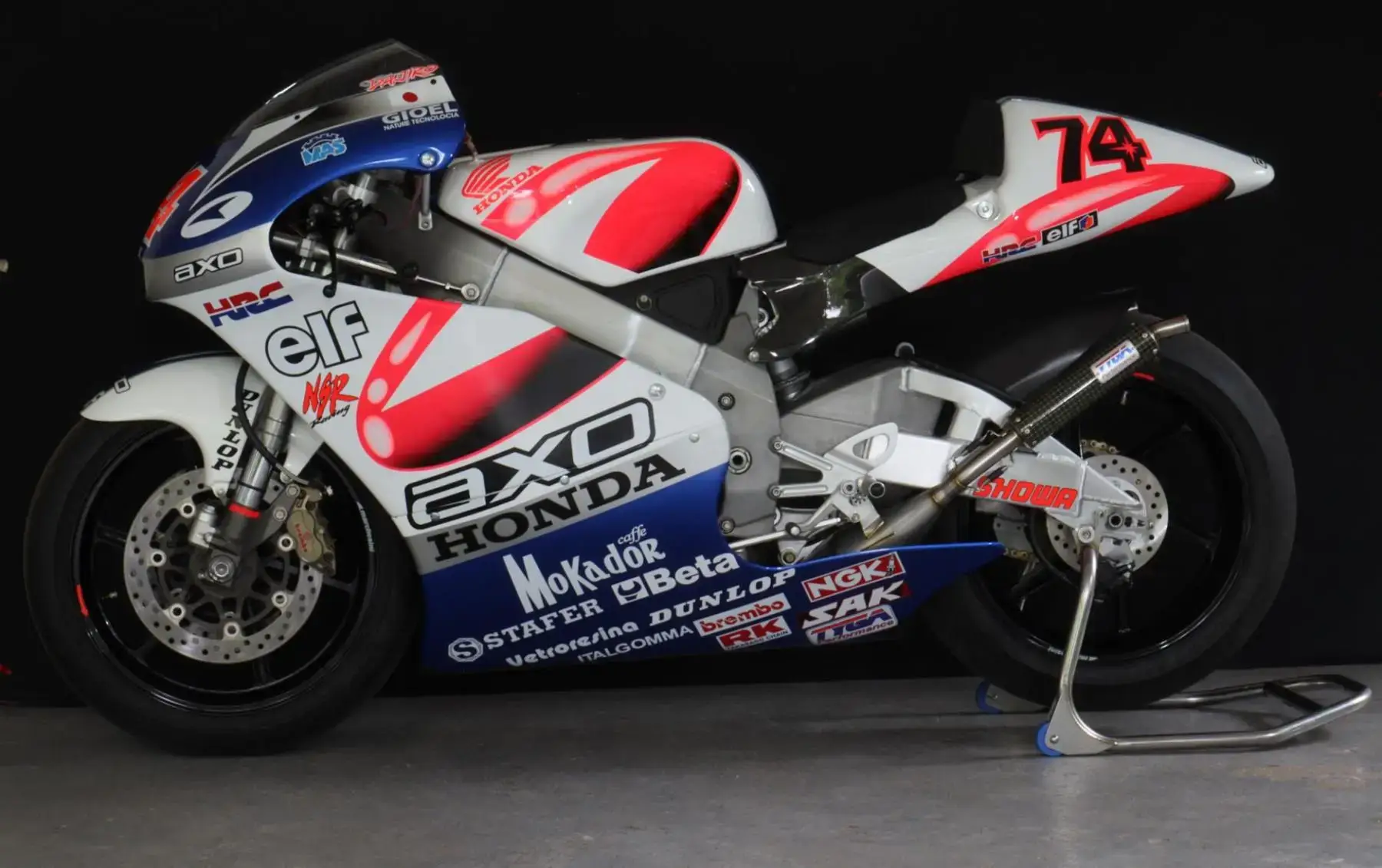
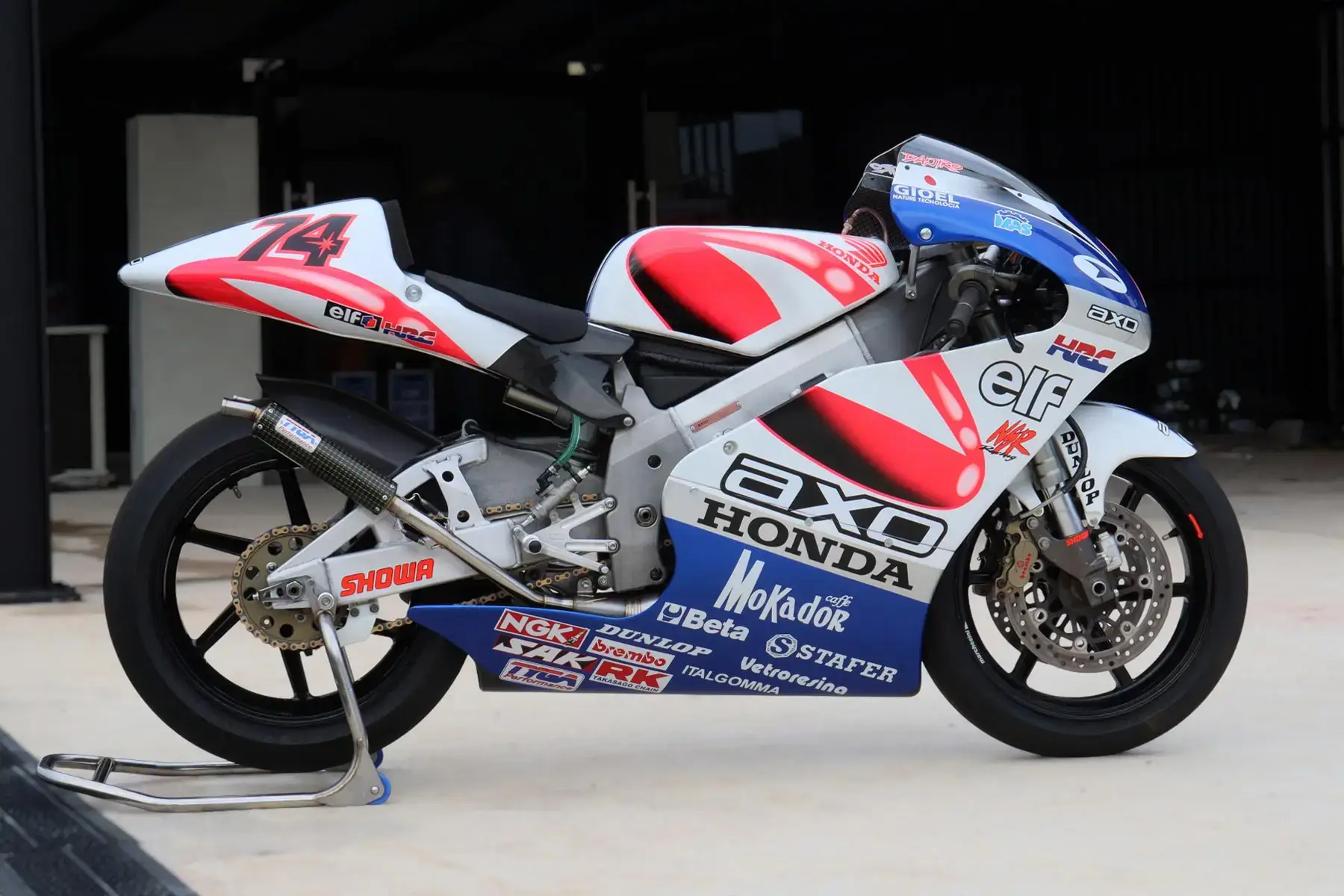
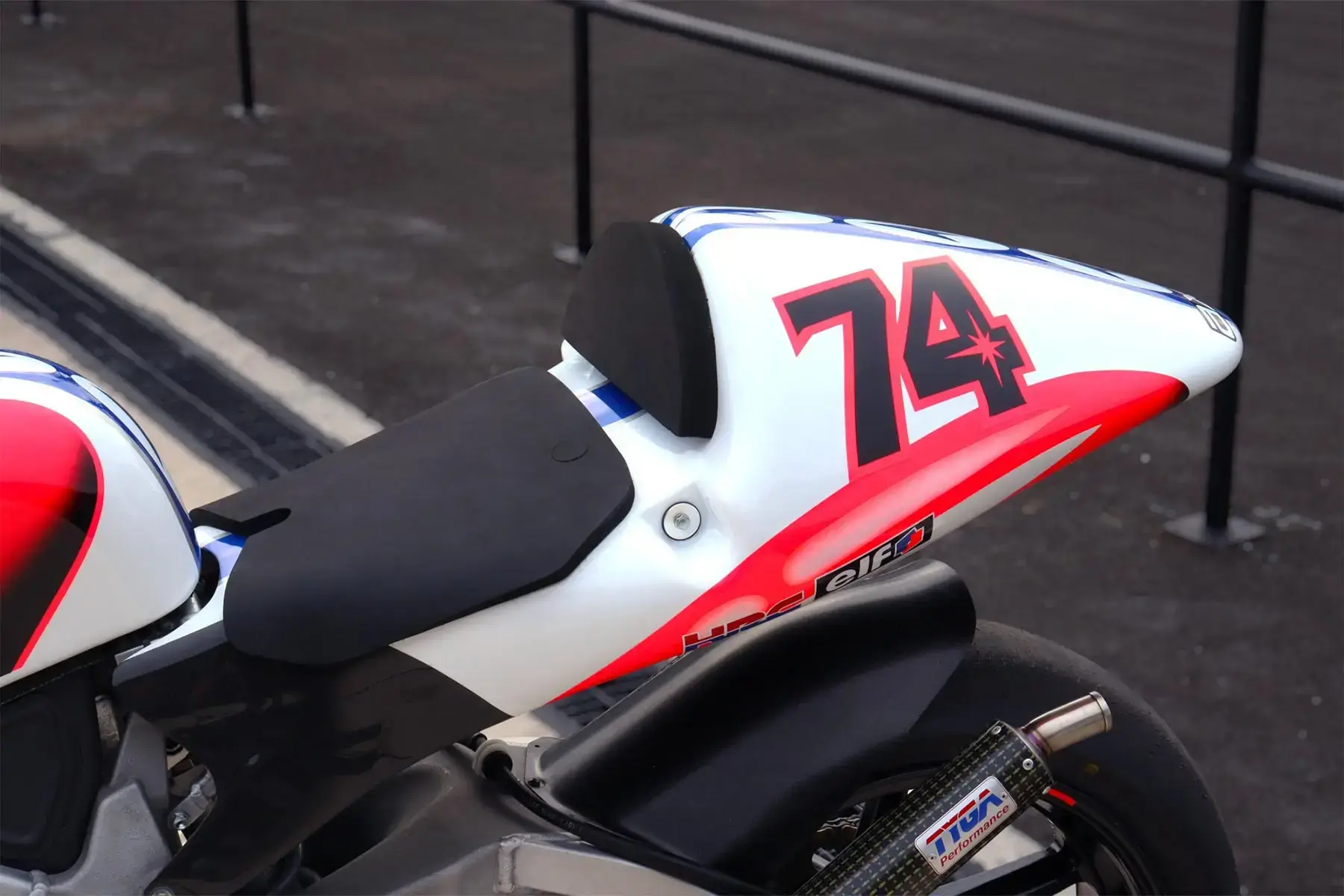
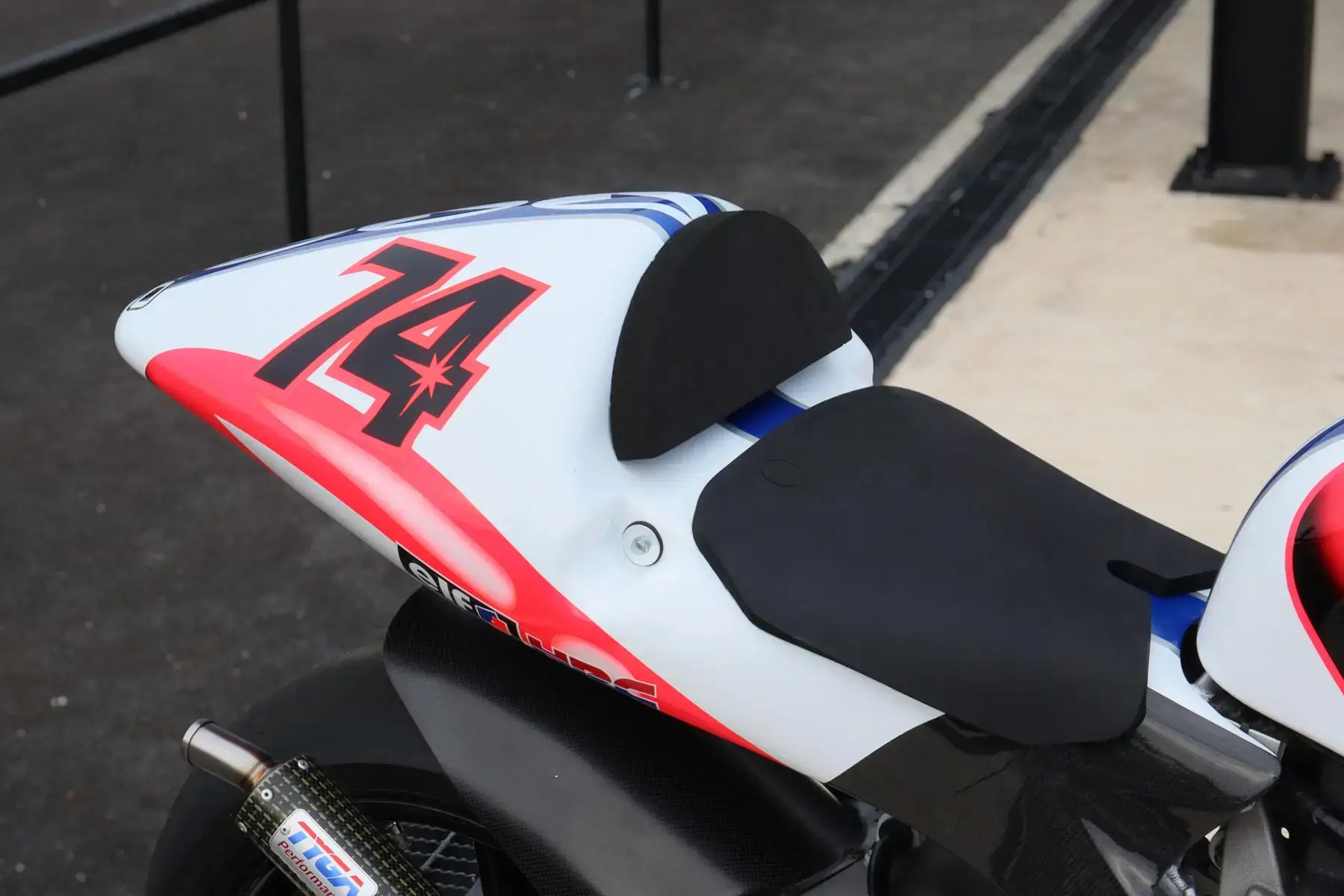
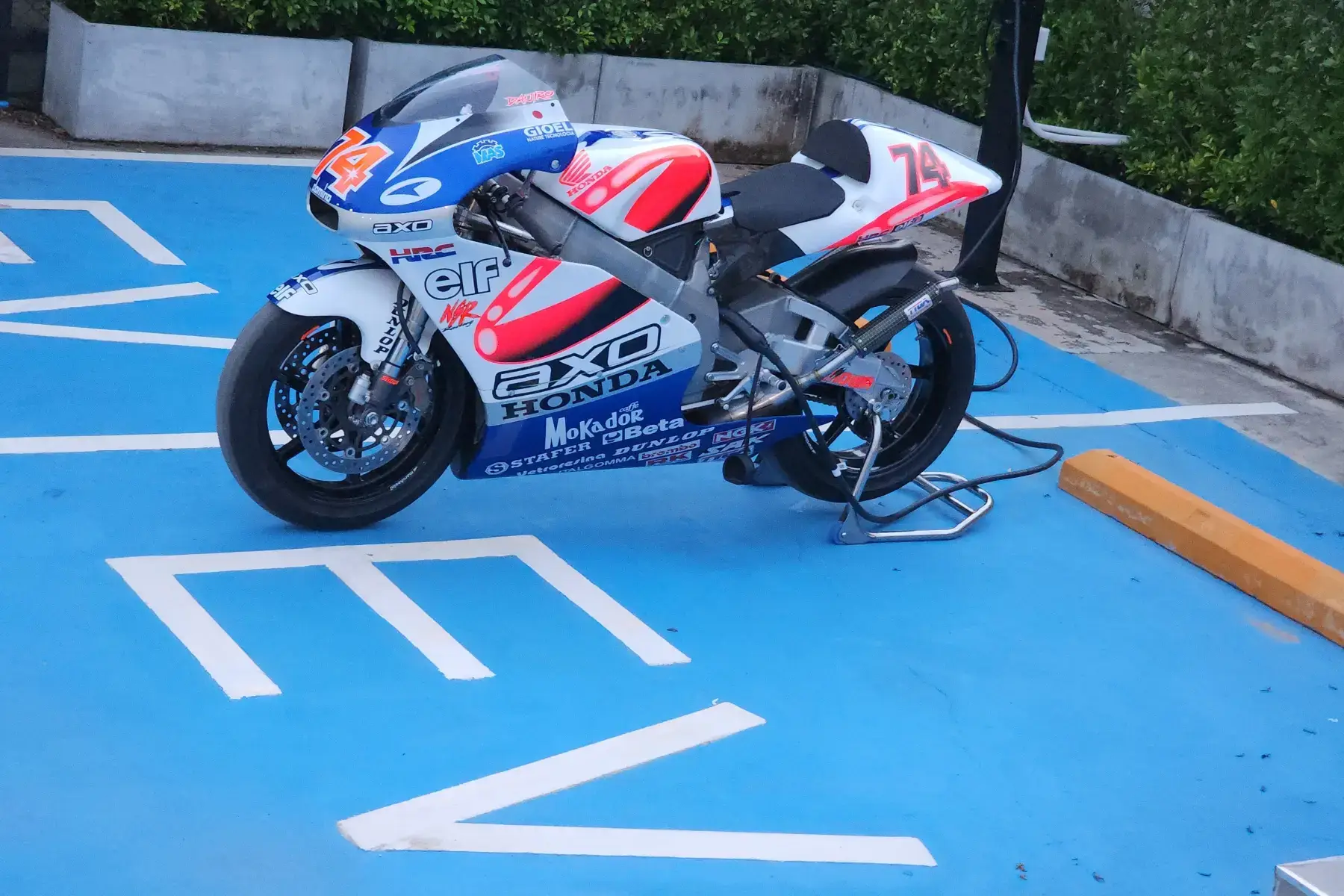
I suppose we should discuss more about the paint scheme before going much further. We are usually pretty confident and able to achieve a high level of accuracy but the AXO turned out being our most challenging one to date. The Axo scheme is one of those schemes that while once being well known and well liked back in the day, it is rarely copied. There are loads of Repsol, Telefonica, Rothmans and even Shell Advance paint jobs. When you do a Google image search for Axo NSR250 or similar, very few bikes appear and a good proportion are either our very own original project or TYGA body kits painted by us or other customers. Interspersed, there are a lot of images of 1/12th scale models of various skill levels and a few pictures of Kato’s actual NSR250.
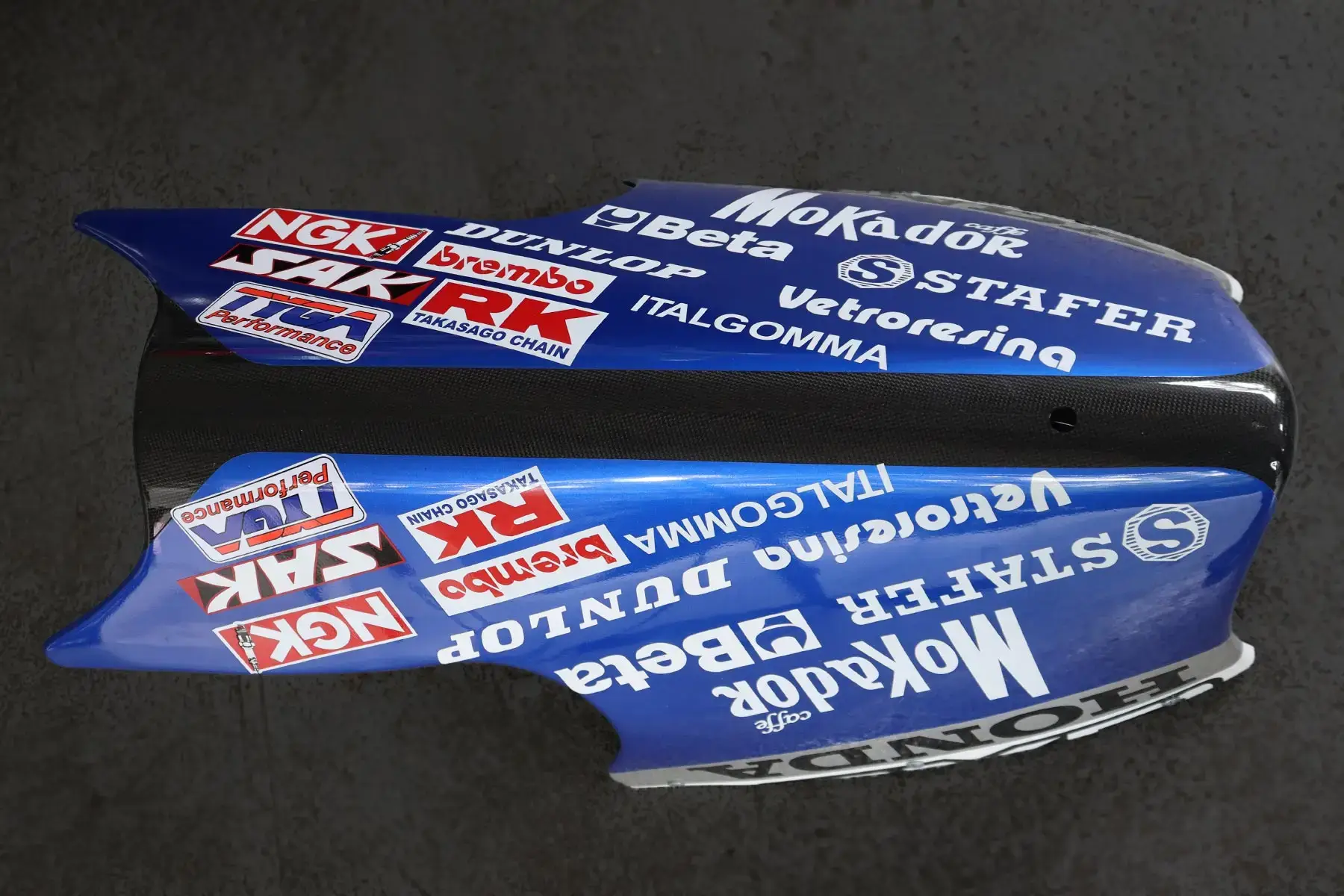
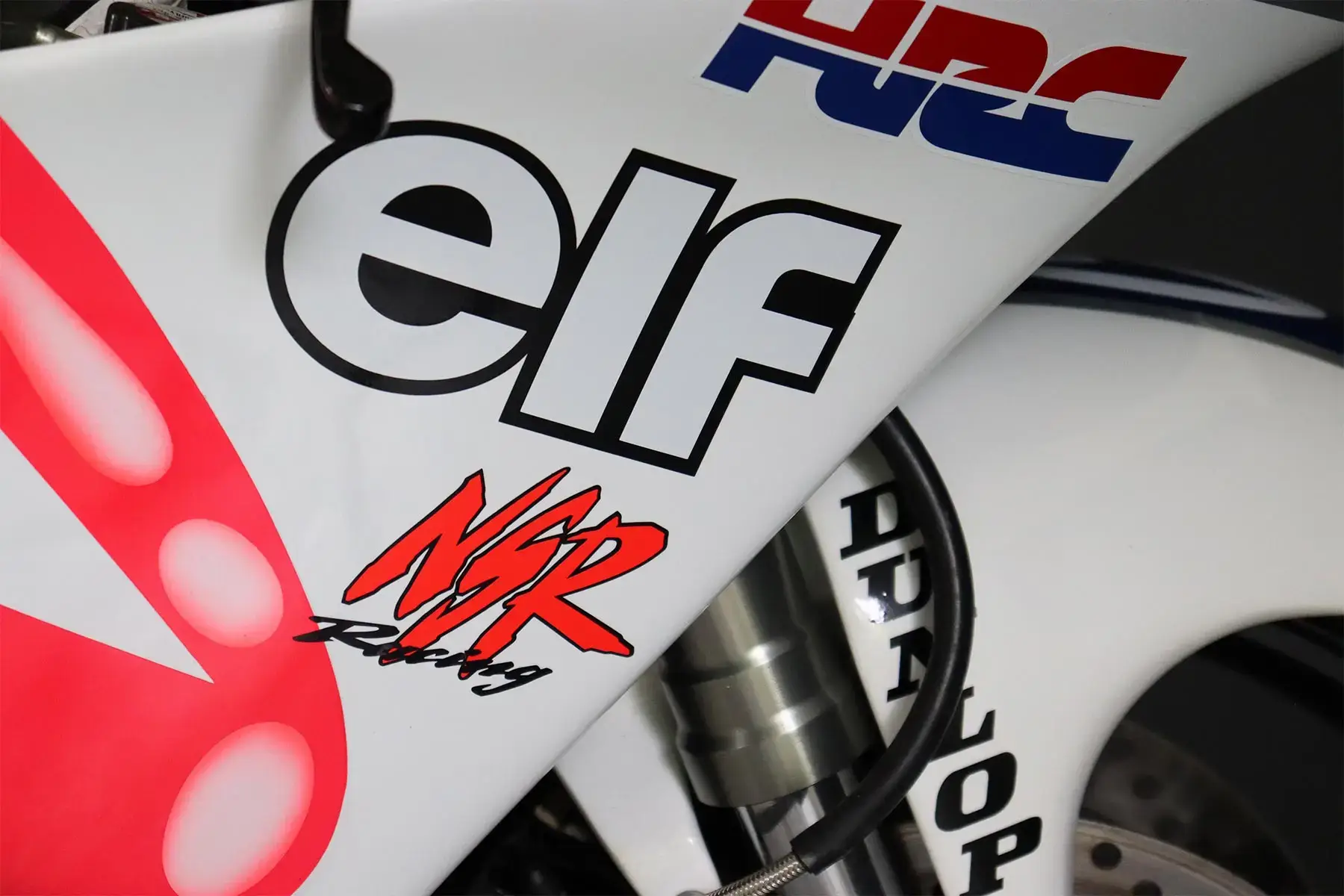
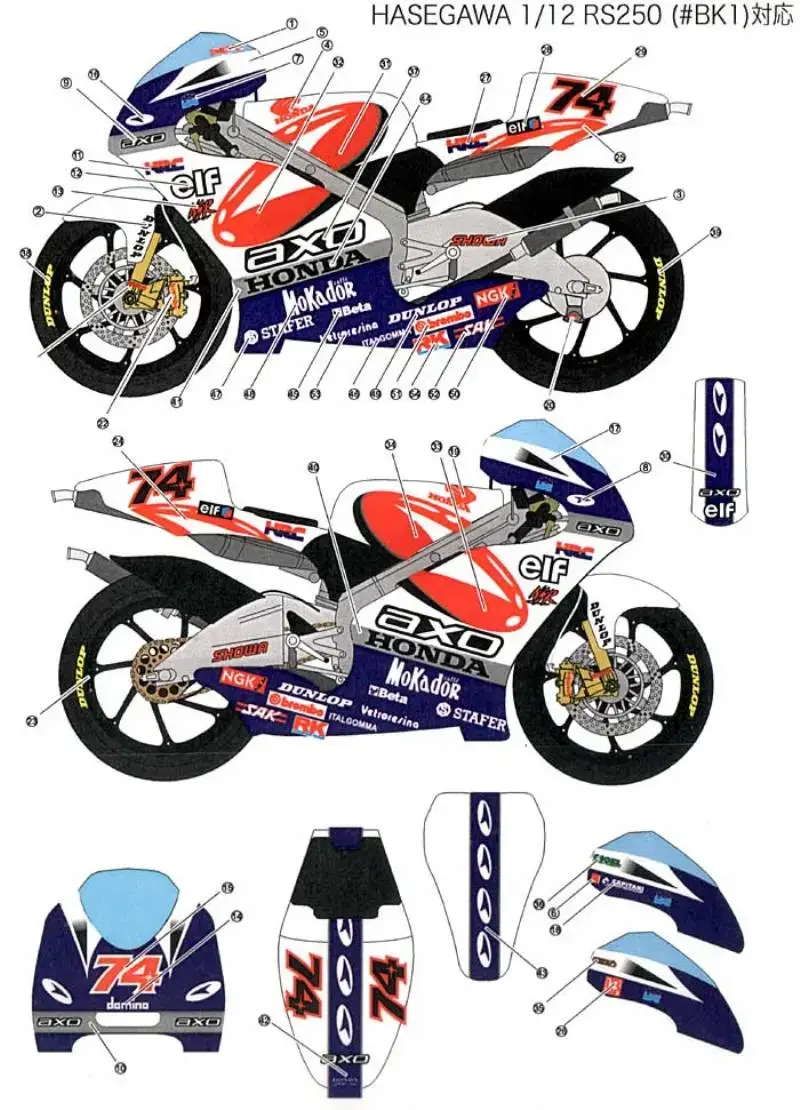
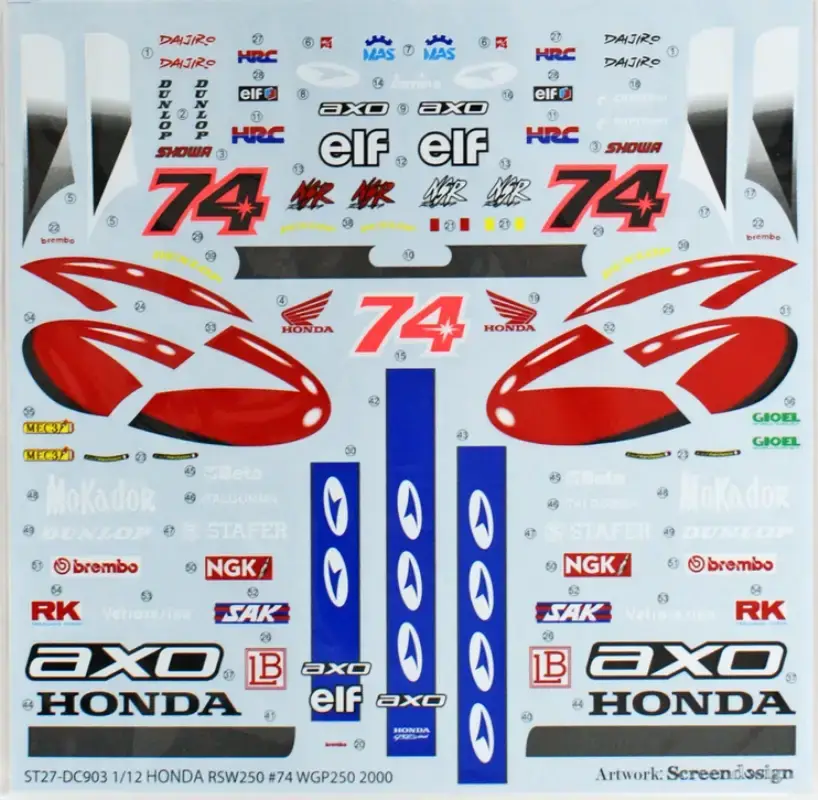
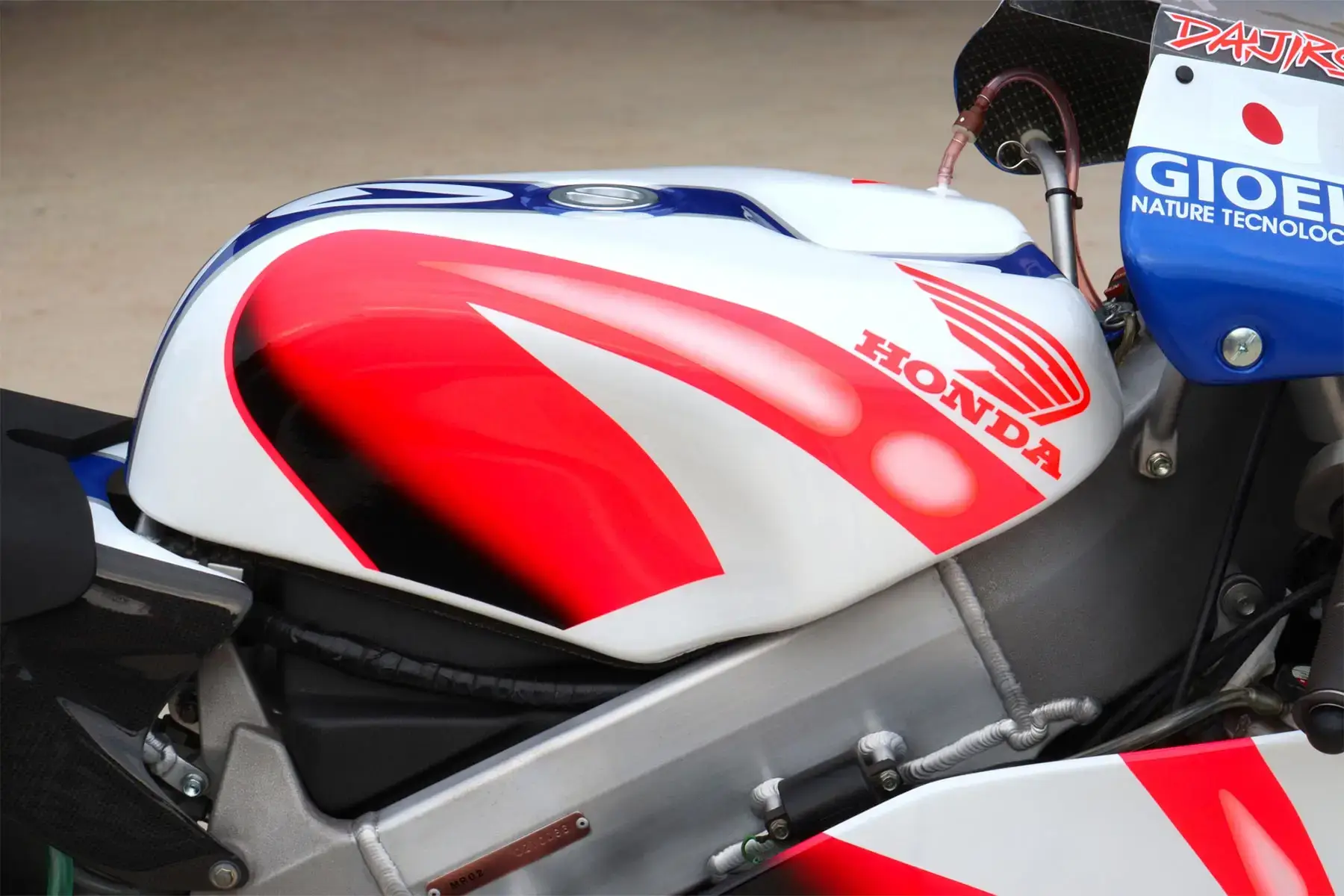
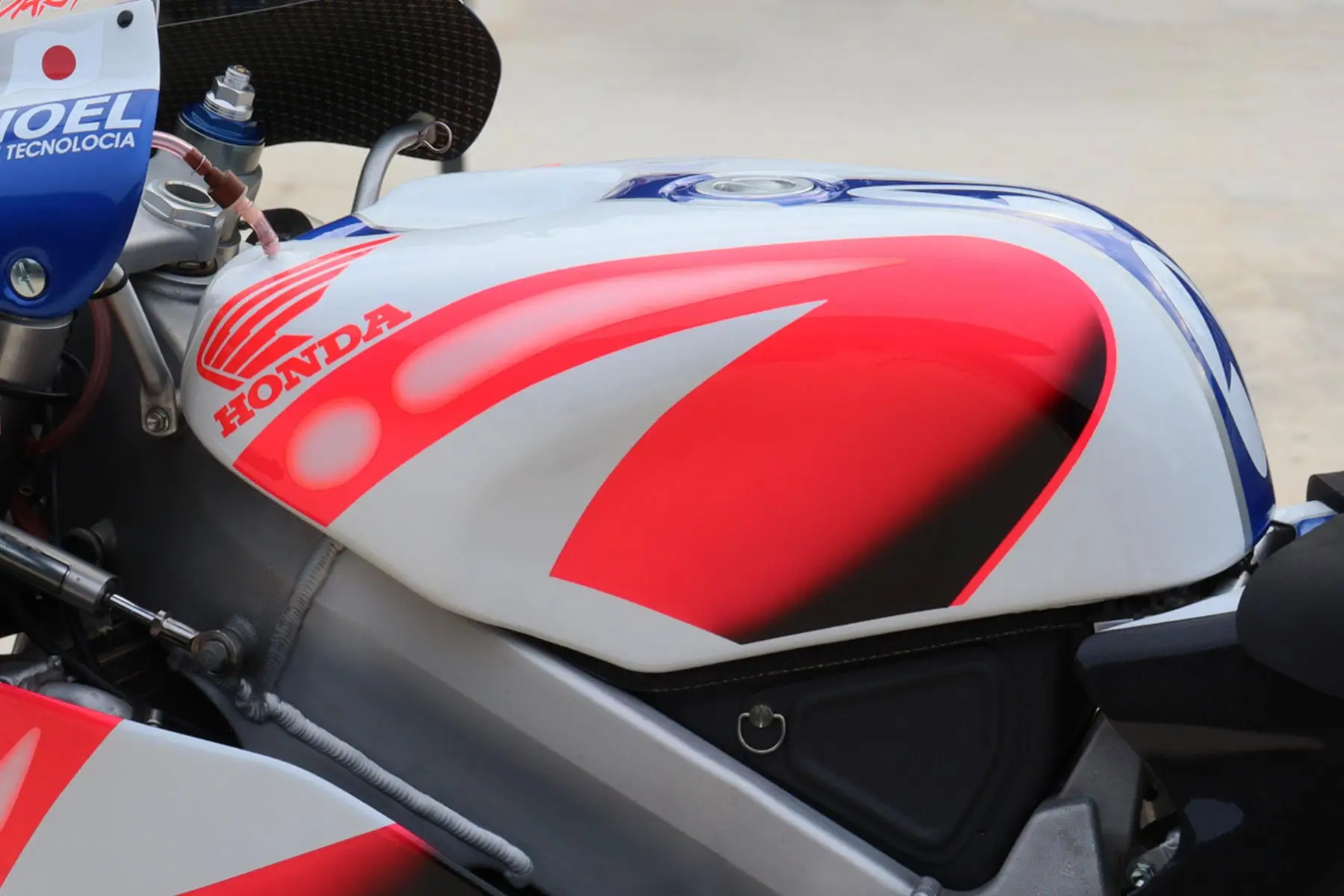
Even then, you have to be careful because at the press team launch, the bike he sat on was actually an NX5 RS250. I wonder what that was about? His team mate didn’t get the NSR250 either. I am not sure why but there just aren’t that many photos of Kato’s bike and I haven’t seen any really close up staged photos in the pit lane, studio or museum that you usually can use for research. I do remember a Race magazine with an in-depth article but not found the online version and my printed one has long disappeared. When you study photos of Kato’s actual bike, you get to notice all the details and how the decals look different on pretty much every photo. The belly pan sponsors, the placement of the ‘NSR Racing’, the size and the black and white sometimes reversed on the ‘ELF’ on the side and the placement of HRC on the seat cowling. Even the AXO logos on the tank and fuel tank differ in the amount of black and the airbrushed white. Same with the iconic 74s. Some are yellow but mostly red and black. Talking of that red, is it red or is it red/pink or orange/red fluorescent? None of us have actually see the real bike and so it is a bit hard to tell. Let us know if you have any knowledge of that one. So, in summary, we gave up trying to make it exactly like any photo but painted the bike to be representative of an AXO scheme taking into account historical photos and the bodywork we were applying it to.
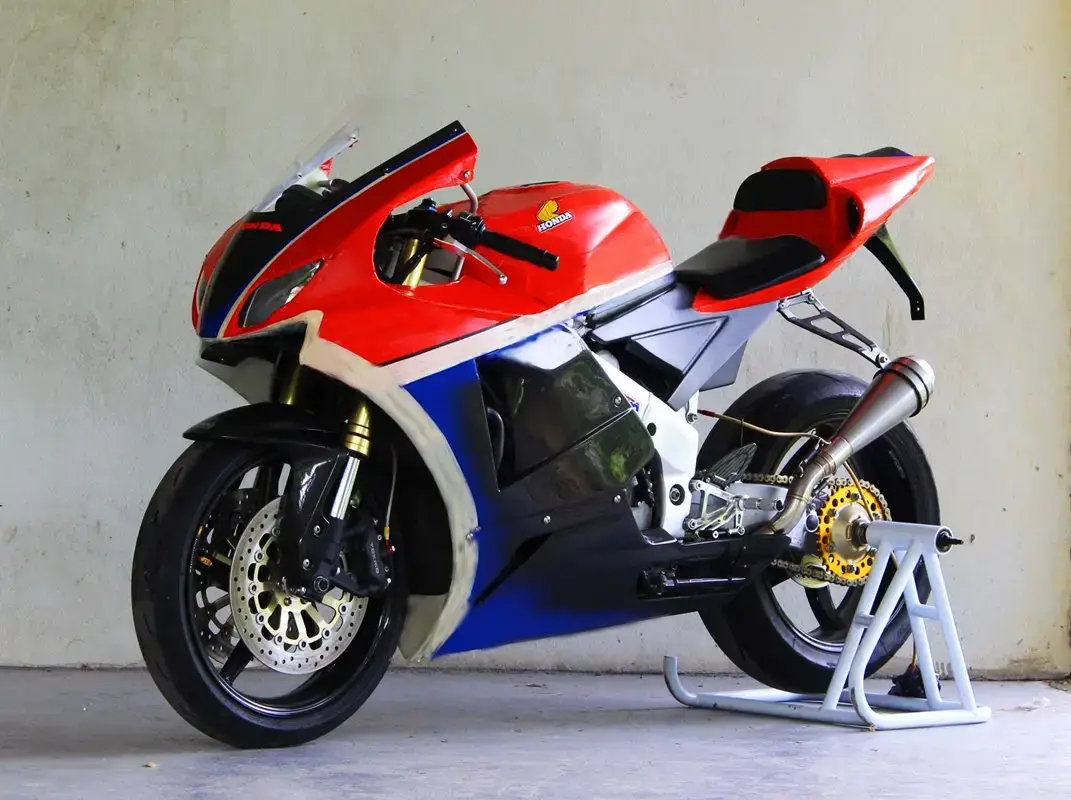
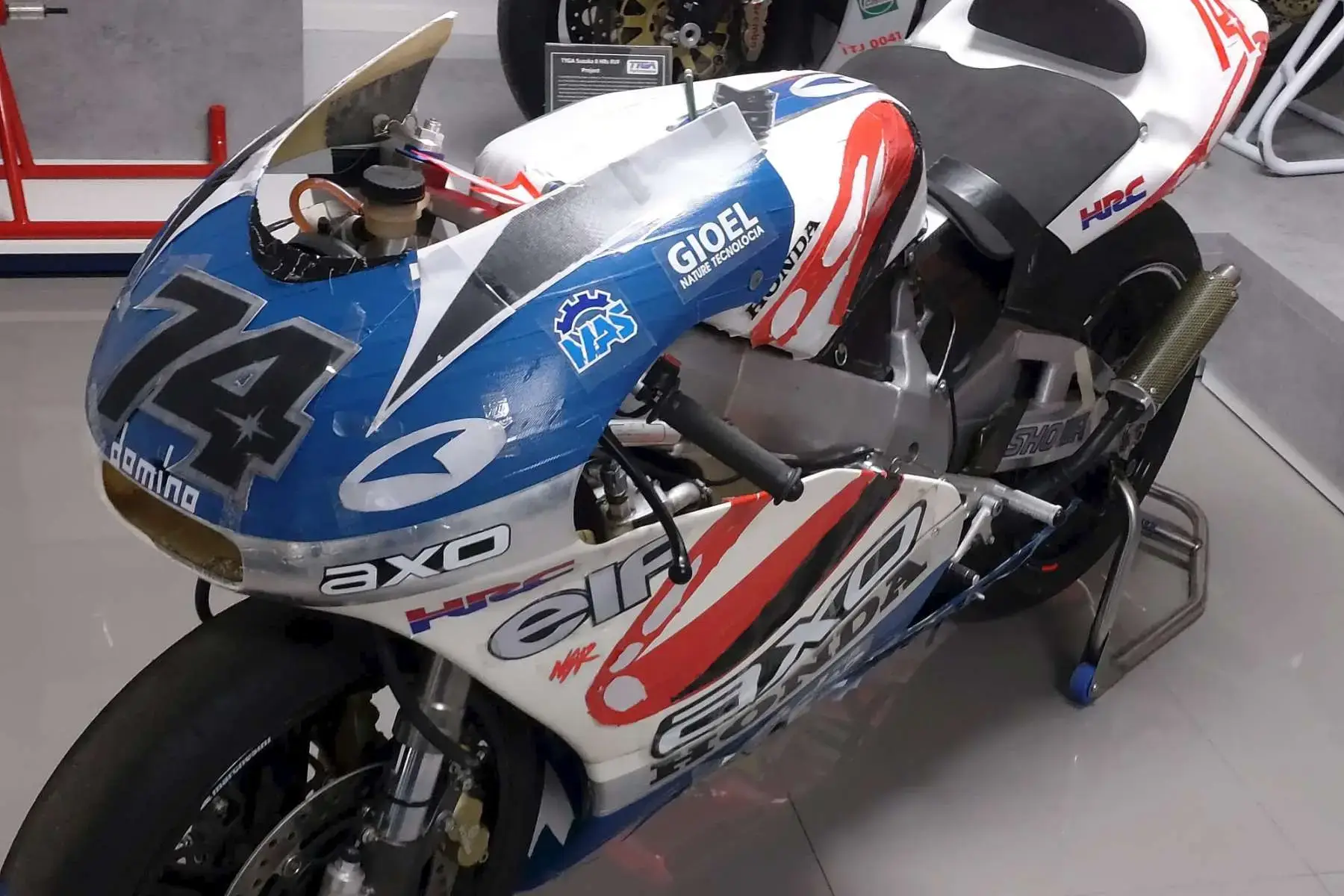
To assist us with painting the bike, we used a few techniques that might be useful for any one else attempting a similar project. First, we figured that the miniature 1/12 decals would give us a good starting point on sizes and even design so we ordered a set. Then we mounted a spare set of bodywork on the bike and made a mock-up of the scheme to see where the lines should go and for placement and size of the decals. For the decals, so we took the 1/12 scale decal kit and photocopied them at X 12 scale on regular A4 paper which necessitated a lot of cutting out and sticking together to make the larger decals. Before applying the decals, it was important to get the main graphics correct and for this we used masking and gaffer (duct) tape of various colours. We even used some aluminium tape for effect. It is not the first time we have used this method (See the T13)
but unlike the T13 where we were trying to design our own scheme, in this case, we were trying to reproduce an existing one. In some ways it is easier (less imagination) but in others, harder because you have to get the design to work on the bike you have even if the shape is ‘wrong’. For this, the most challenging aspects were the big AXO logos on the side and the seat cowling. The upper front was quite tricky too because the shape of the NXA is a bit more rounded especially at the front of the windscreen and we added a black area there to help. The side logos are supposed to be ovals but with the fuel tank being very three dimensional, the outline has to do a crazy weave to look correct when viewed from side on. Then we had the seat cowling to contend with. It is a completely different shape to the Kato bike. If I were doing this scheme again, I think I would have the AXO logo a bit less on show by moving it lower but it was always a compromise with painting a chunkier sloping NXA seat cowling instead of the factory NSR250 one with the exhaust up one side. Anyway, when we were reasonably happy with the general lines, we applied the sponsor decals we had photocopied earlier. Some old vinyl decals also stood in where we had them in our stock of left-over stickers from previous projects. The next thing was to take a few photos and then compare them on the computer with the real bike because that is where wrong font sizes really become obvious. Talking of fonts, the other challenge we had was some of the decals in the 1/12 kit were not correct and some lesser known sponsors we couldn’t find on the Internet or had since changed their logos, so we did our best and hopefully not offended anyone.
Eventually we reached a point where we were happy with the scheme and took the bodywork off so it could go to the paint shop as a sample. In the meantime, the lovely carbon fairings we had requested the composite guys make for us were ready too. At this point, our painter K Pong, who is always busy and could see this was going to be a challenging project did what all sensible busy professionals do in such a situation and said he would get around to it when he got time. He would let us know when he was ready.
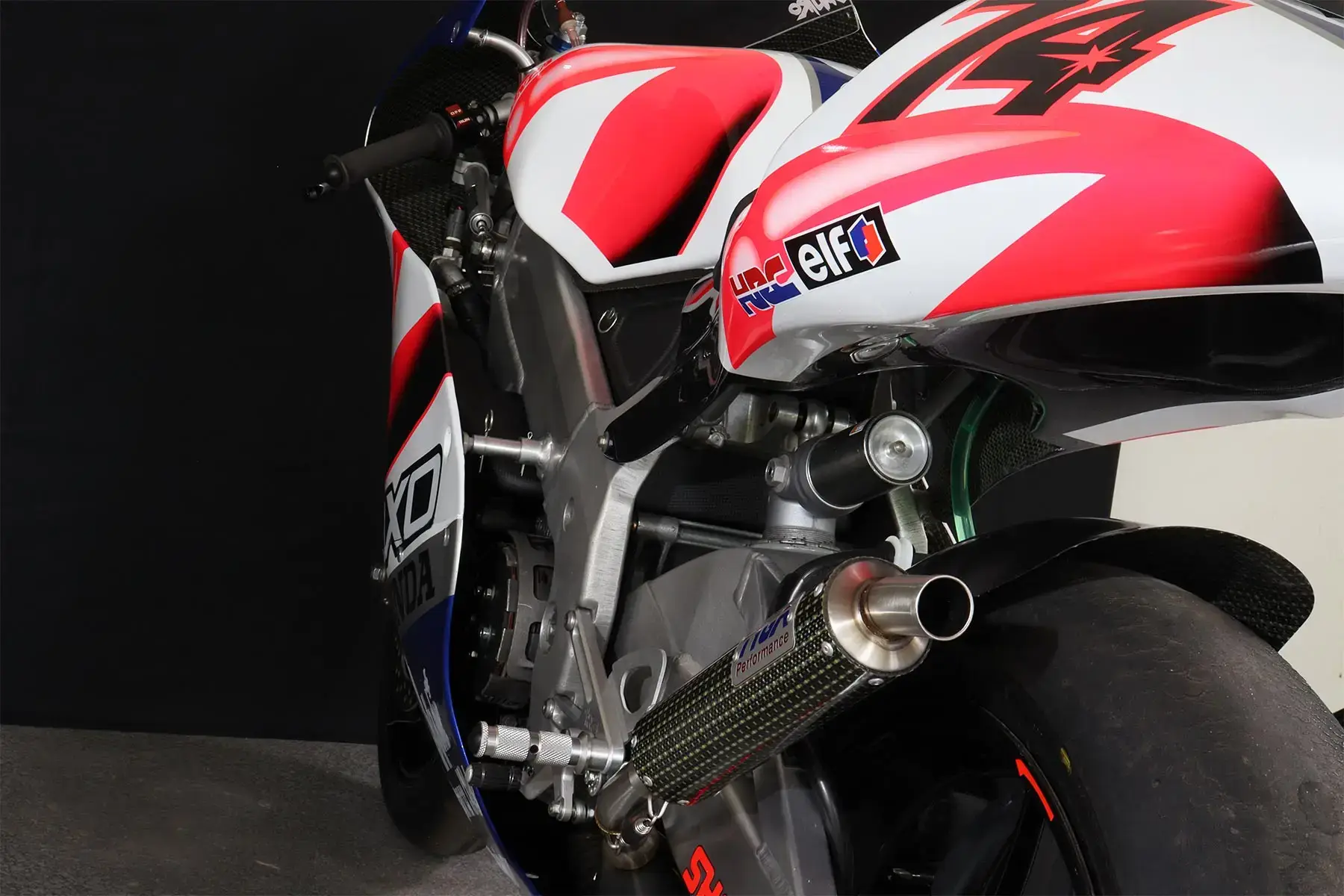
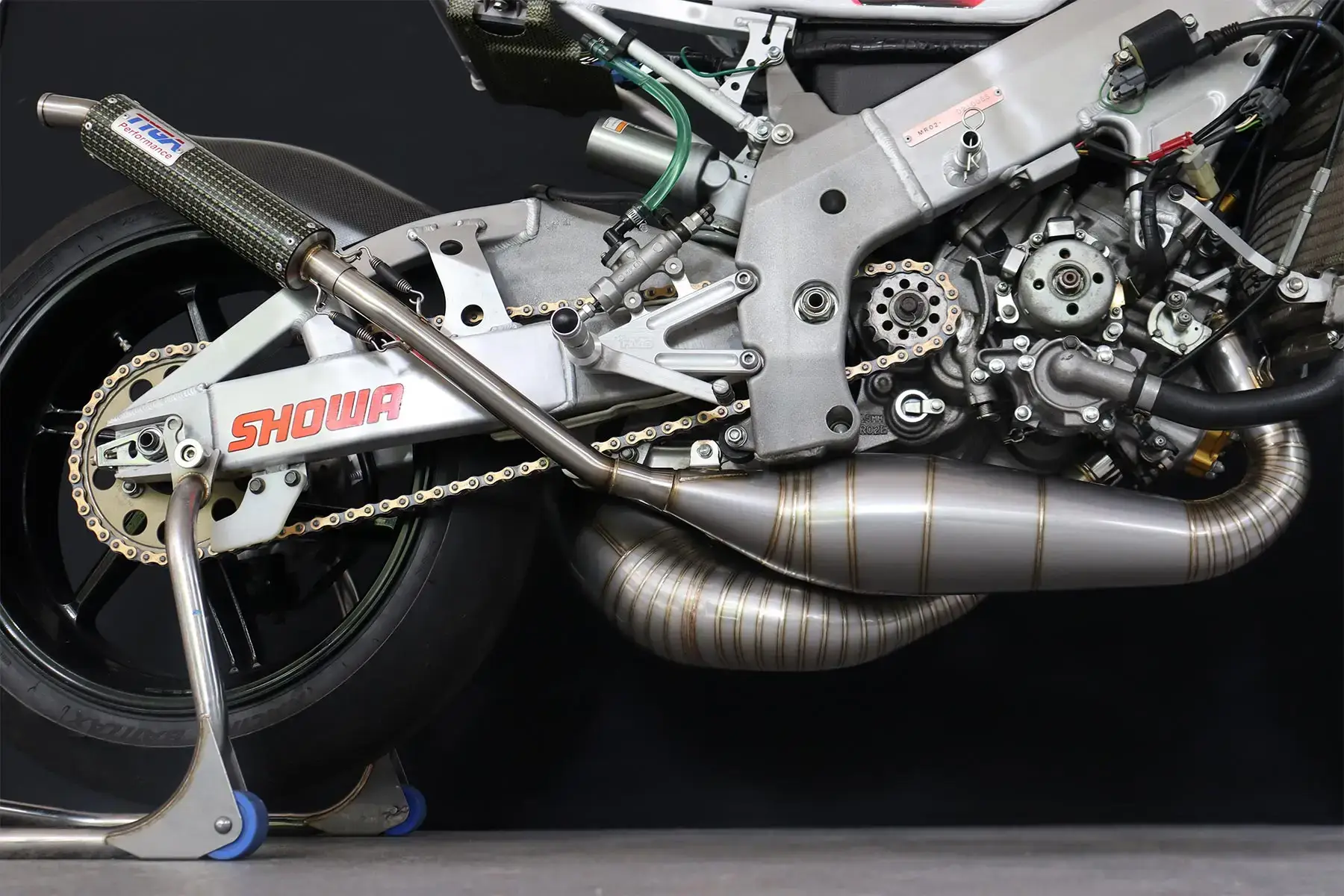
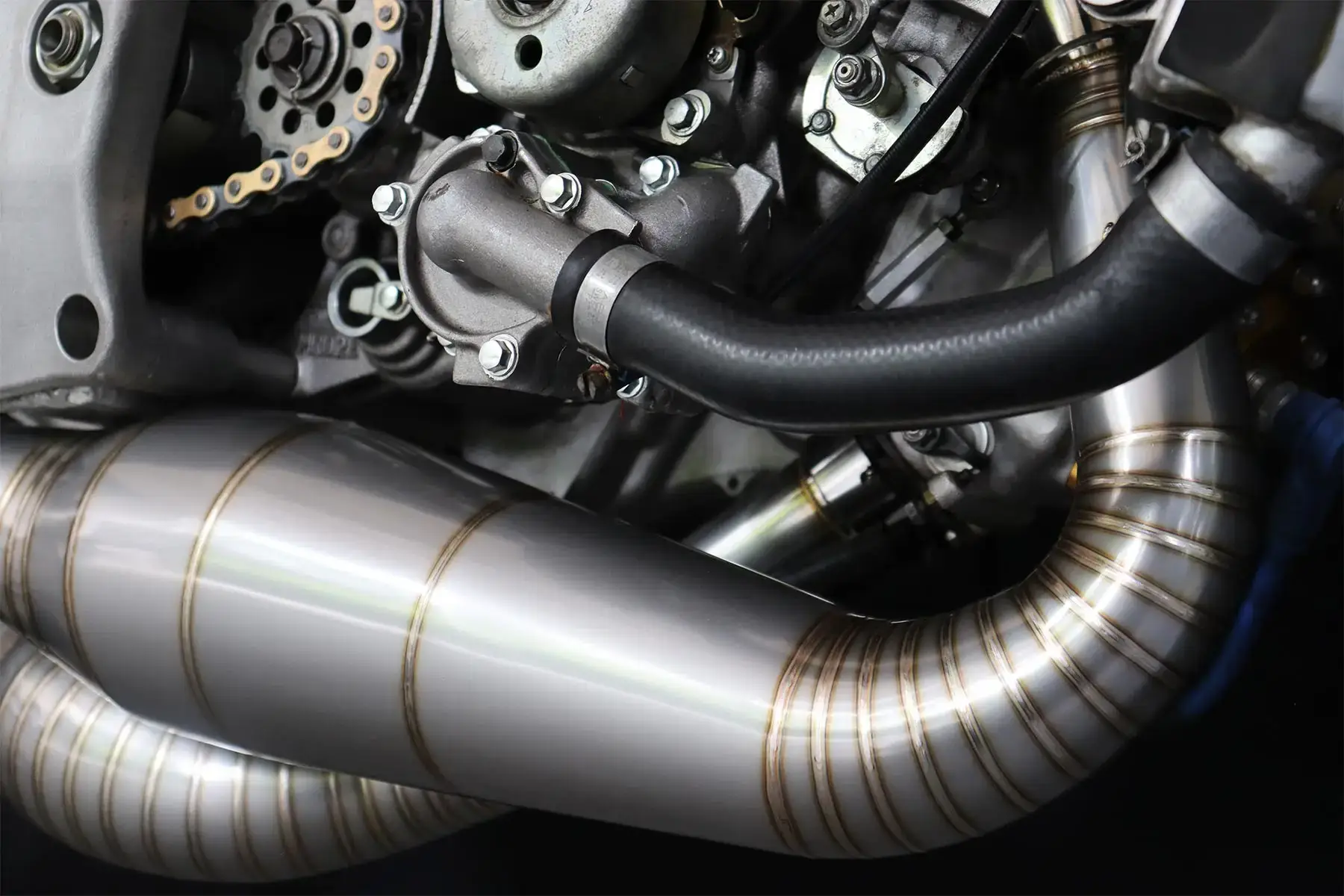
Three years later…K Pong finally was ready. A rare opportunity when he had cleared most of our customer’s paintwork jobs. I think this is a record wait, and in the three intervening years, we got on with other products and projects and had pretty much given up hope for the Axo. Hearing the news from K Pong, it jolted us into action and this meant we had to move our plans to make NXA exhausts up the head of the queue or we’d be showcasing the bike without one of our main products and that wouldn’t do! Luckily, the design of the exhaust chambers is heavily based on the TYGA NX5 ones. It seemed the most logical thing to do, The NX5 chambers give excellent power and the NXA uses the same cylinders and very similar engine so we knew they would perform well. Our first hope was that if Matt offered up a set of rolled cones from the NX5 to the NXA, they could just be re-positioned to clear the swing arm and fairing and it would be a relatively straight forward job. Unfortunately, and not surprisingly, in order to make the chambers clear everything as well as look nice, Matt ended up cutting XXX new cones and of course the tail pipes have different bends to the NX5 ones too. After a few attempts and changes Matt designed the chambers you see here which are much cleaner designed than the stock ones which are not very pretty from the factory with dents to clear suspension linkage etc.
The TYGA chambers look the part and clear the chassis and bodywork (just requiring small rubber blocks on the inside cowling to stop the rear most part of the lower touching the chamber.) In the end, it turned into a bit of a race between K Pong and Matt as to who would finish first. Anyway, as I type this, the chamber should be ready first. To be fair, it is already finished but is now being used to make the jig while we wait for the paint. To be fair also to K Pong, the only reason the paint is not finished is because I keep sending it back for changes. The tail is in the paint shop now getting a bit of rework where I damaged it with glue when I applied the seat pad for the third time. Also, the fuel tank turned out to be a bit of a challenge. It turned out that the two fuel tanks we had were very different from each other with at least 15mm differences in length so the template tank would not work on the tank we were going to paint. To compound the problem, the tank that was destined for the bike was not symmetrical being at least a cm different each side where the knee indent starts.
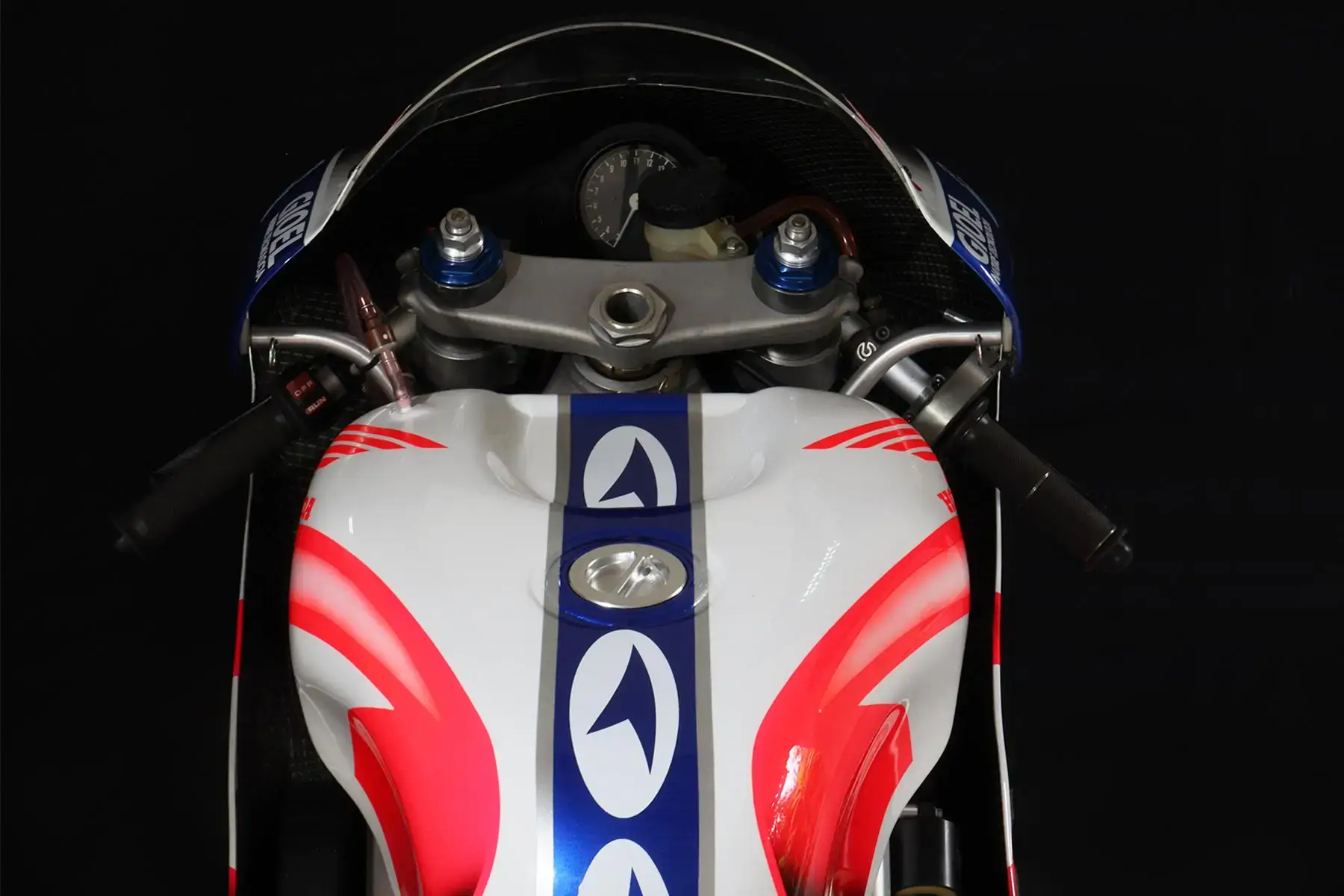
We got around this in the end by painting both tanks using the fairing as a guide to get the logo shape and position correct. Sorted! All there is to do now is the final clear coat over the decals on the shorter tank, a must when fuel spillage is always a risk. Anyway, I can confidently say, we will be ready for photos in the next few days so that is why I am getting a wriggle on to finish this (typically) long write up.
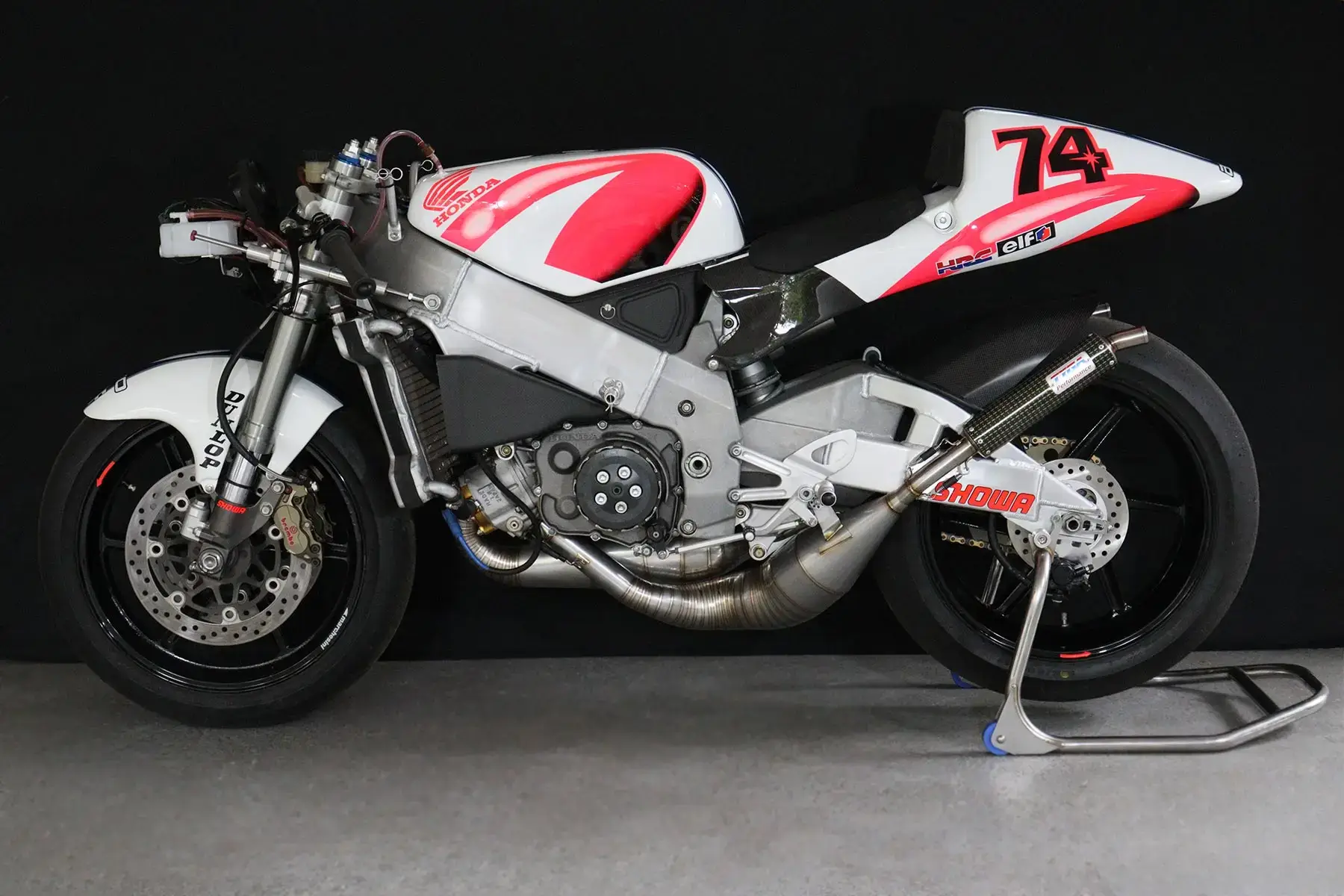
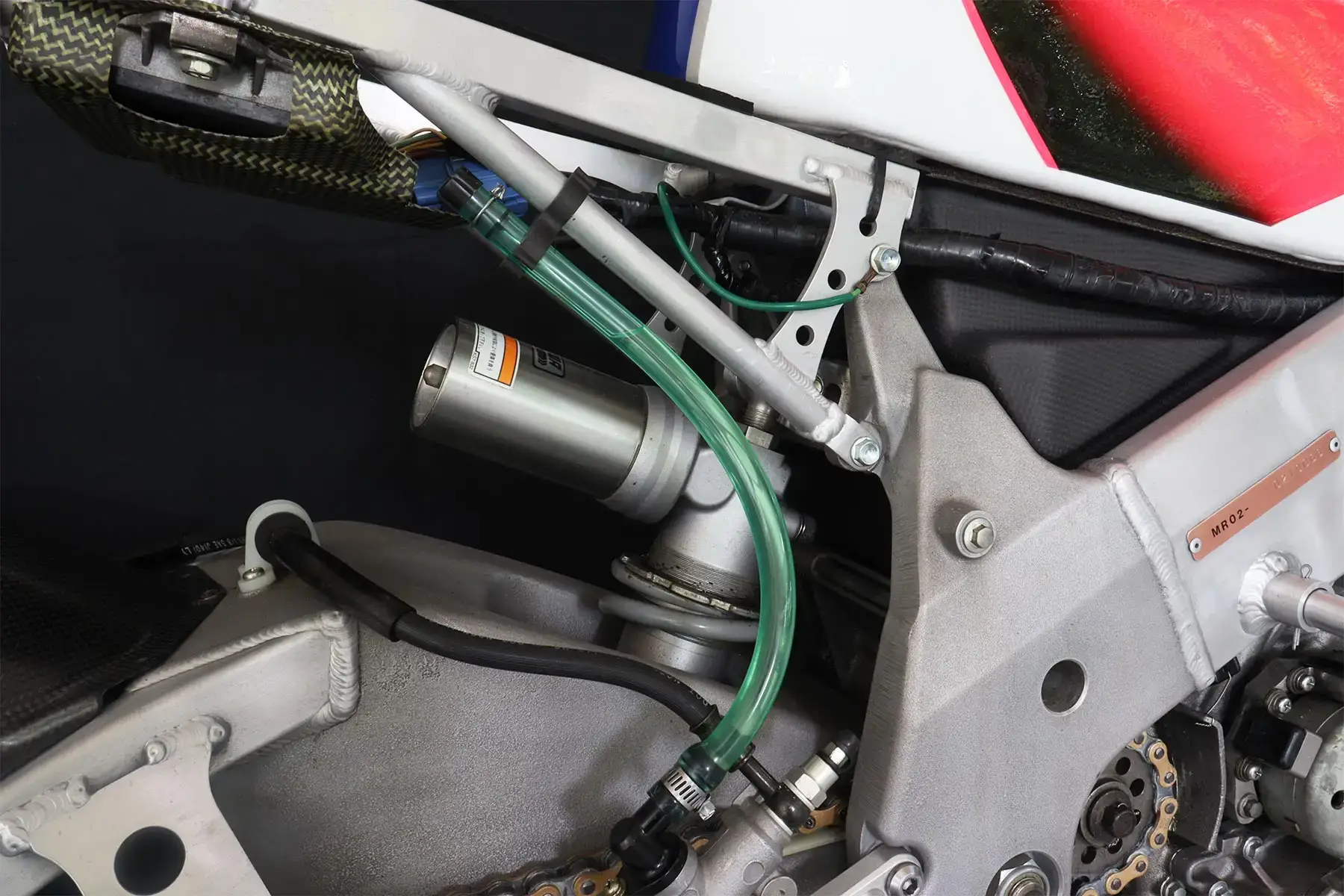
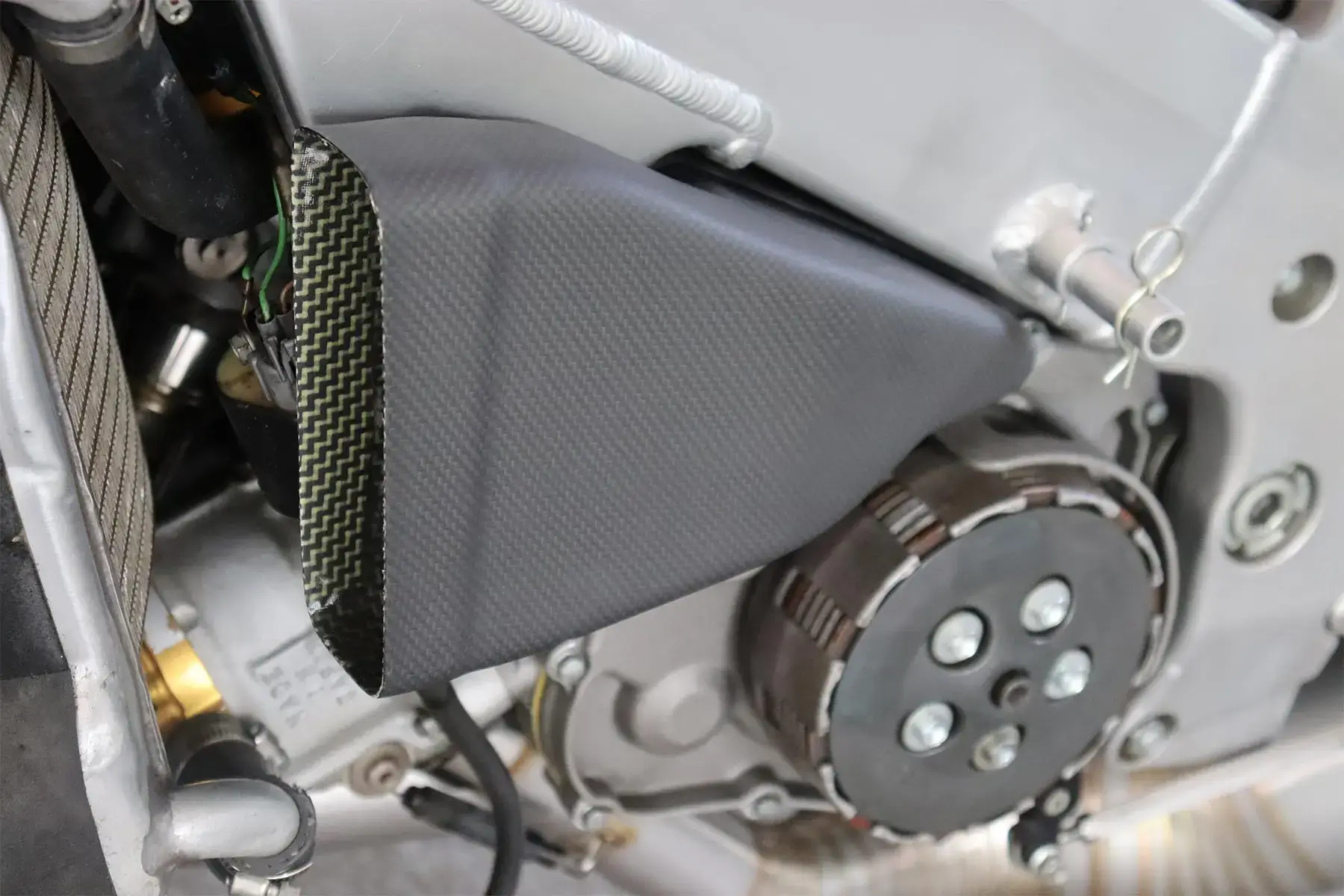
As well as the bodywork and exhaust, there are a few other TYGA Performance products on this bike. Actually, pretty much everything that we make for the NXA was installed. As new from HRC, the production RS250s didn’t have any carbon fiber components, unlike the factory machines. We already make a few replacement parts in carbon fiber such as the NXA. The TYGA airbox is a reproduction of the fiberglass original but made in lightweight and attractive carbon fiber to match the bodywork. It even has kevlar on the inside.
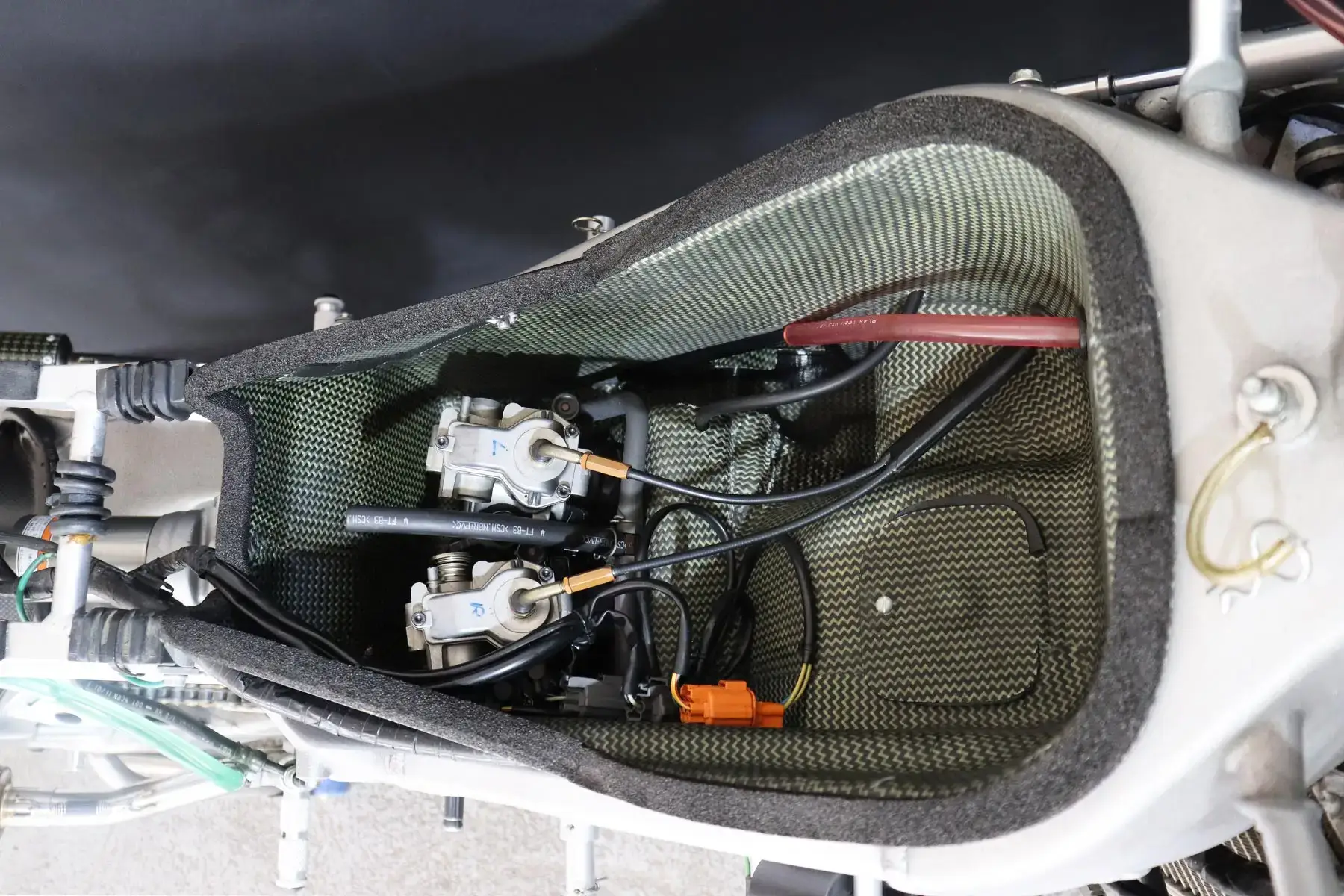
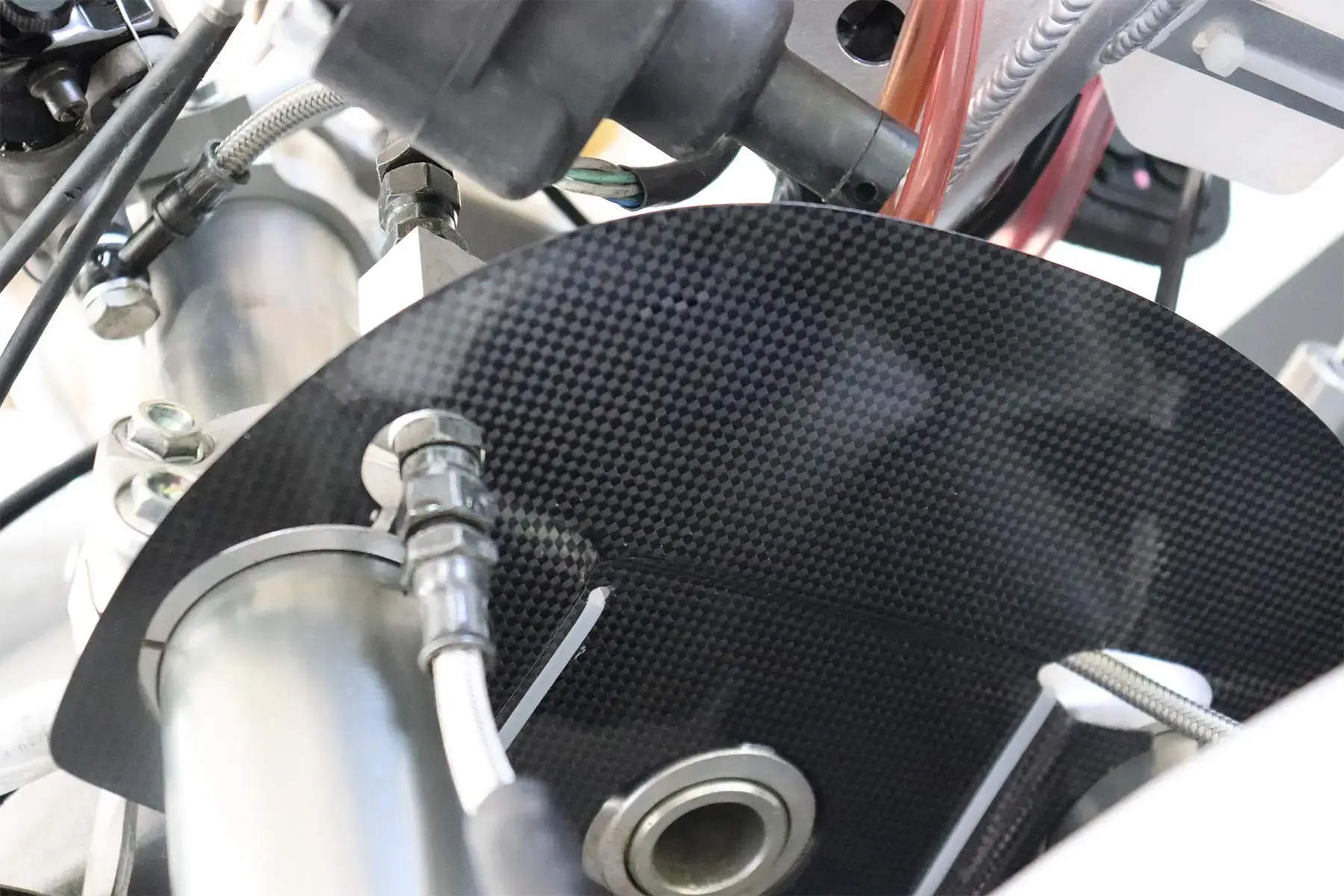
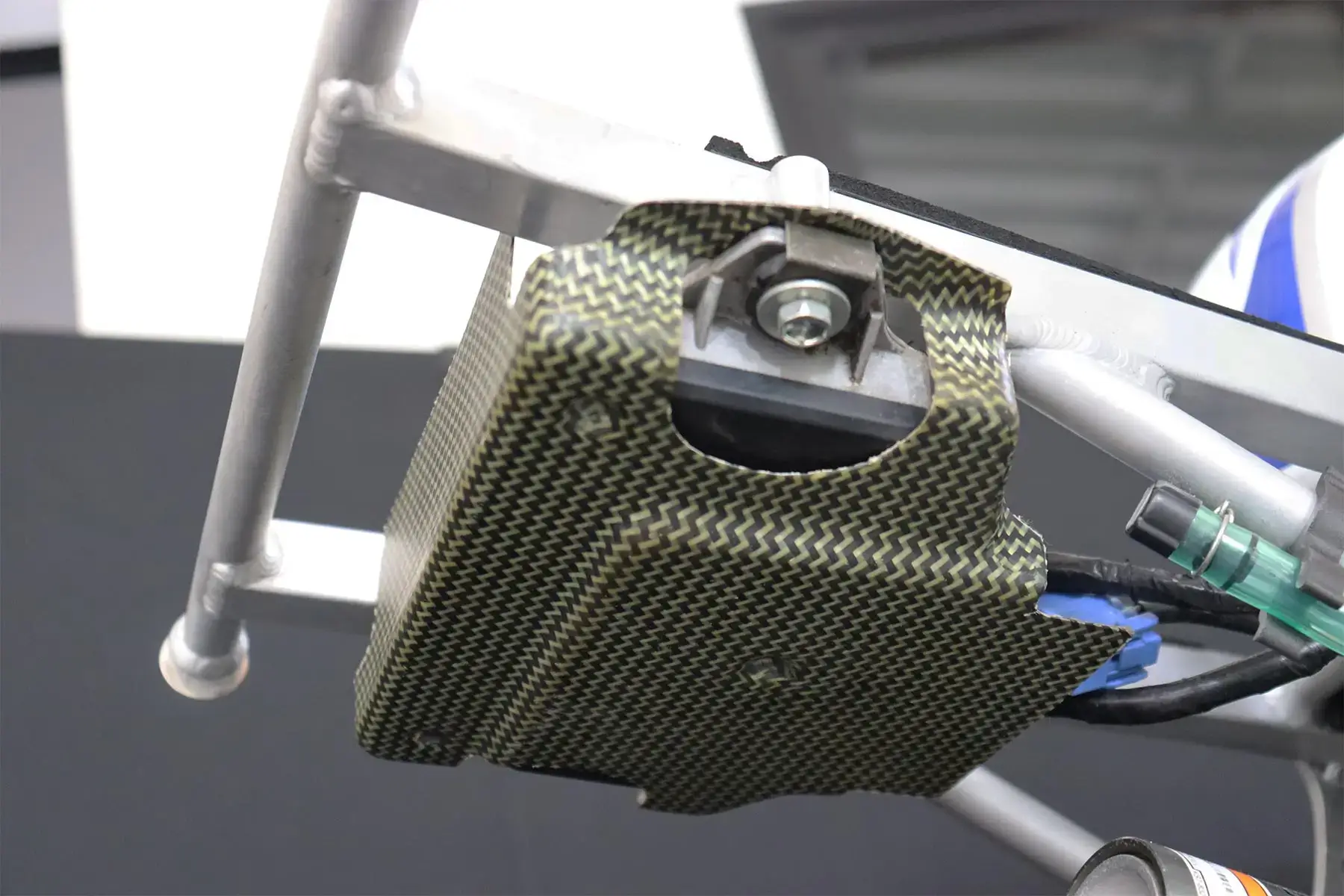
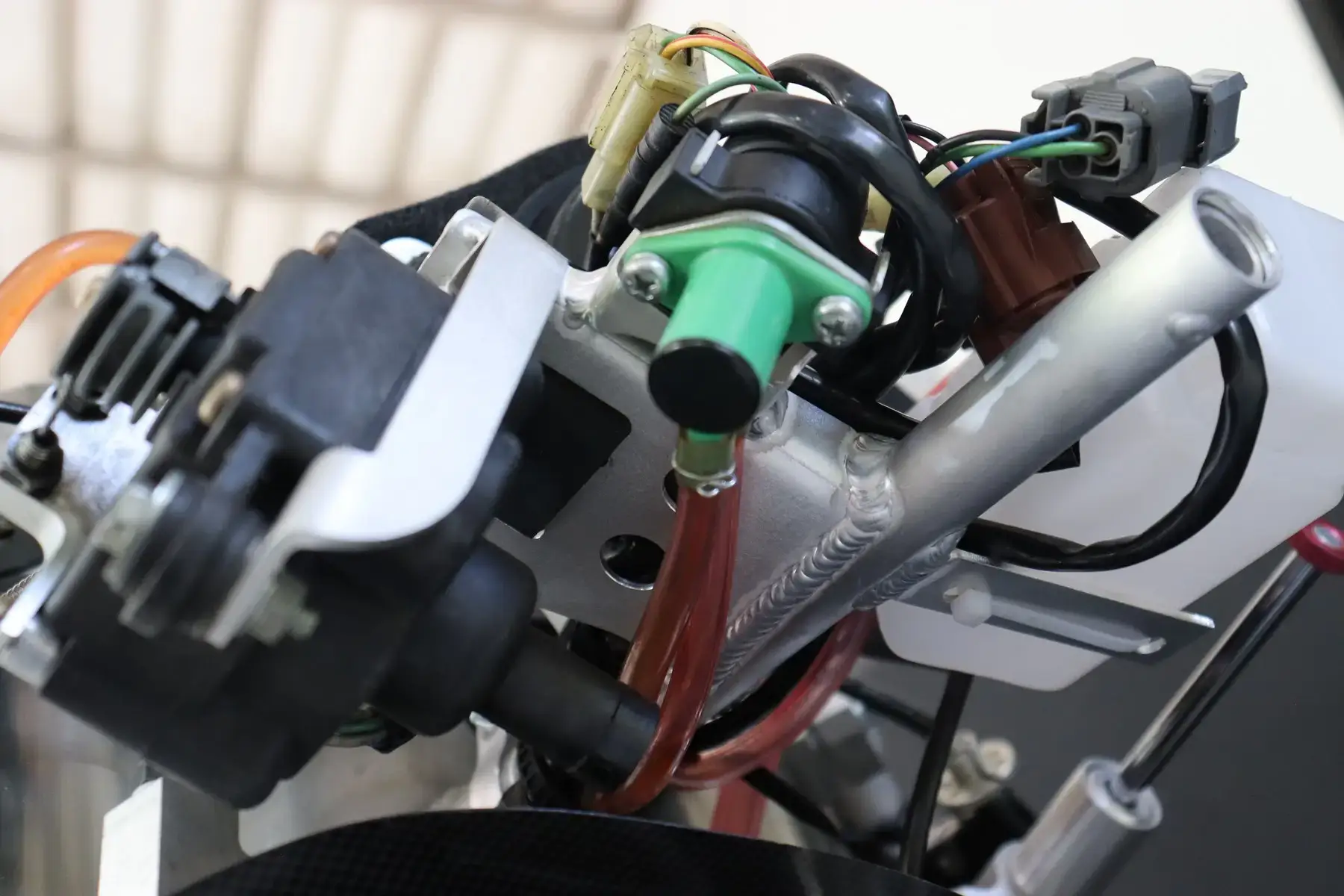
You’ll also notice the steering stem and ECU cover in carbon and Kevlar respectively.
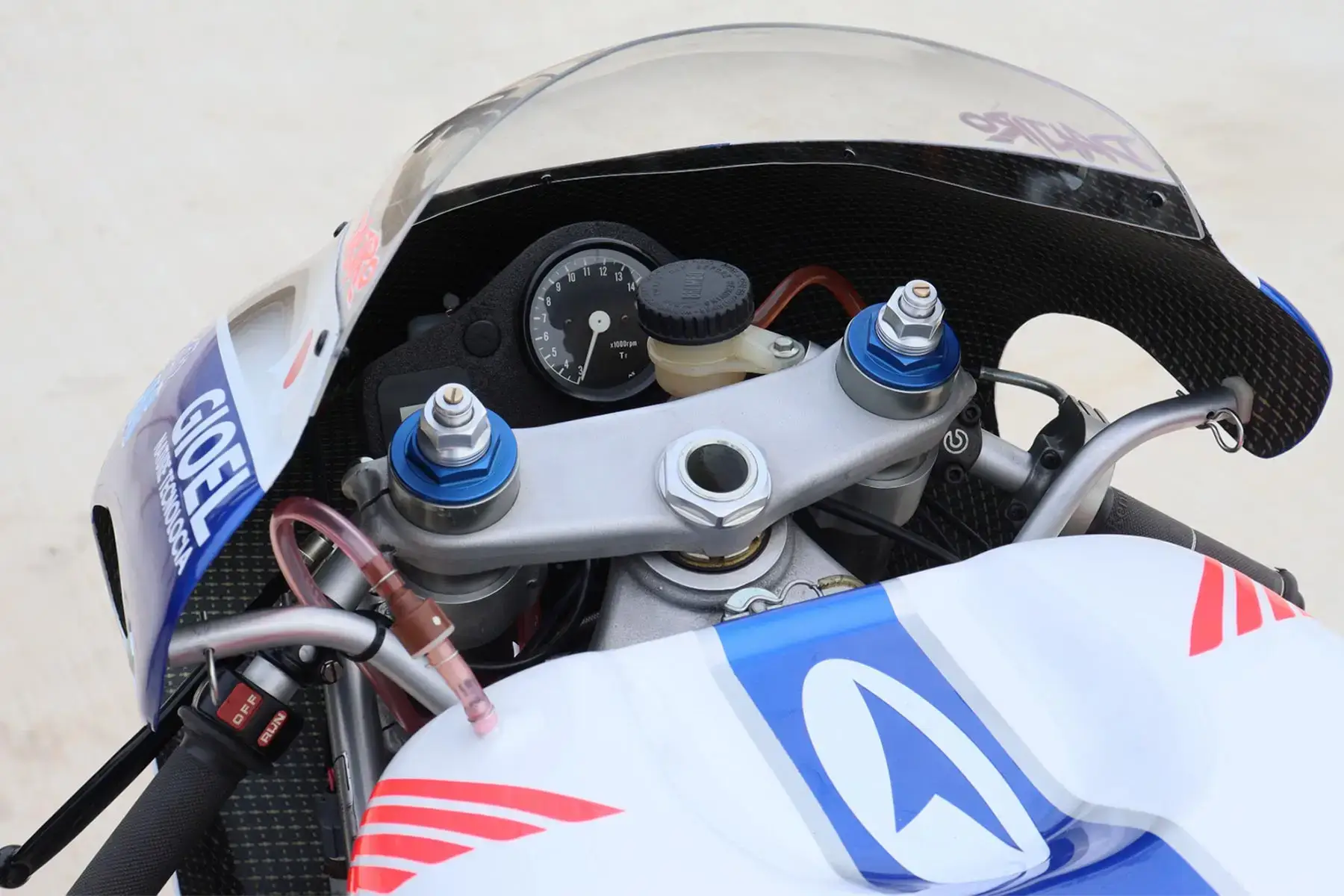
On the chassis, we freshened up the front forks which had been damaged from years of hurried start line final adjustments with a spanner; normal for this type of bike. We also replaced the HRC handlebars which are prone to cracking with age, with a set of TYGA ones.
While still at the front of the bike, you can see the meter stay is also a TYGA Performance replacement part. The originals are often accident damaged and re almost impossible to find.
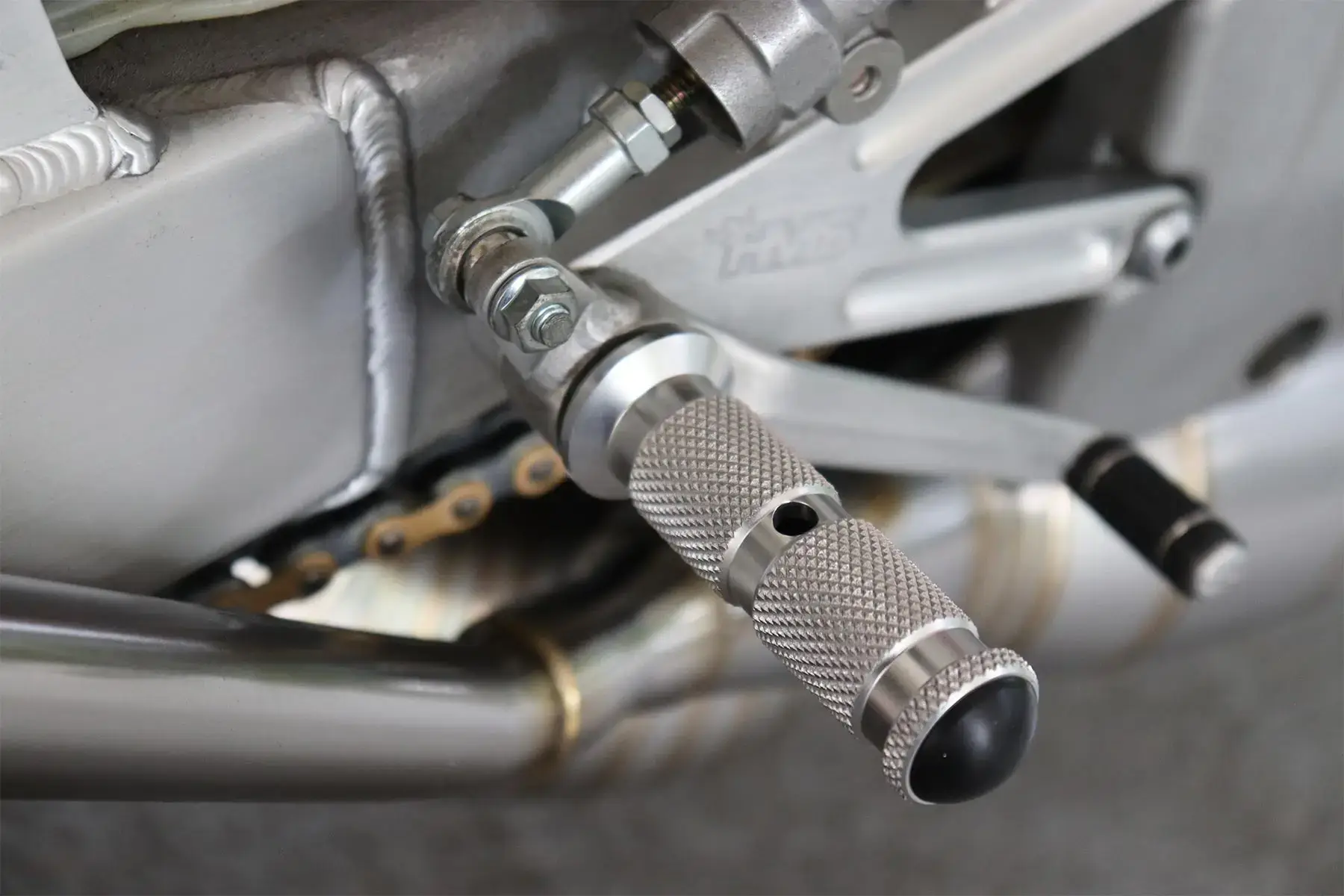
We don’t make the rear sets (yet) which is another project for the future. Our bike came with a broken heel guard on its aftermarket hangers. We now make a reproduction of the HRC one which also fits earlier RS250 models. Typically, it didn’t fit and the mounting holes for the heel guard would have been right in the hanger lightening slot. Luckily it was not a problem, Matt quickly adjusted the program on the laser cutter to allow for the new mounting points and the lads cut and bent us a new one. Within hours our bike now has a bespoke heel guard which looks the same as stock. It is nice to have the correct tools for this kind of emergency! While we had the foot peg hangers removed, we freshened up the scraped foot pegs with our short TYGA versions which are a direct replacement fitment for the HRC ones.
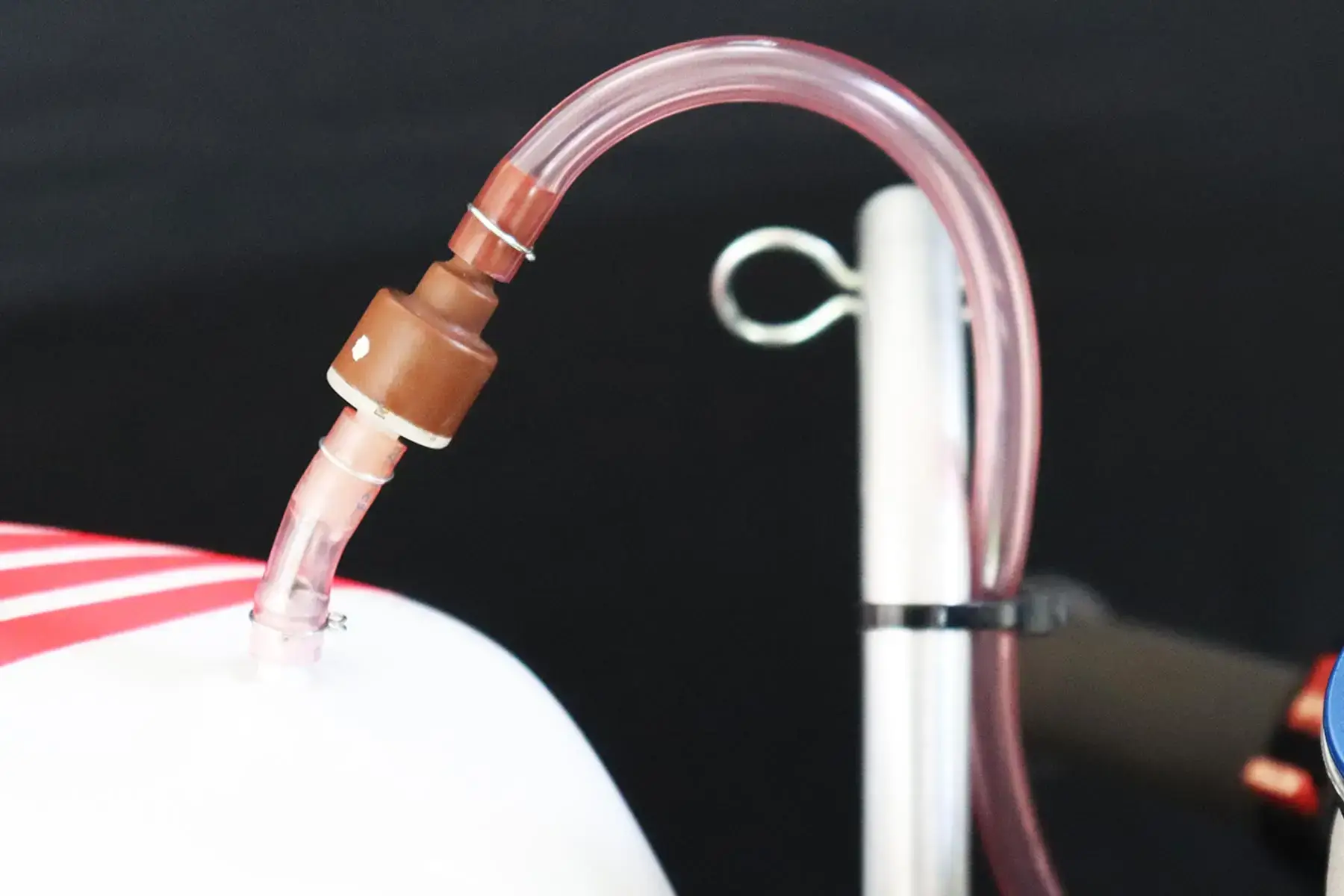
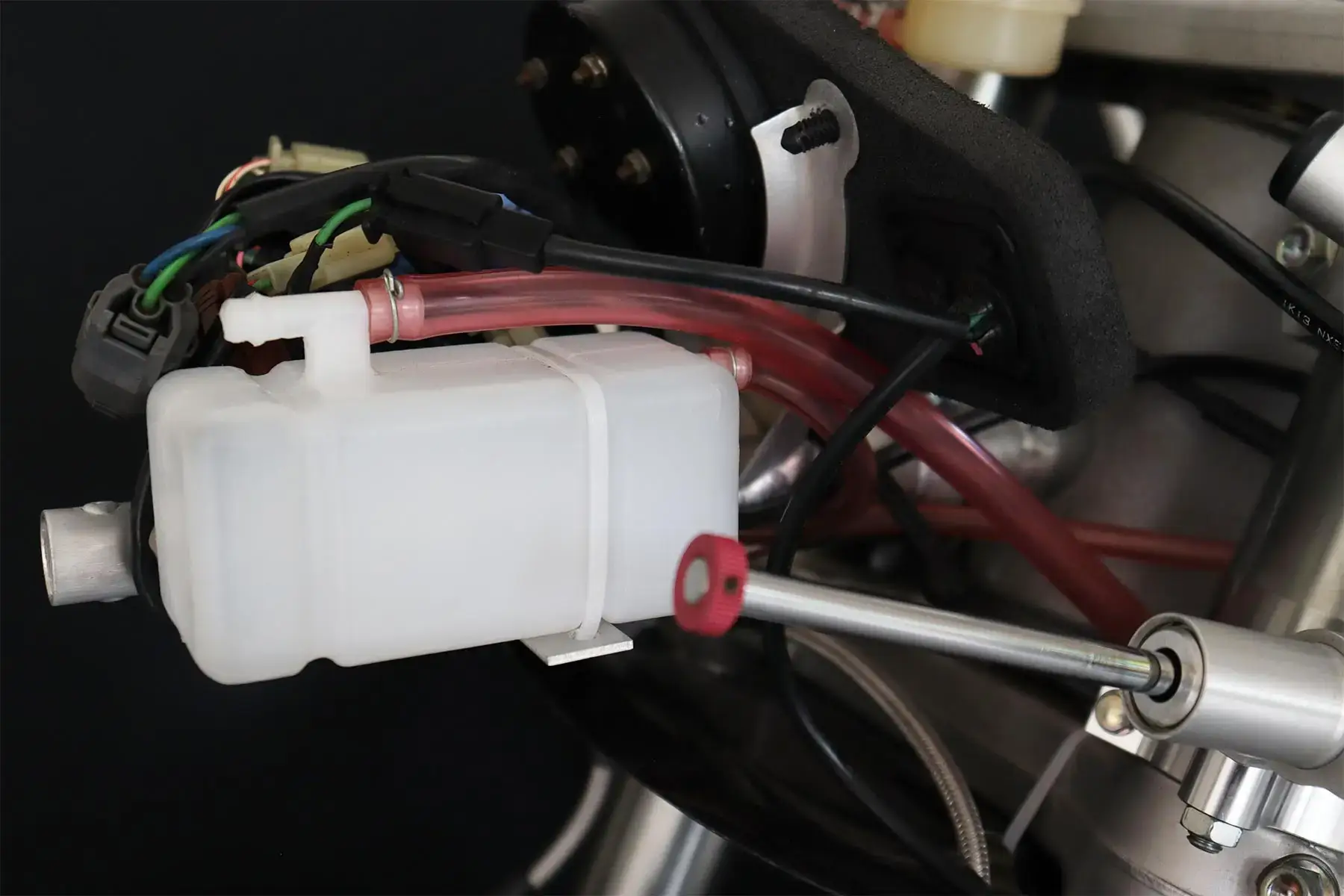
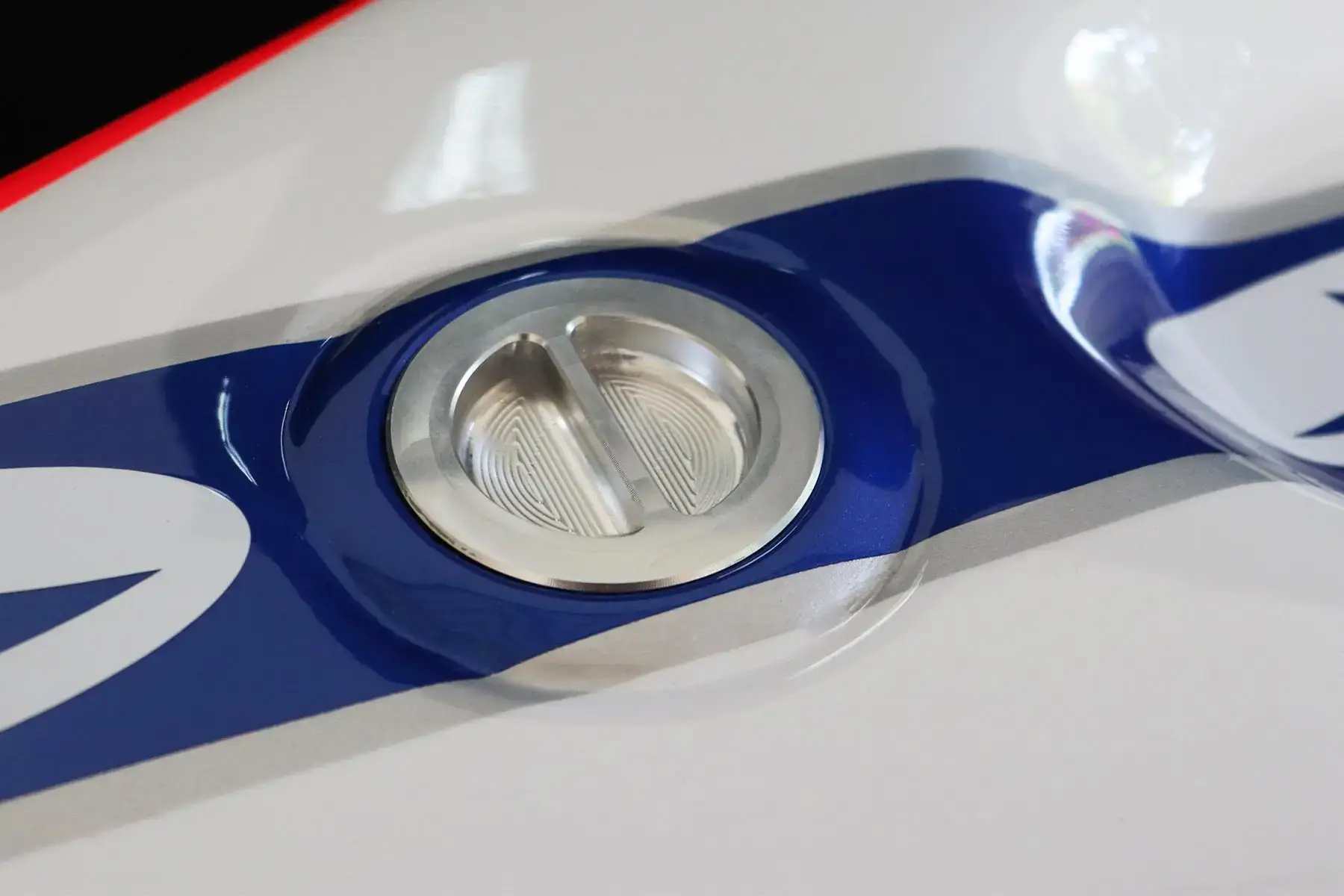
To round up the parts we raided from the TYGA Performance stock room was a steering top nut, fuel filler cap, a rear brake reservoir kit, an NSR250 style RS250 seat pad which we cut the sides off, a large bum stop, and some reflective heat shield for the belly pan.
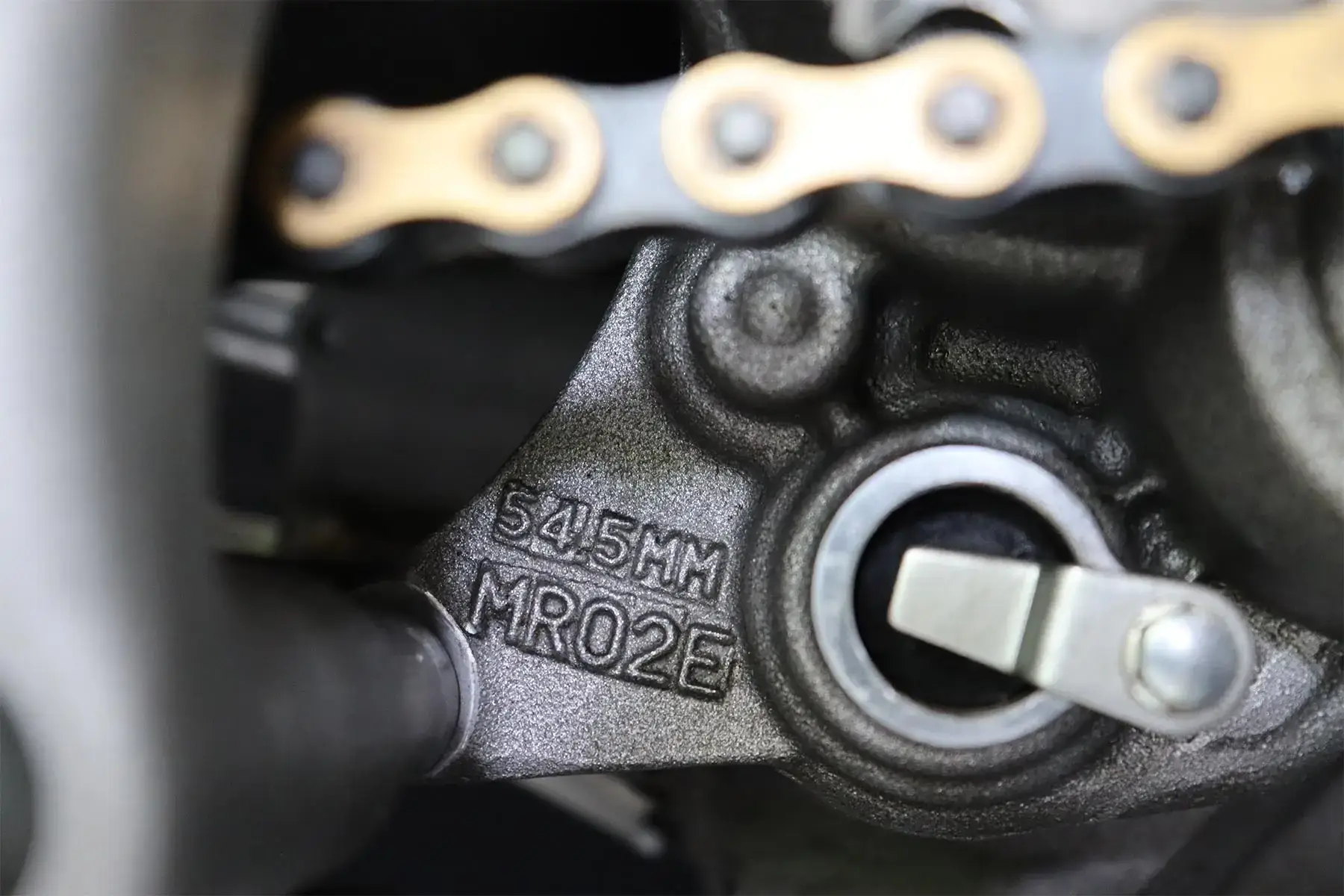
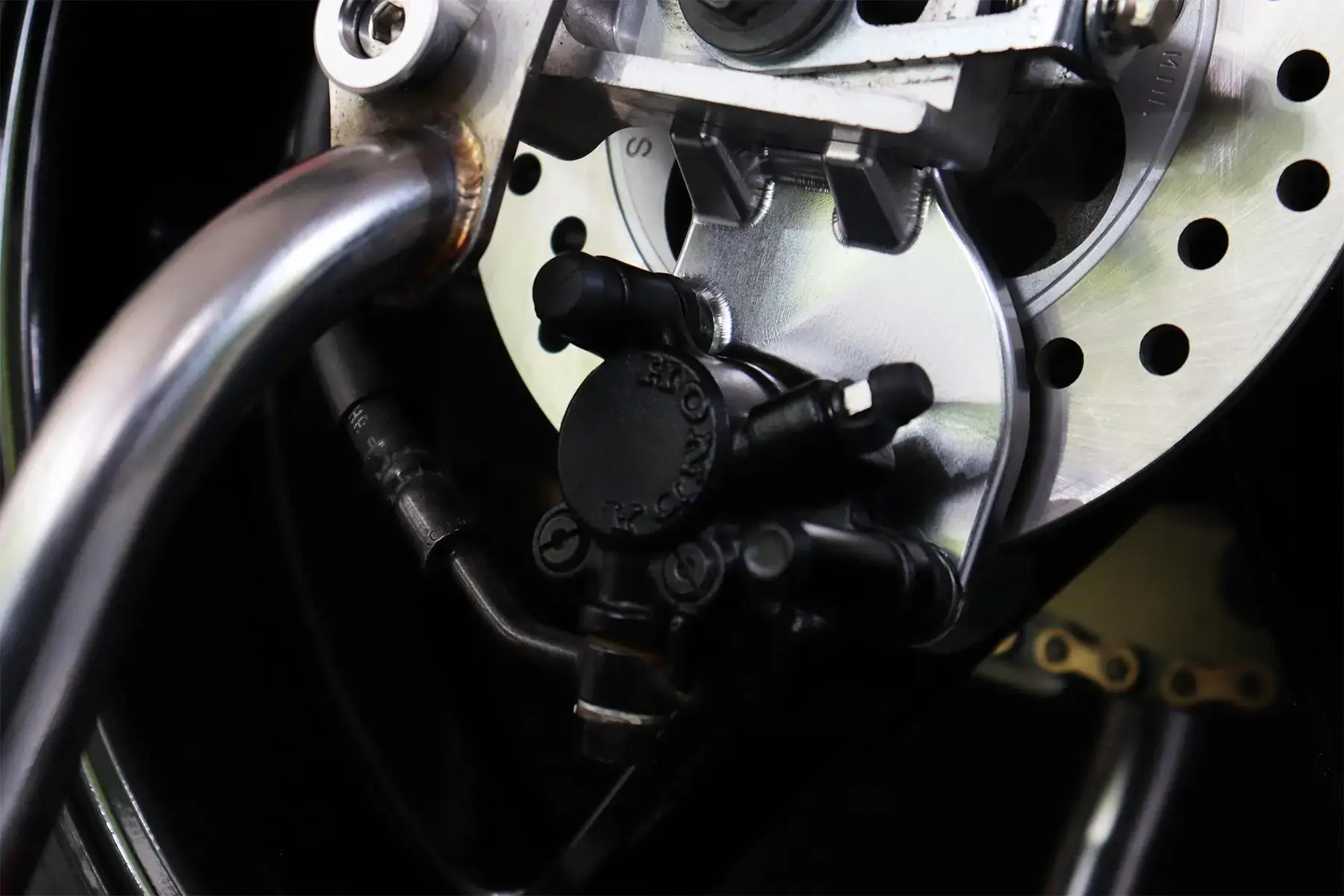
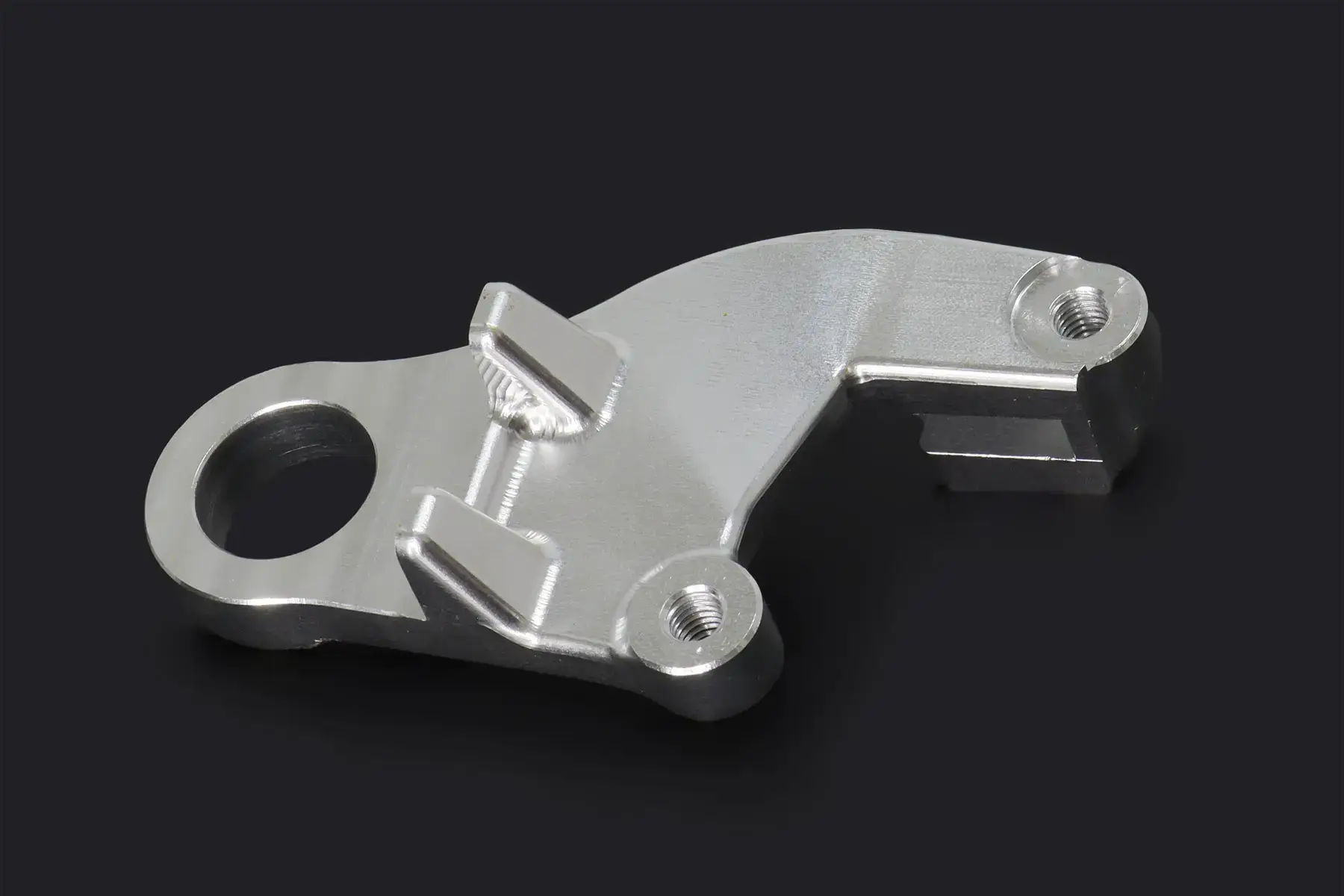
In addition to the TYGA parts, we freshened up the bike by ordering as many new fasteners as were available from HRC and Honda. Most generic parts are still available, but nearly everything ‘-NXA-‘ is ‘NLA’ (No longer available). This was a bit for an issue because we needed the rear caliper bracket and it was definitely in the NXA NLA category. Luckily, Matt was able to 3D scan an original one and from that he was able take an accurate model with a bit of cleaning up. The original one though is cast and so it was not the easiest thing to model and but Matt was able to turn the surfaces into tool paths. Then came the mesmerizing magic of the 3 axis Haas hewing the solid billet. After an hour or so and quite a few tool changes and fizture changes, out came the gem you see here on this bike. This hanger is now available for sale to anyone who finds themselves in a similar predicament with nothing to hang their rear caliper from.
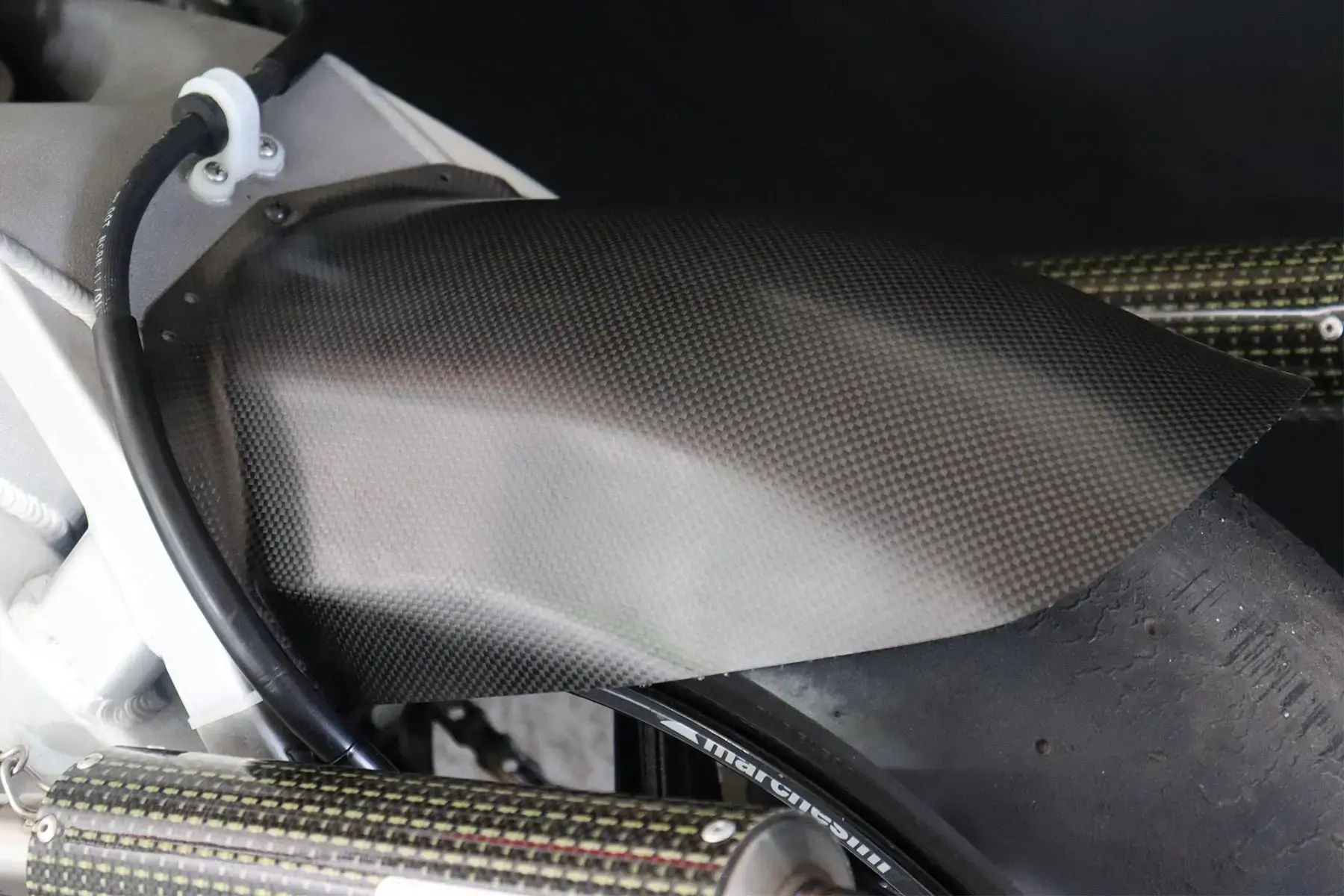
One thing that is installed on the bike and we can’t take credit for is the Speedfiber rear hugger. This was advertised on an online platform as suitable for the NXA and the seller had two in stock so we bought them both. It was a bit of a gamble and sure enough, when they arrived and I rushed to offer one up to the swing arm, the first thing I noticed was how light it was and the second thing was that it didn’t really fit. A quick bit of research (ie. reading the label on it) revealed it was actually for an NSR250/RSW250 and not an NXA. Normally, this would be disappointing but it worked out ok. First, it meant that it was the exact same part as installed on Kato’s bike, so we now actually had a bit of actual NSR250 in the project. Secondly, it could easily be made to fit the NXA by first drilling an M4 threaded hole in the centre line of the swing arm and then attaching it with a bolt and two cable ties. Sorted!
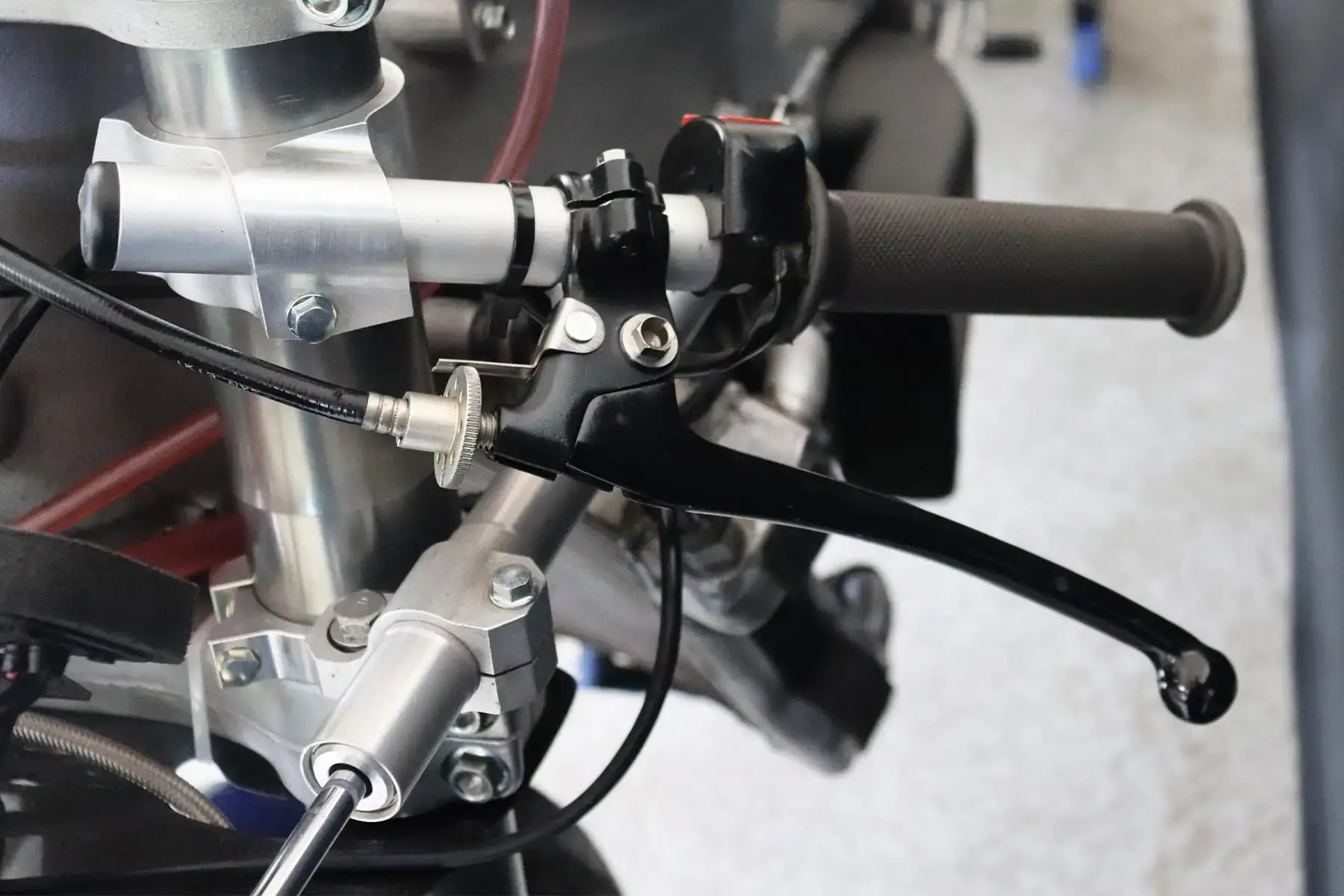
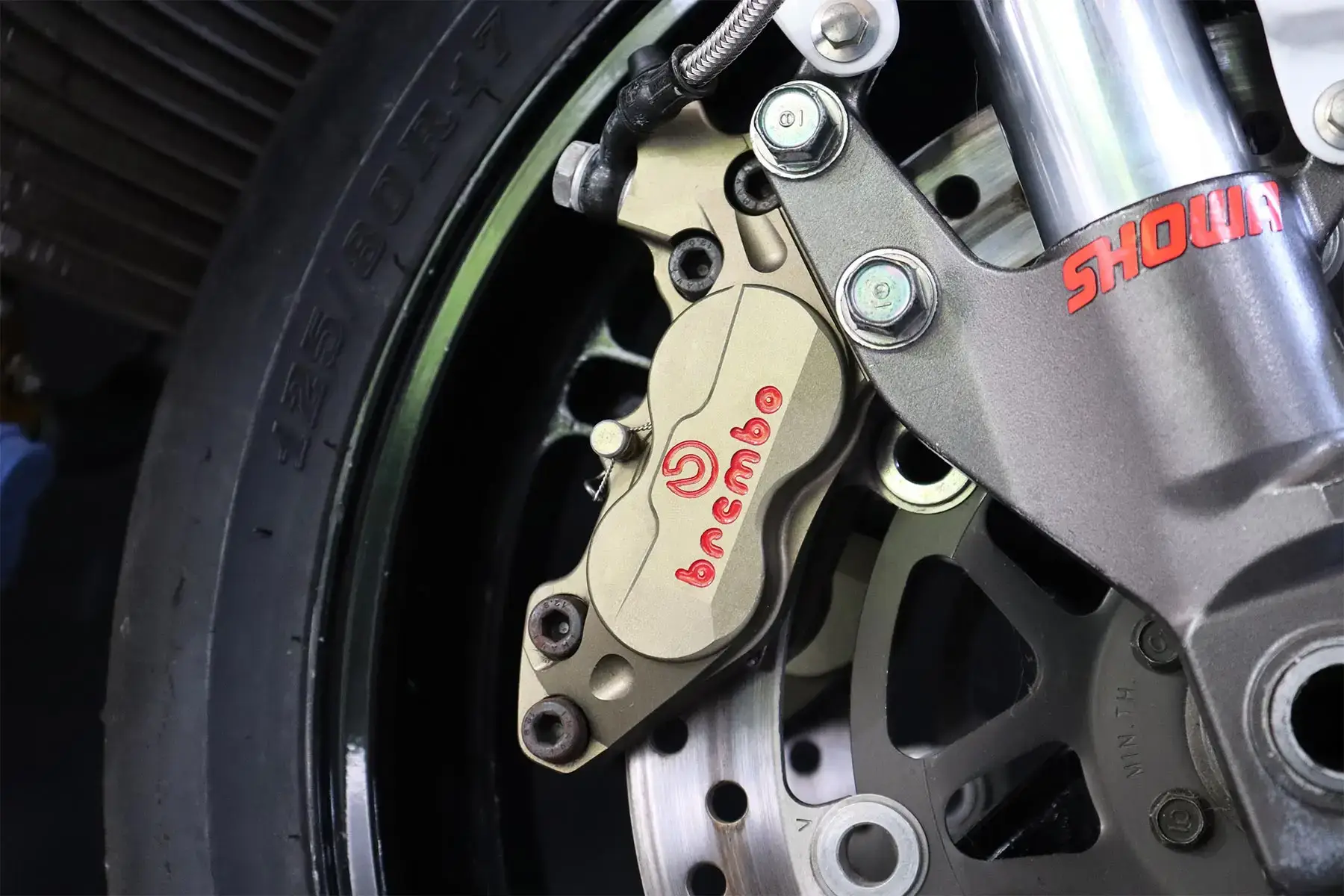
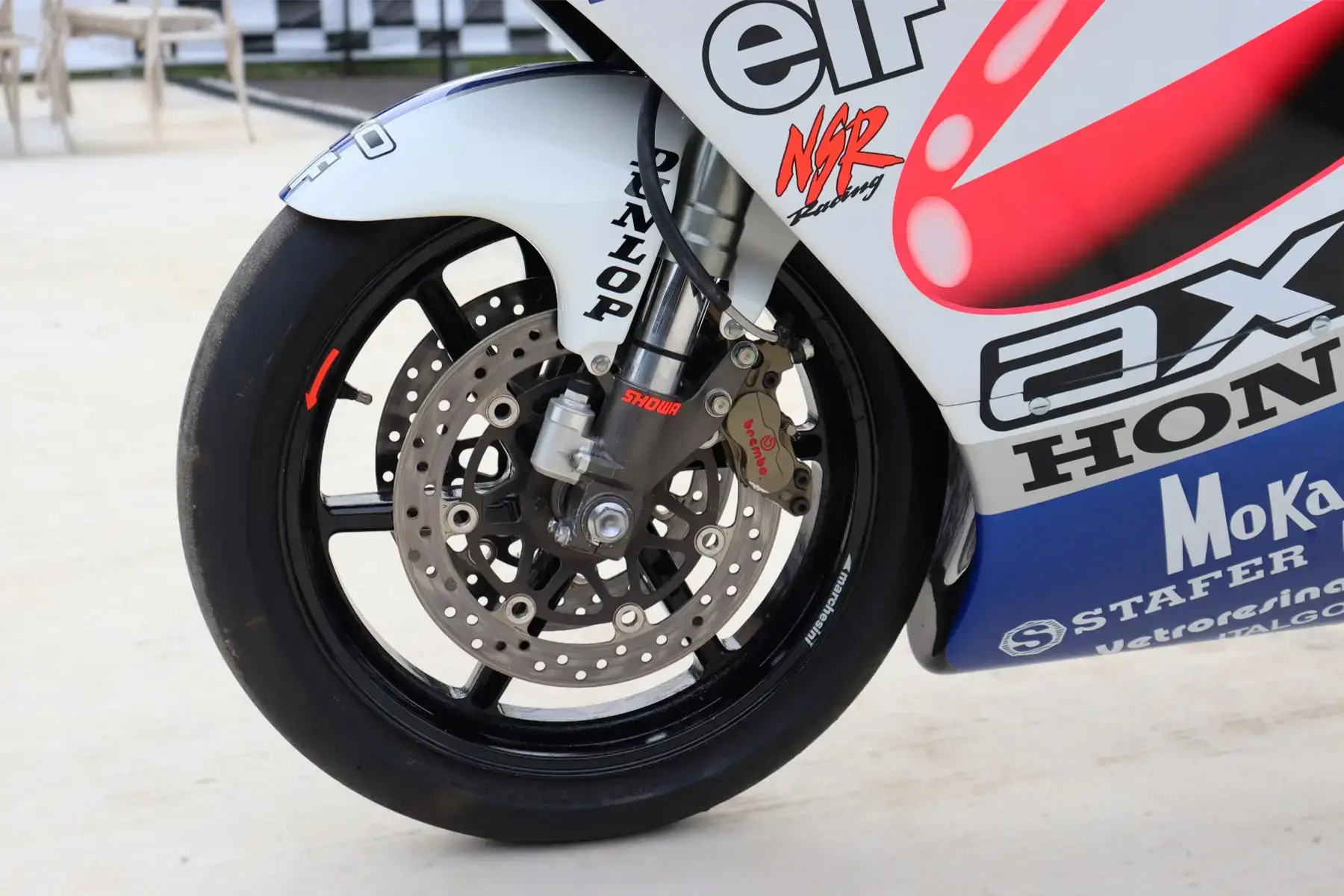
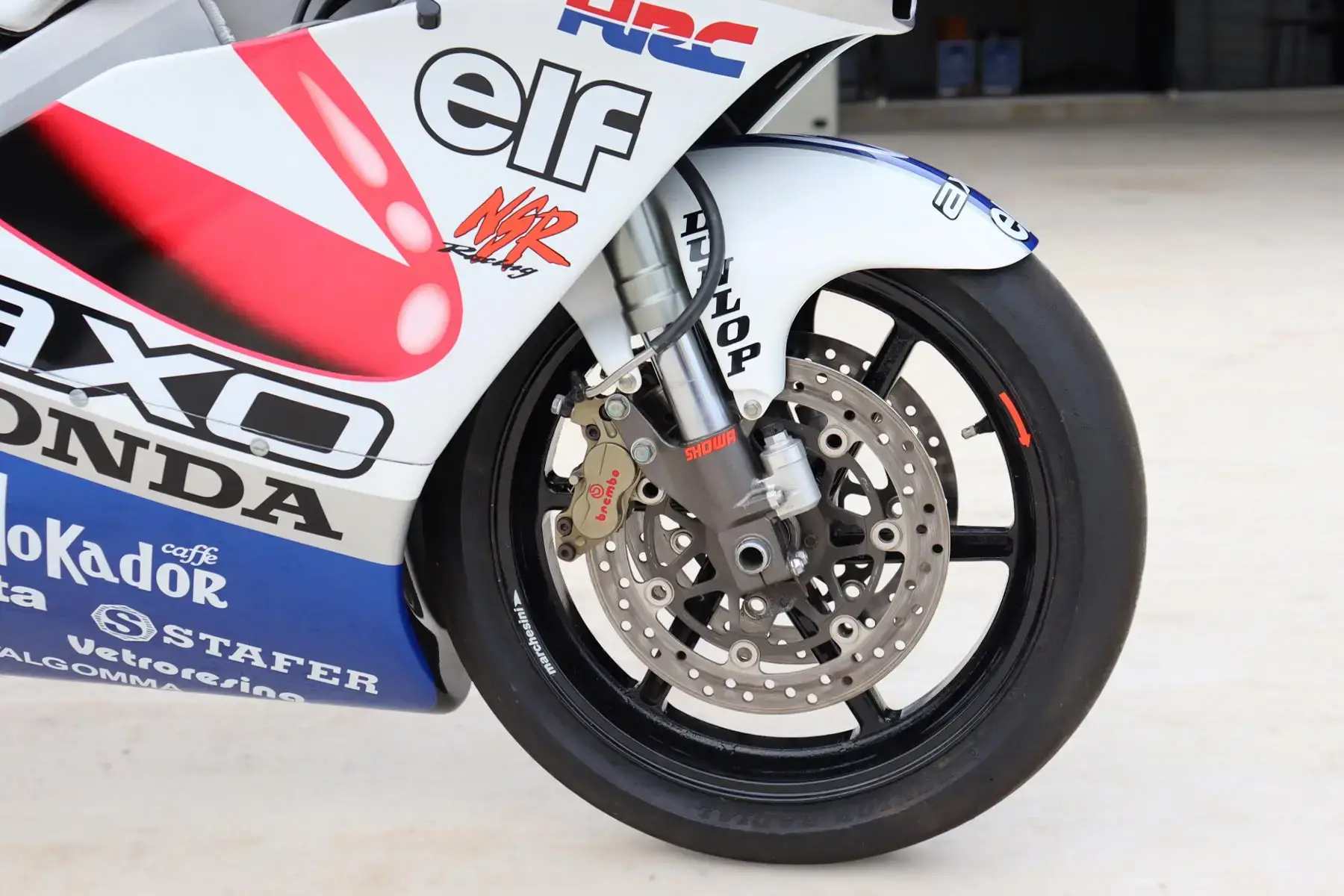
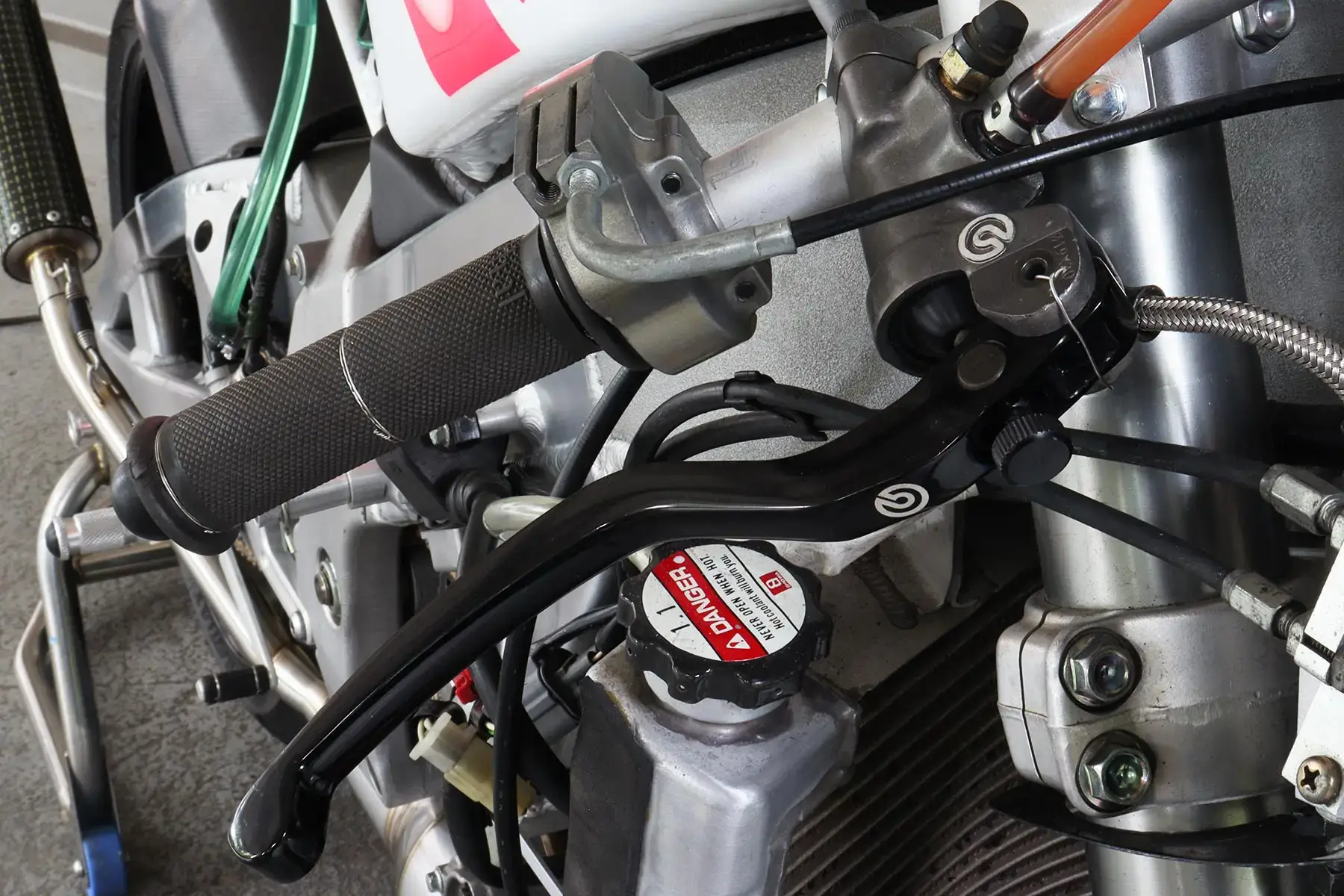
While waiting for exhaust and paintwork to be completed, Matt took the opportunity to lovingly go over the frame and swing arm with some Scotchbrite. We also swapped out a new rear brake rotor, ordered a top quality RK racing chain (not many chains give me the horn but this one does!), and installed some billet Brembo front calipers. The original fitment cast calipers, while they perform fine, just don’t look special enough for this machine. We also treated the bike to a brand new rear caliper off an NX4 which is identical which looks very nice mounted on the billet bracket. Nearly there now! Once last thing we installed was a GP spec clutch lever and perch. To be honest, it wasn’t strictly necessary but it was sitting on the shelf doing nothing so why not? This assembly has a magnesium clutch lever which pivots on miniature ball bearings, which in turn use a titanium pivot pin and held on the handlebar by titanium pinch bolts. Oh dear, did I mention ti? Once you start substituting steel for titanium it gets out of hand very fast. The ‘ti habit’ is as addictive as crack cocaine and way more expensive. So never mind the pinch bolts, I had to pinch myself back to being sensible and left things alone and declared the modifications complete.
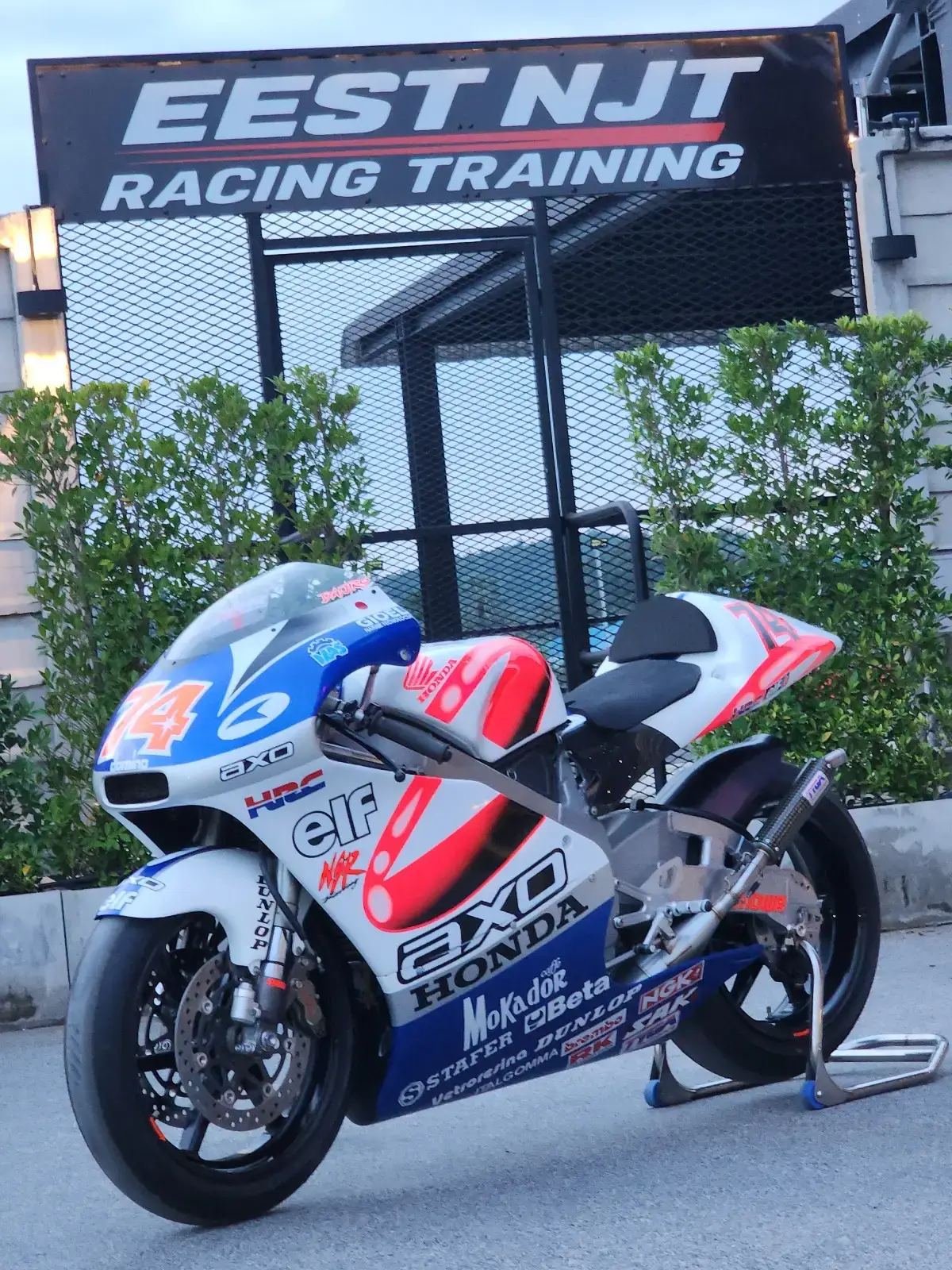
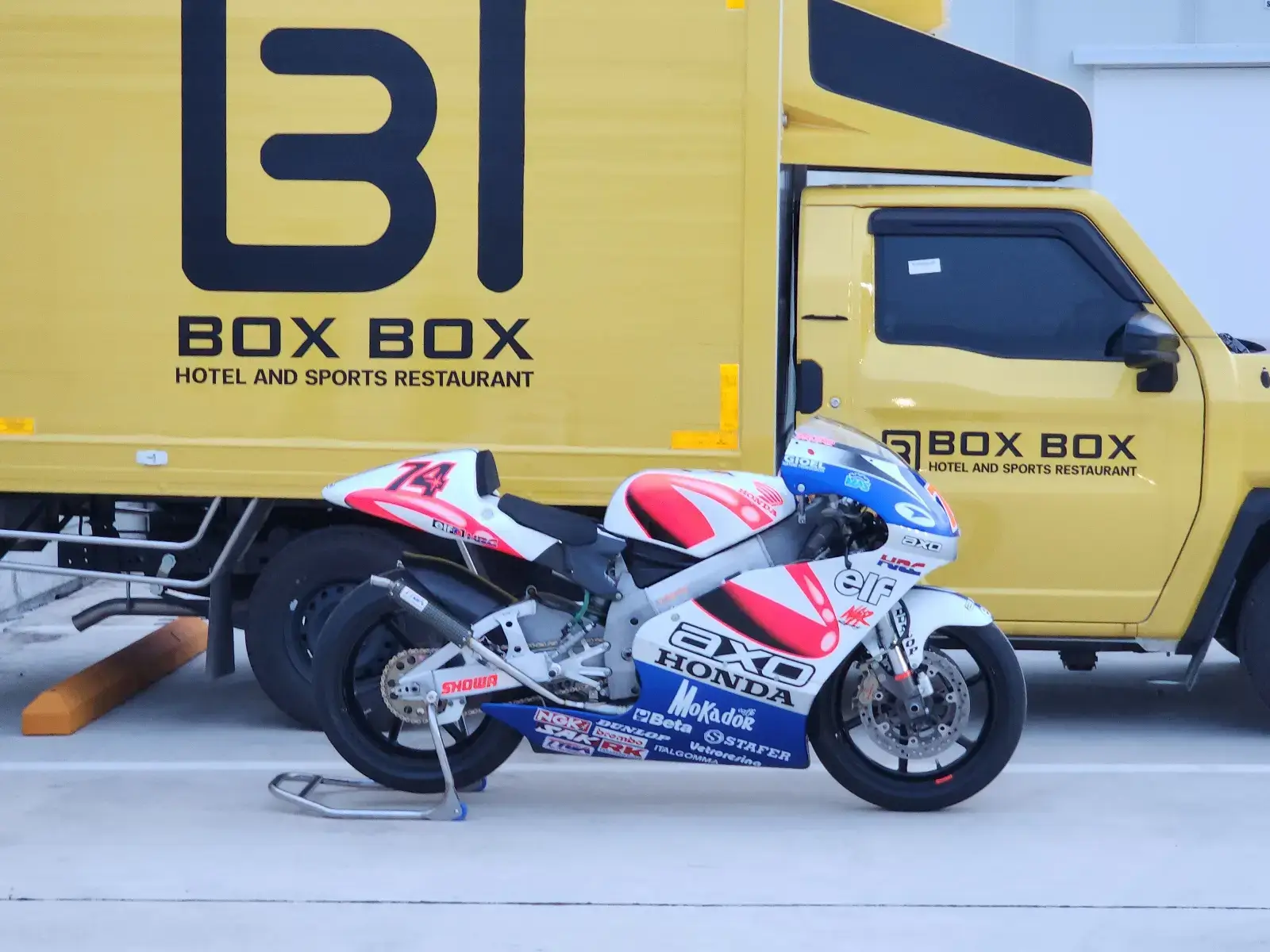
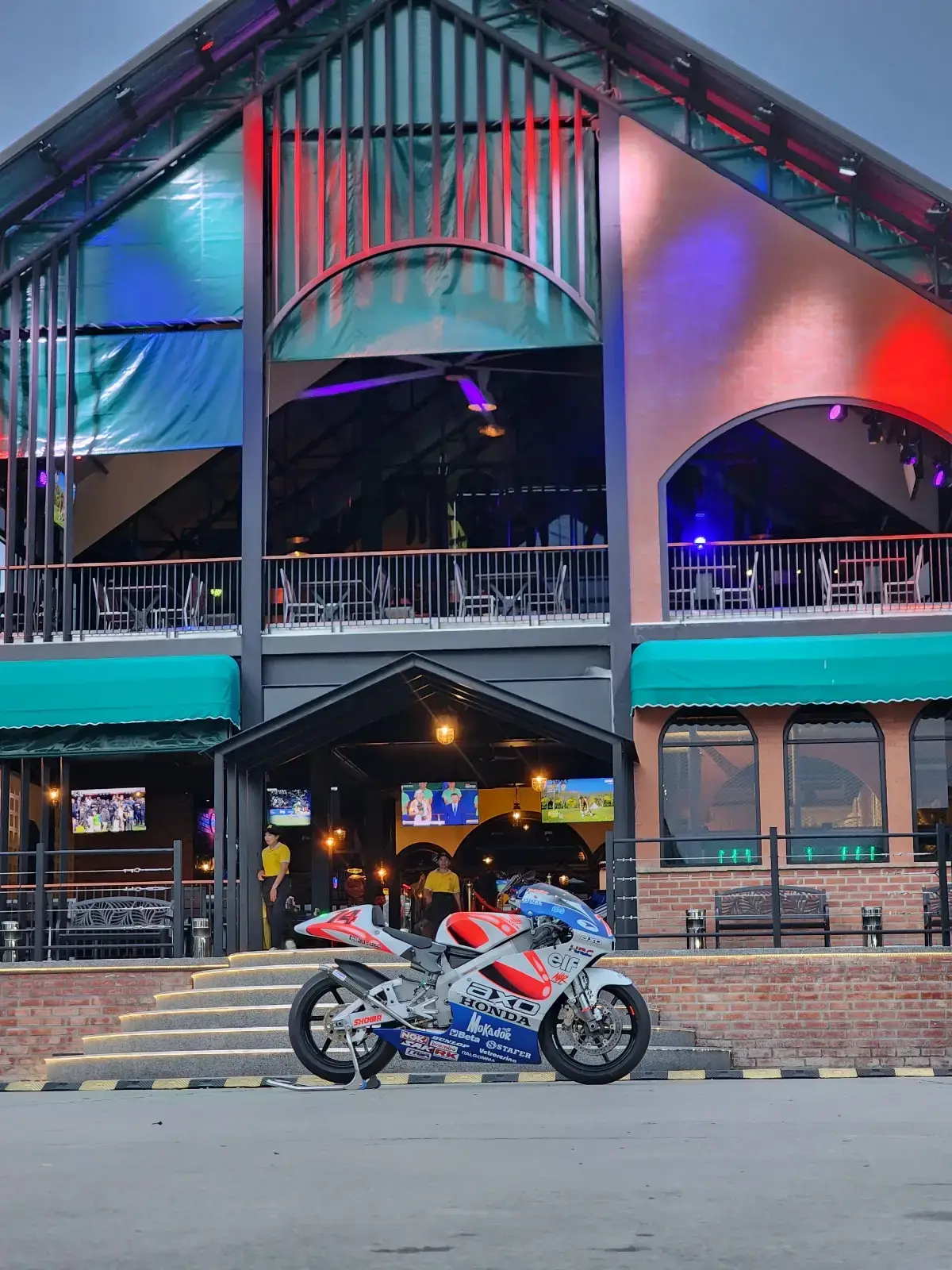
So, we finally got the bike back together and this presented the opportunity to take some long awaited photos and videos. We actually ended up taking quite a lot of pictures with two shoots. The first shoot was done at base and included some close-up details and studio shots. Then we got permission to take pictures at the brand new EEST NJT training track at the Box Box Hotel in Sattahip.
This is conveniently located near to the TYGA factory. The owner, Bob Davidson, is a close friend of TYGA’s is an avid motorcycle enthusiast so he was only too happy to have us there revving up the RS and stinking out his hotel with two stroke smoke. Top bloke! Many thanks for hosting us, and we hope to be using this venue a lot more in the coming months, including a shakedown ride for the AXO bike.
In the meantime, there are some small jobs still left to do. For example, before it is ridden hard, the wheels need to be sent off to be crack testing and refurbishing. Then we will fit new rubber and do some laps.
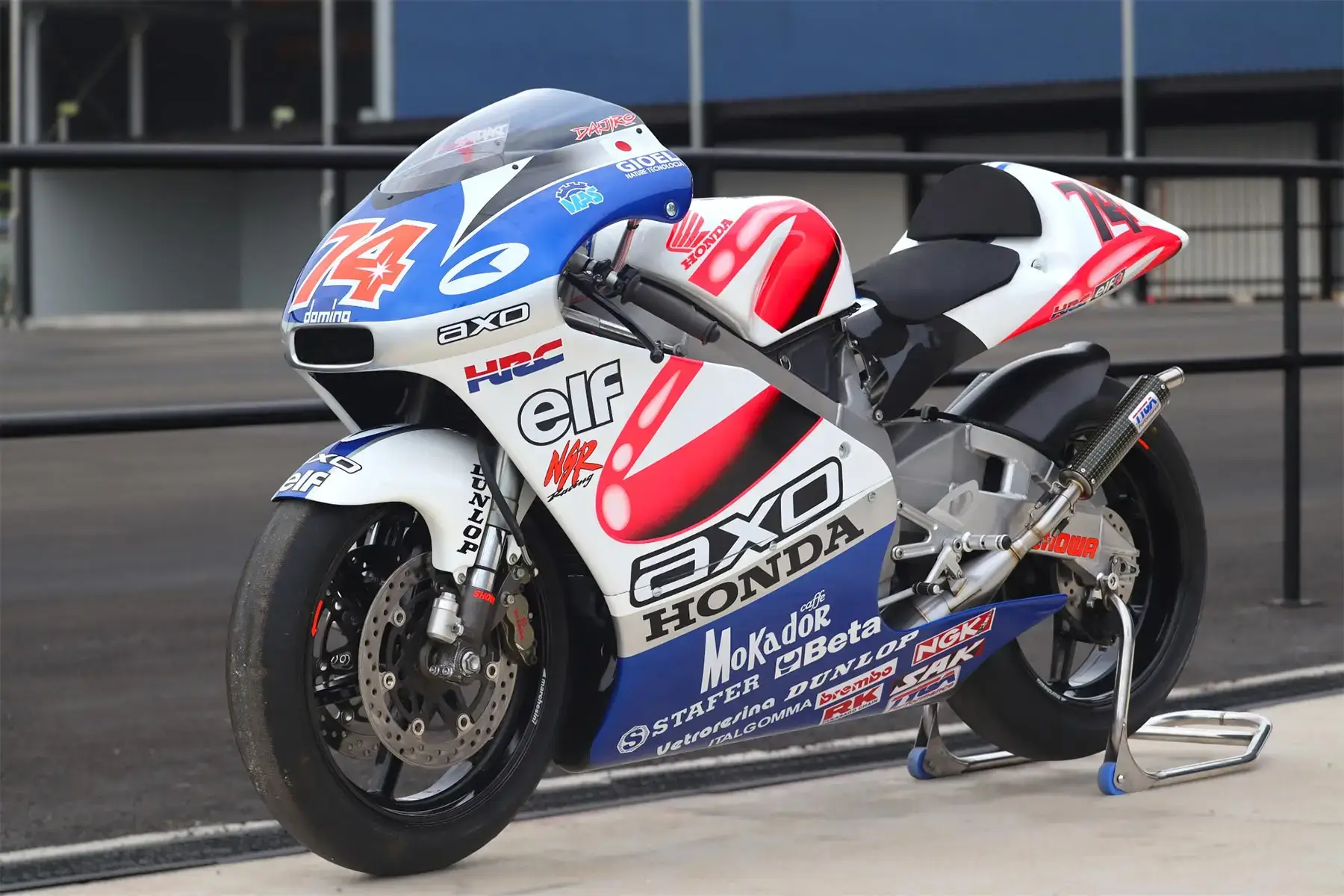
We had a lot of fun working on this bike and all the hard work definitely paid off. We hope you enjoy the static shots and videos and we hope it is a fitting tribute to Daijiro’s memory. We also hope that it gives you some inspiration to build your own project bike. Judging by the social media response, it is a popular one. Finally, just a reminder, don’t forget to check in again later, after we’ve done the shake down. Until then, happy riding!
Products used on this project
1 products
-
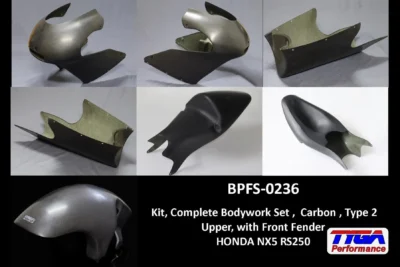
Kit, Complete Bodywork Set, Carbon, Type 2 Upper, with Front Fender, RS250R NXA
SKU: BPFS-0236 Model: RS250R NXA In stock -
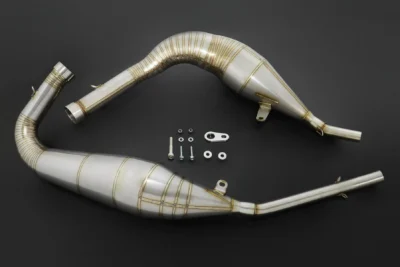
Set, Exhaust Chamber, Stainless Steel, NXA RS250R
SKU: EXCS-0053 Model: NX5 RS250R In stock -
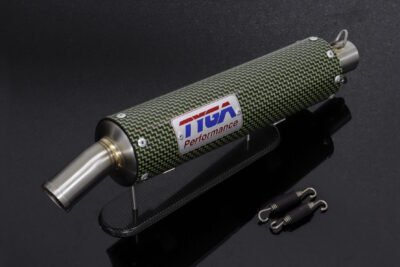
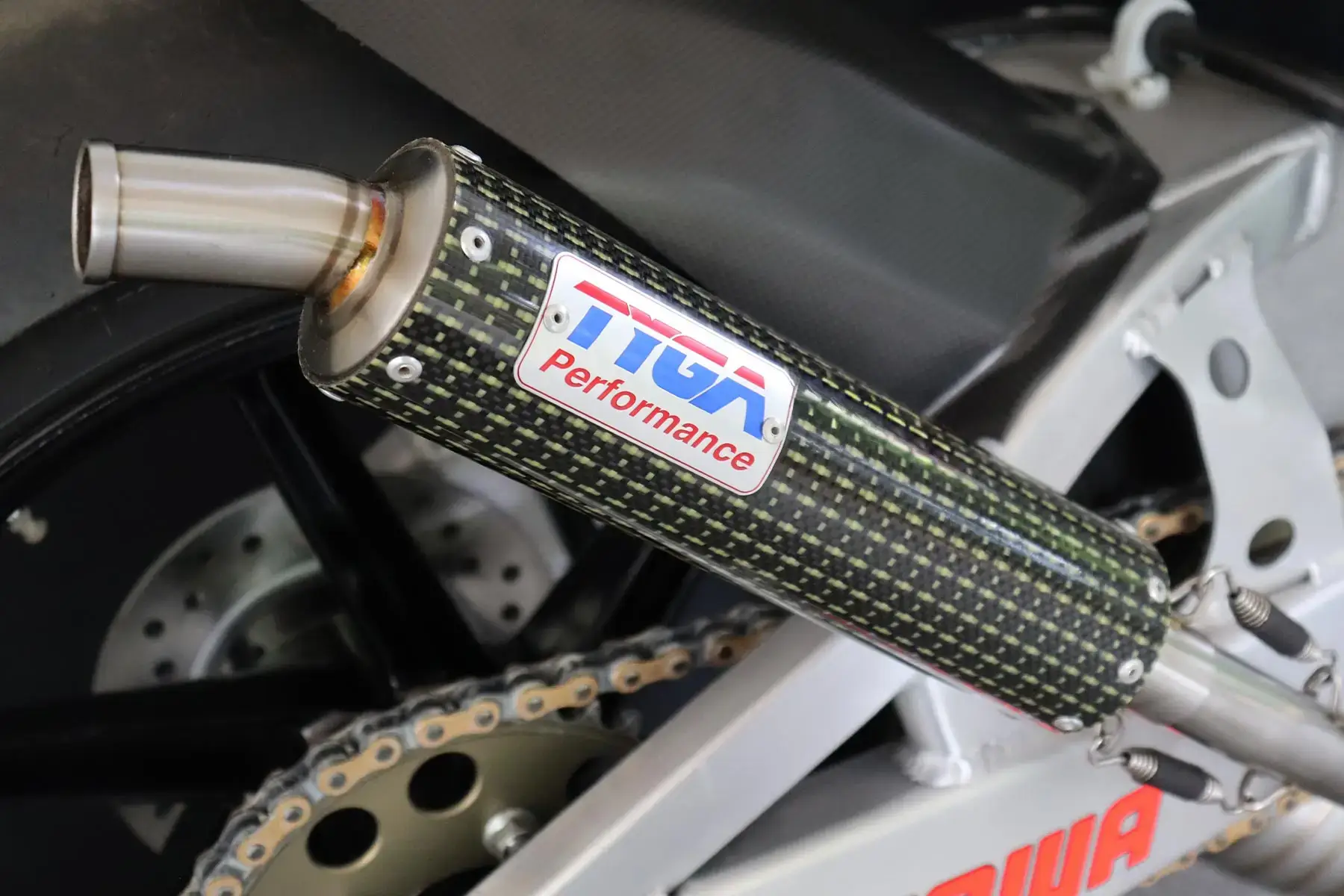
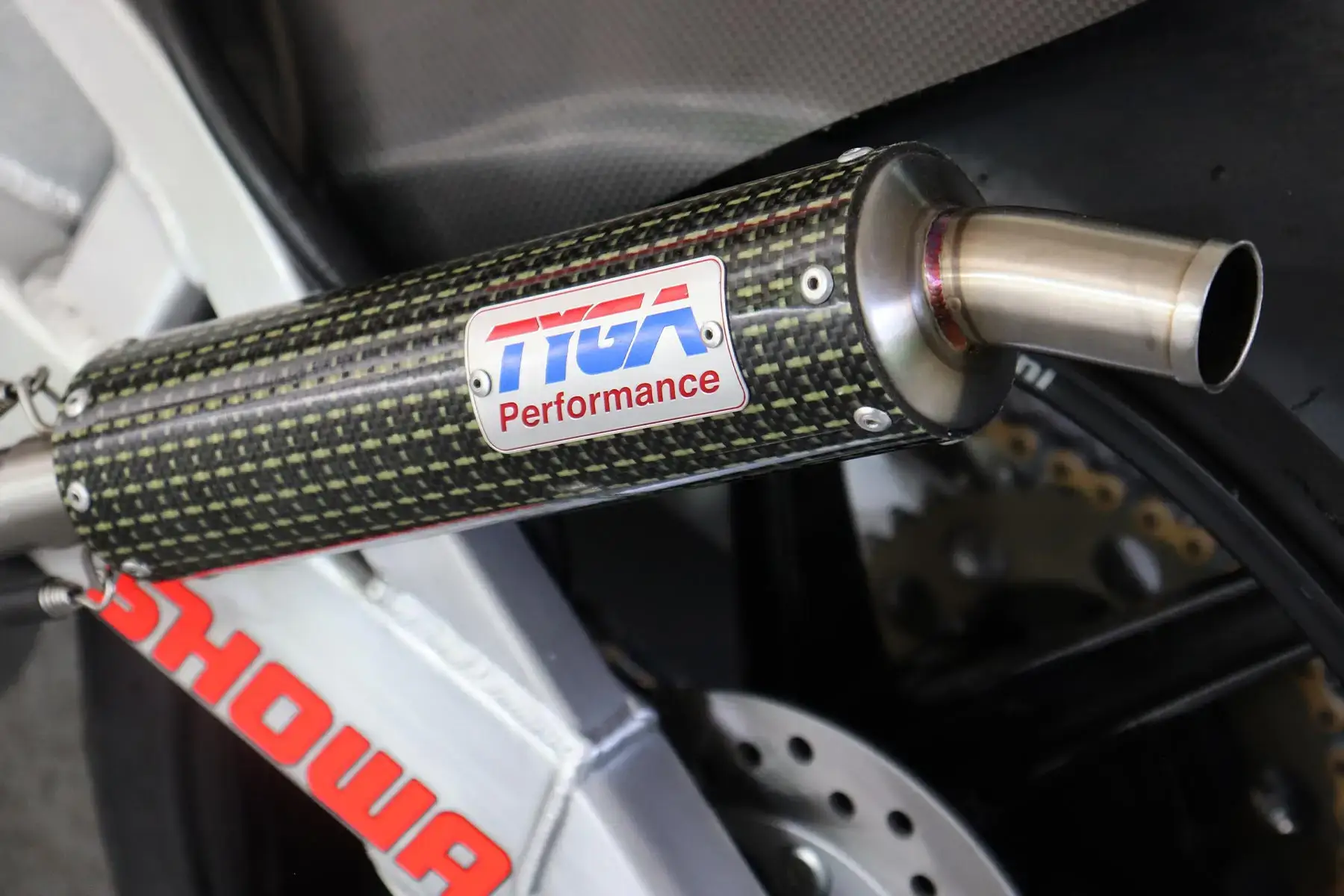
Silencer, GP-T, Carbon/Kevlar, Two Stroke, Spring Mounted, Assy.
SKU: EXSL-0069 Model: NX5 RS250R In stockUSD98.41 This product has multiple variants. The options may be chosen on the product page -
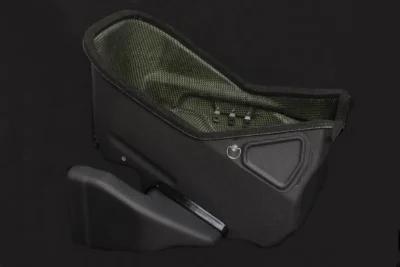
Air Box, Carbon/Kevlar, RS250, NXA, Kit
SKU: BPCX-0032 Model: RS250, NXA 1 in stock -

-

-

Heel Guard, Aluminium, Left, OEM Replacement, Honda RS250R NF5.NX5.NXA
SKU: TYLY-0384 Model: RS250, NF5, NX5, NXA 4 in stock -

Bracket, Rear Brake Caliper, CNC Silver, RS250R NXA
SKU: TYLY-0279 Model: RS250 NXA 4 in stock