













Description
Big Bore Kit, NSR300, Wiseco, VHM
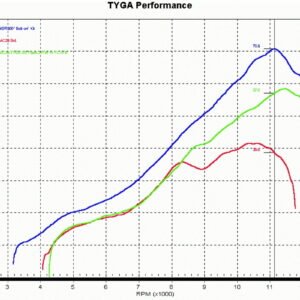
This 300cc Big Bore Kit is identical to the TPER-3007 NSR300 Big Bore Kit, but uses VHM cylinder heads instead of the cast TYGA cylinder heads. See dyno charts for performance details for TPER-1007.
Bore & Stroke is 59mm x 54.5mm giving a total displacement of 298cc.
Parts included in the NSR300 kit.
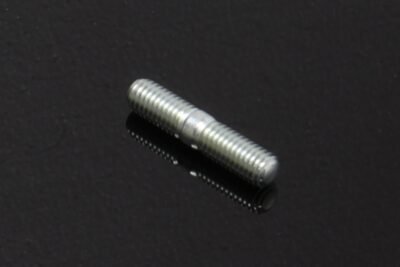
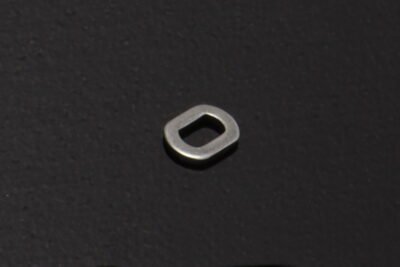
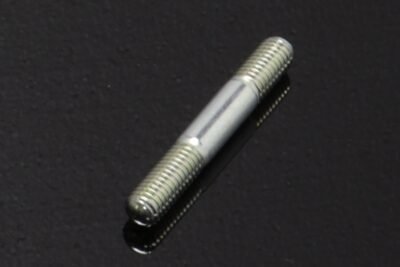
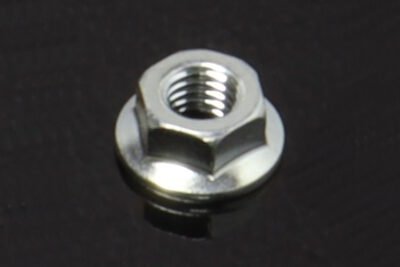
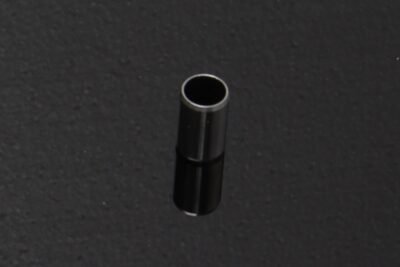
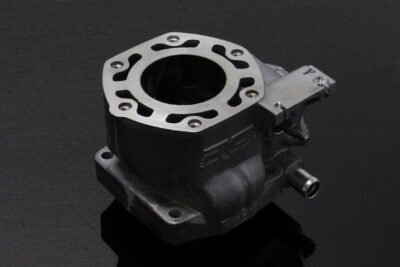
- Cylinder x 2 (includes head studs, RC valve, pulley & nut and washers)
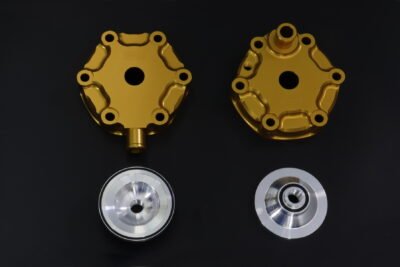
- VHM Rear Head x 1
- VHM Front Head x 1
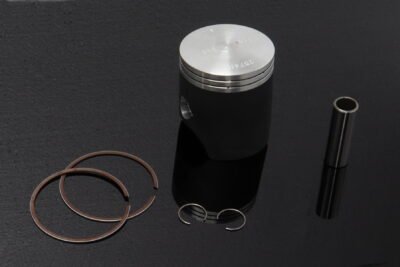
- Wiseco Piston kit x 2 (Includes Piston, rings, pin & circlips)
- S/E Bearing x 2
- Head gasket x 2
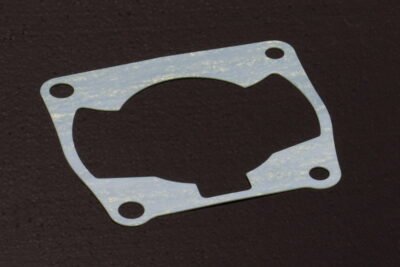
- Cylinder gasket x 2
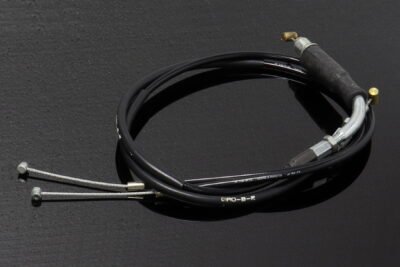
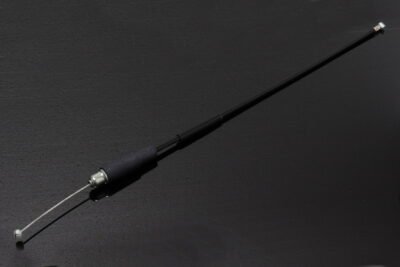
- RC Valve cables x 4
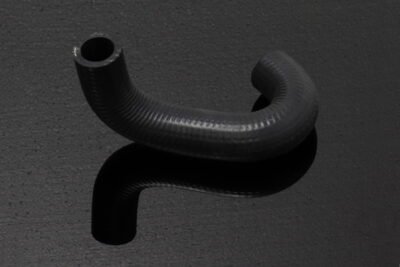
- Water hose x 1
- Exhaust Manifold x 2 (to fit TYGA pipes)
Please select your piston preference from the option dropdown below:
Short Skirt (default):
The short skirt type piston is a ‘bolt on’ solution for the big bore kit. In this case we modify the piston by shortening the front side skirt to allow clearance from the crankcase at BDC. Therefore, no crankcase disassembly or modification is necessary, and the top end can be assembled in the usual way of doing a top end overhaul.
Full Skirt:
The full skirt type piston has a very slightly increased longevity compared to the short skirt type, however, this necessitates that the crankcase is completely disassembled, and some grinding of the crankcase is required to allow for piston clearance from the case at BDC. Please see the guide for how to perform the necessary modifications.
Technical information:
Exact Jetting requirements for your area and application cannot be provided due to differing atmospheric conditions around the world. However, following are some base settings to work from:
MC21 Std bottom end, Wire splice, TYGA Pipes, Airbox lid mod with filter.
- Temp: 29 C
- Press: 1015mb
- Hum: 65%
- Alt: 30m
- MJ – #182/#185
- JN – Std./Std.
- SJ – #38/#38
- AS – 1.5 turns out
- PwrJ – Std./Std.
Tip: Cooler temps, higher pressure and/or lower humidity require richer jetting. High altitude requires leaner settings. Starting off with rich settings will in the worse case foul a plug. Too lean a setting may destroy the engine.
This jet set-up is for guidance only. TYGA Performance cannot be held responsible for any engine damage incurred due to incorrect settings.
At present, this kit is available by special order. Each kit takes approx. four weeks to prepare.
Torque Values:
- Cylinder Head: 22Nm
- Cylinder: 24Nm
There is no problem about the RC valves hitting the piston due to thin cylinder wall thickness. This is not an issue on our kit as it’s using different
cylinders, not modified NSR250. They are genuine OEM Honda cylinders, made and plated in Japan to their typical high quality.
The RC valves are easier to adjust than ever on the 300 kit, as there’s only one adjuster screw to play with, and each cylinder marked at the correct ‘fully open’ position for simple setting.
In the case of the Honda NSR250 MC28, to realise the full potential of the big bore kit, you really need to use the HRC ignition card, as without this the ignition timing is quite retarded and you will not reach full power.
If using the standard ignition card, then we suggest following the modifications that can be found on out power up kit page: HERE
The power up kit mods will be most helpful and will increase power all through the range compared to the 250cc setup, but will not reach what is possible with the HRC card.
Be sure to take the time to set up the carbs properly. This is most important

Contact us for more details
Due to recent changes in the USA with regard to import tariffs, we can no longer import VHM products to the USA.
This change only affects the USA and only affect VHM products which are sent directly from the VHM factory in the Netherlands.
For the rest of our product range and for VHM orders outside the USA, we will continue to ship as normal.




TYGA Thailand (verified owner) –
Hi Matt.
You made me think a bit here. I’ll try explain my thoughts.
First of all – My ideal motorcycling day is riding a road I don’t know so It needs reading as I ride it (local knowledge changes how you ride) and knowing at the end, that I beat the road.
On the 4 strokes this becomes so much easier because the road is everything. Keith Code maybe would have said if you have $10 to spend on the ride you’d use $9.50 on the road and only need .50c for the bike and yourself.
My 2 stroke riding changes everything. I need at least $3 now, leaving only $7 for the road so I work harder. But if I get the same result it is much more sweeter.
There is also the strokers garnish – the pose – seeing astounded 600 riders as they can’t stay with it – the conversations at meets – the envy in the eyes of those who dare not change……..
I have no NSR 250 yardstick for a direct comparison but have memories of my ‘Prilla RS 250. Also bear in mind I’m still finding my 2 stroke head.
I also ride a Fireblade all day long at work so this will interfere with my judgement.
First impressions are that the motor is very strong. The biggest surprise is there is a mid range that is actually useable – not like a 4 stroke, but its there, and with practice and planning its enough to ride normally in traffic without having to stir the gear box too much and scream everywhere.
Once out on the open road though I tend to ride it more like the traditional 250.
The mid range isn’t enough to dilute the strokers personality and I could summarise by saying the 300 is beefier everywhere, including the satisfaction gained from riding it. I seem to recall having to change down in a strong headwind on the ‘Prilla. That will not happen on the 300.
This is only one example of the difference. Exiting fast bends the motor actual helps the bike be more stable as it pulls earlier. Not delivering too much power, but definitely driving forward. So this can be done with the bike still cranked over as its a smoother delivery. You get this smooth transition to the powerband and then its off! By then though the corner is dealt with and the bike is on its way to being more upright. Hence more stability.
I don’t believe there is any significant top speed bonus. But you have to understand I don’t like to nail it on long straight roads for lengthy periods and just sit there waiting for the speedo. I didn’t want an NSR for that.
However on my recent trip to Scotland it would climb to an indicated 110mph very quickly and strongly then sometimes 120 would be easy sometimes 120 would be a struggle. This may be down to the conditions / altitude (weather was changeable) or the size of my breakfast.
This didn’t worry me, as I say it’s not its purpose in life.
I understand the purist view ( I agree with most of it) but in the real world on real roads I get the impression that If I rode with a 250 the rider and bike would be working 10% to 15% harder than me to keep with the 300. If I then found that extra 15% myself,,,,,, bye bye.
Carb settings I know little about. I have a note somewhere and will search them out.I wish I knew more about stuff like that to be honest and I could then understand if it needed a nip and tuck sometimes. I am really envious of you guys who know the facts.
Plus I’m the only stroker owner in my group so I can’t pick anyone’s brains.
Thanks, Mal
TYGA Thailand (verified owner) –
Hi Matt,
The 300-kit on the street is absolutely phantastic. Power and power. Its a long time ago, since I have had as much fun like today. I made a break-in ride through the lower parts of Switzerland. Revved not more than 10’000 after 200 km with max. 8 – 9’000. Burning picture of the plugs with half open throttle is a nice milky brown. Setting with unleaded 98 octane gasoline and 2% oil in the gasoline is: MJ 160/160 SJ 38/38 AS 1 1/2 PJ 75/80 Spark plug NGK BR 9 ECM.
Mounting the kit was very easy and only small problems with the stock fairing.
All in one, this engine is more than just fun. My congratulations. Let’s hope, that I can say the same with the race 300 project.
Best regards, Heinrich